Basic Information
Green Tree Pythons have a scientific name that sounds like magic – it’s called Morelia viridis, where “viridis” means “green” in Latin!


Did you know?
Search name of person, animal, place, thing, etc.
Share
Green Tree Pythons have a scientific name that sounds like magic – it’s called Morelia viridis, where “viridis” means “green” in Latin!
Green tree pythons aren’t venomous at all—they’re constrictors, which means they wrap their prey in a super-strong squeeze to catch it!
Green tree pythons live in lush rainforests across Papua New Guinea, parts of Indonesia, and the northern tip of Australia!
In the wild, green tree pythons often live about 15 years, but in zoos or with excellent care, they can live 20 years or even longer!
A full-grown green tree python can grow about as long as two baseball bats placed end to end—that’s around 4–6 feet long!
When baby green tree pythons hatch, they’re tiny—usually about 8–10 inches long and light enough to fit in your hand!
Adult green tree pythons usually weigh about 1.1 to 1.6 kilograms—that’s about as heavy as a big bag of potatoes!
Scientists classify green tree pythons as part of the Pythonidae family, making them cousins to other famous pythons around the world!
Green tree pythons usually live alone, but a group of snakes is sometimes called a “knot” when they’re all tangled together!
Green tree pythons belong to the order Squamata, the giant reptile group that includes all snakes and lizards on Earth!
Green tree pythons have special heat-sensing pits along their lips that help them detect warm-blooded animals nearby—like having built-in heat detectors for hunting in the dark!
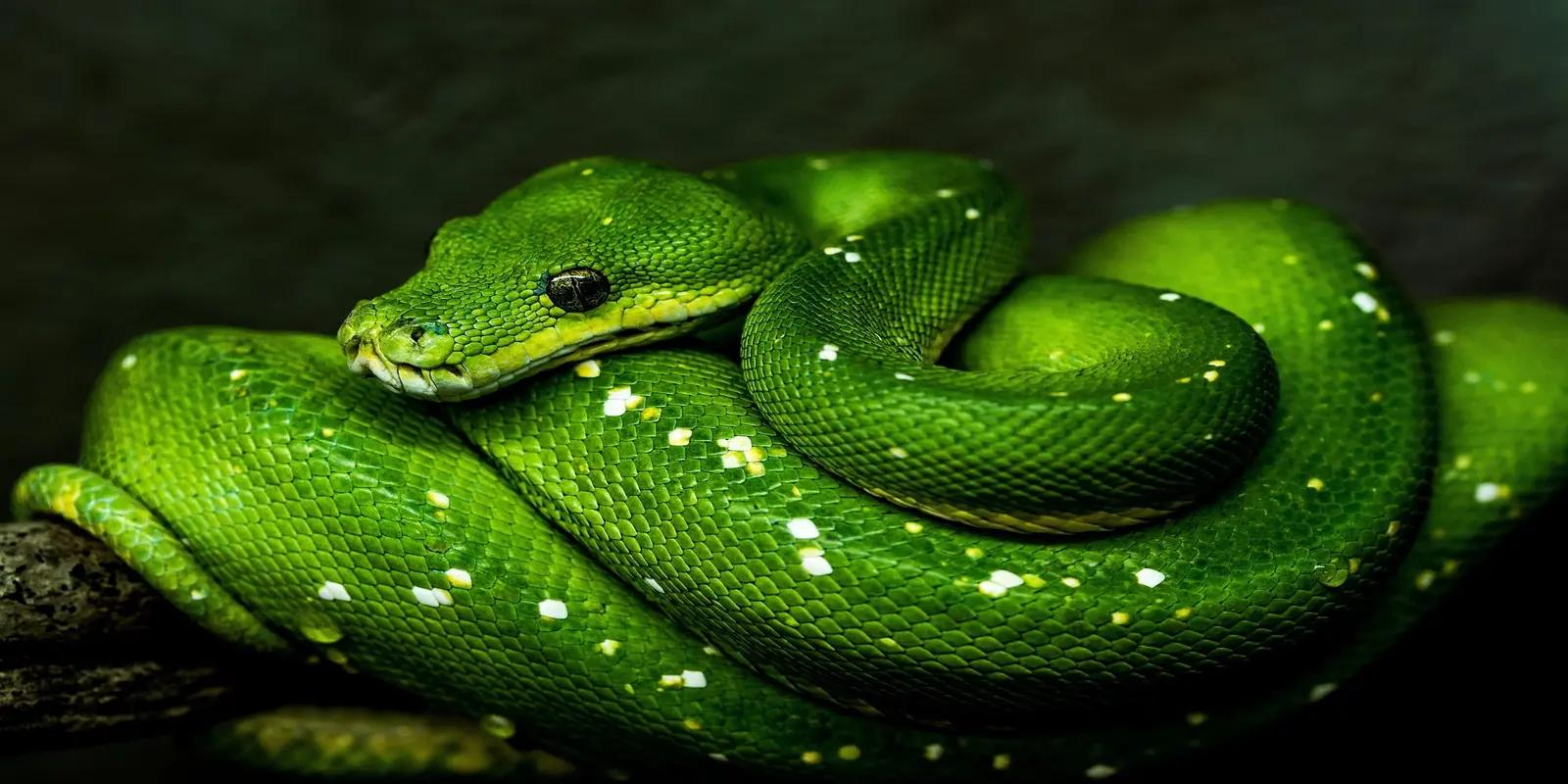
Most adult green tree pythons are a beautiful emerald green color, but some can be yellow, blue, or even white – like wearing different colored t-shirts!
Baby green tree pythons are born bright yellow or brick red, and as they grow, they slowly change into beautiful green snakes around 6–12 months old!
Green tree pythons have over 100 sharp, backward-curved teeth that help them hold onto their food tightly—like tiny hooks that never let go!
Green tree pythons have special tail muscles that let them grip branches tightly—like having an extra hand to help them hold on in the trees!
Green tree pythons have vertical, cat-like pupils that help them see better at night when hunting, along with special heat-sensing pits that help them detect warm animals in the dark!
Green tree pythons have super flexible jaws that can stretch wide enough to swallow prey bigger than their head—like slowly eating a giant sandwich without chewing it!
Green tree pythons may be able to see some colors, which helps them blend into leafy green trees in the rainforest—but they also rely on their amazing camouflage and heat-sensing superpowers to stay hidden and hunt!
When green tree pythons are excited or hunting, they flick their tongues very often to “smell” the air and gather information about their surroundings—sometimes just a few times per minute, and much more when they’re actively exploring or tracking prey!
Green tree pythons are masters of stillness—they can sit perfectly motionless on a branch for a long time, sometimes even days, waiting quietly for the perfect moment to catch their food!
Green tree pythons are mostly active at night, making them nocturnal—like owls and bats that come alive in the dark!
When green tree pythons rest, they often curl their bodies around tree branches and tuck their head safely in the middle of their coils—like a leafy green rope wrapped snugly around a branch!
Green tree pythons are excellent climbers and spend most of their lives in trees—they rarely come down to the ground and move through branches like graceful acrobats in the rainforest!
Green tree pythons communicate using special chemical signals called pheromones—like leaving invisible smell messages in the air and on branches for other snakes to “read”!
Green tree pythons can swim really well when they need to, even though they prefer living in trees most of the time!
Green tree pythons are super patient—they can stay in the same spot for days, perfectly still, waiting quietly for the perfect moment to catch their food!
Green tree pythons naturally have slow heart rates and low energy needs. When they rest, their bodies slow down even more to save energy.
Green tree pythons are quite shy snakes that usually like to stay alone and avoid other animals. They spend most of their time quietly hidden in trees, staying still and safe in the rainforest!
Green tree pythons are actually quite shy and prefer to avoid other animals when possible!
Green tree pythons live in rainforest canopies, sometimes as high as 30 feet above the ground – that's as tall as a three-story building!
Green tree pythons like warm, tropical temperatures—usually around 75–85°F (24–29°C), just like a cozy summer day in the rainforest!
Each green tree python often picks a favorite branch or small area in the trees and may stay there for days or even weeks, patiently waiting for the perfect moment to catch food!
Green tree pythons love warm, humid rainforest air, and they need moisture in the air to keep their skin healthy and shed properly—like living in a misty tropical jungle in the treetops!
Green tree pythons are found from sea level all the way up to mountain forests about 6,500 feet high—that’s like climbing high into the clouds on a tall rainforest mountain!
In the wild, green tree pythons often rest on branches that are about as thick as their own body, helping them stay balanced and safely wrapped around their tree home!
Green tree pythons can live in different kinds of rainforest trees—from tall jungle giants to smaller trees—as long as they have strong branches, leafy cover, and a safe place to hide and wait for food!
Green tree pythons love to eat small mammals and birds—like rats, mice, and small birds they catch in the rainforest trees!
Green tree pythons can go for weeks without eating after a big meal because they digest food slowly and save energy—so one good meal can keep them full for a long time!
Green tree pythons have special heat-sensing pits on their lips that help them find warm-blooded animals in total darkness—like having built-in heat detectors for night hunting!
After eating a big meal, green tree pythons take several days to a couple of weeks to fully digest their food, slowly breaking it down while resting quietly in the trees!
Young green tree pythons mostly eat small lizards when they’re little, and as they grow bigger and stronger, they start hunting larger prey like rodents and birds!
Green tree pythons can eat prey that weighs up to about 15% of their own body weight—like a kid eating a big meal that feels surprisingly heavy and filling compared to their size!
Green tree pythons are strict carnivores, which means they only eat other animals like mice, rats, birds, and lizards—they never eat plants!
Female green tree pythons lay about 6–30 eggs in each clutch, depending on how big and healthy the mother snake is!
Green tree python eggs take about 45–52 days to hatch, and during that time the mother protects and warms them until tiny baby snakes are ready to come out!
Baby green tree pythons are about 12 inches long when they hatch—that’s the same length as a ruler, but they’re still tiny and lightweight compared to adult snakes!
Green tree pythons grow really fast when they’re babies—sometimes almost doubling their size in just a few months during their first year, before slowing down as they become adults!
Green tree pythons reach sexual maturity at about 2–3 years old, but they may keep growing for a bit longer and usually become fully grown adults around 3–5 years of age!
Female green tree pythons wrap their bodies around their eggs to keep them warm and safe, gently protecting them until the baby snakes are ready to hatch!
Baby green tree pythons are independent right after hatching—they don’t need their mother and start hunting small lizards and tiny animals on their own in the rainforest!