Basic Information
The frilled lizard’s scientific name is Chlamydosaurus kingii, named after Captain Phillip Parker King who first discovered them in 1820!


Did you know?
Search name of person, animal, place, thing, etc.
Share
The frilled lizard’s scientific name is Chlamydosaurus kingii, named after Captain Phillip Parker King who first discovered them in 1820!
Scientists classify frilled lizards in the family Agamidae, making them cousins to bearded dragons and water dragons!
Frilled lizards are completely non-venomous and use their impressive frill display instead of venom to stay safe!
Frilled lizards live in northern Australia and southern New Guinea, where they enjoy warm, tropical weather all year round!
A group of lizards is often called a “lounge,” which sounds like they’re chilling together — just like when you relax in the sun!
Frilled lizards may live around 10–15 years in the wild, and some can live up to about 20 years when people take good care of them!
Frilled lizards can grow to be as long as your ruler – about 85 centimeters (33 inches) from nose to tail tip!
A full-grown frilled lizard weighs about as much as a large hamburger – between 500-600 grams!
According to scientists, frilled lizards are listed as "Least Concern," which means they're doing well in the wild!
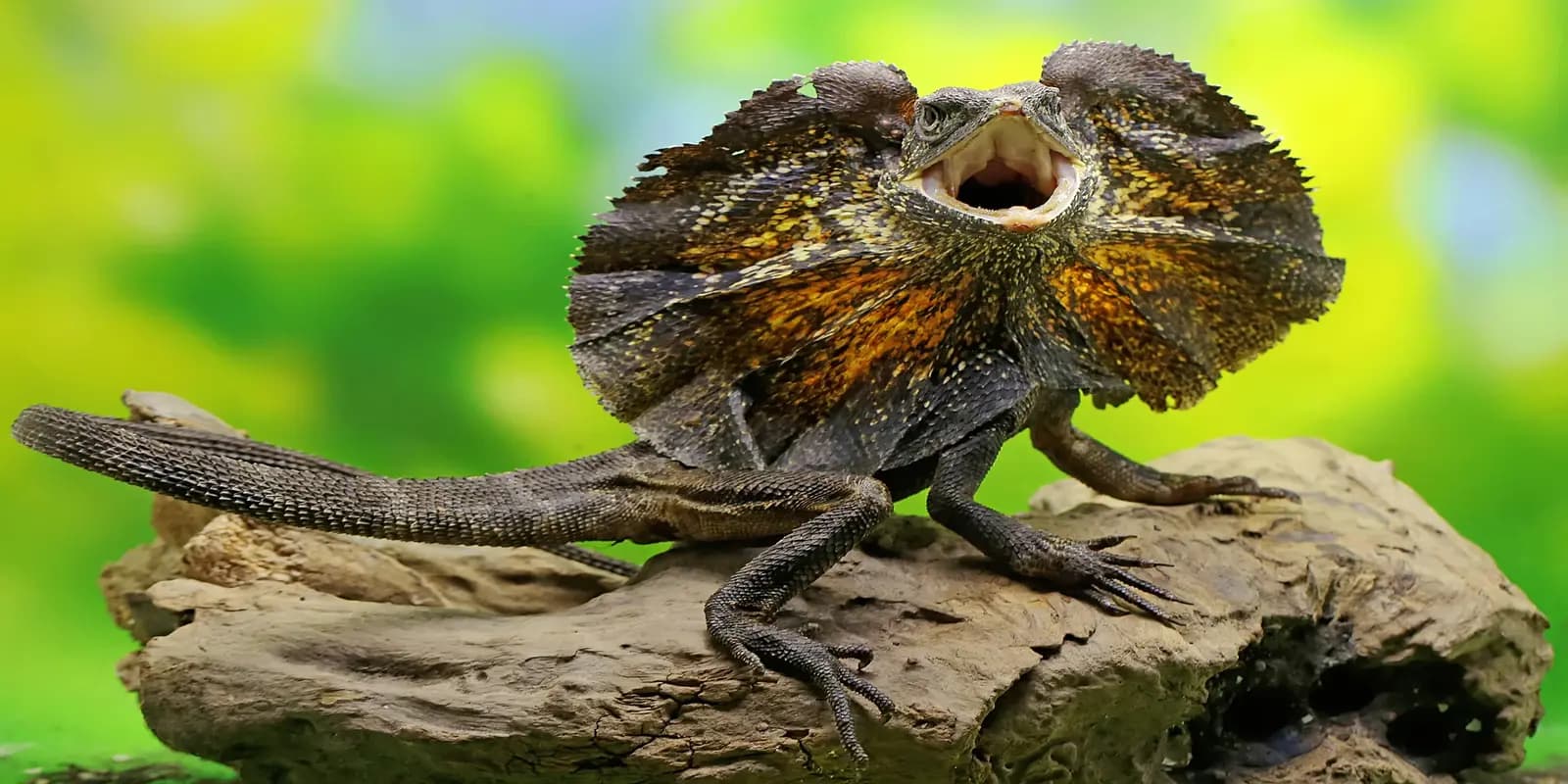
A frilled lizard’s famous frill can open up to about 10–12 inches wide — about as big as a dinner plate!
A frilled lizard's frill is made of special stretchy skin supported by long rods of cartilage – like the frame of an umbrella!
Frilled lizards can be different colors including yellowish-brown, reddish-orange, or gray, helping them blend in with tree bark!
Frilled lizards have super sharp claws that help them grip tree bark like tiny mountain climbers!
A frilled lizard’s long tail is even longer than its body and helps it balance when it runs on two legs to get away from danger — like a natural tightrope walker’s balancing stick!
The frilled lizard's frill has bright warning colors on the inside that are normally hidden – like a secret rainbow that only appears when needed!
A frilled lizard’s tongue is bright pink or yellow and helps it “smell” the air by picking up scent particles — kind of like how snakes check out their world!
When frightened, frilled lizards can sprint on their back legs at speeds of about 20–25 km/h — faster than many people can ride a bike in a school zone!
Frilled lizards communicate with head bobs and arm waves, like they're doing a special lizard dance!
Frilled lizards love the sun and often warm up by basking in it in the morning and afternoon — but once they’re warm, they spend the day climbing trees and hunting insects!
Frilled lizards do push-ups to show other lizards how strong they are!
Frilled lizards can swim across small streams when they need to — they paddle with their legs and use their long tail to help steer!
Frilled lizards usually sleep high up in the branches of trees at night so they stay safe away from hungry animals on the ground!
Male frilled lizards defend their territory by showing off their frills and doing special challenge displays!
Frilled lizards live in tropical and warm woodland areas where there are plenty of trees to climb!
Frilled lizards prefer areas where the temperature stays between 25-35°C (77-95°F) – like a warm summer day!
Frilled lizards are most active during the morning and late afternoon when it's not too hot!
Frilled lizards help control insect populations in their environment by eating lots of bugs!
Frilled lizards can survive in both dense forests and open woodlands!
Frilled lizards are insectivores, meaning they love to eat bugs like butterflies, beetles, and ants!
Frilled lizards hunt by staying very still and waiting for insects to come close – like playing a game of freeze tag!
Frilled lizards sometimes eat small lizards when insects are hard to find!
Frilled lizards hunt most actively during the early morning when insects are slow and easy to catch!
Baby frilled lizards start hunting on their own as soon as they hatch!
Female frilled lizards lay between 8-23 eggs in a nest they dig in the ground!
Frilled lizard eggs take about 70 days to hatch – that's like waiting through your whole summer vacation!
Young frilled lizards are born with their frill and can use it right away, and it keeps growing and getting stronger as they grow up!
It takes a frilled lizard about 1–2 years to grow up to adult size — that’s like growing from little kid to big kid lizard!
Unlike some reptiles, mama frilled lizards don’t stay to protect their eggs — she lays them in a nest, covers them, and then leaves, so the babies must fend for themselves when they hatch!
The temperature of a frilled lizard's nest determines whether the babies will be boys or girls!
Baby frilled lizards shed their skin every few weeks as they grow!
Frilled lizards reach adulthood and can start having their own babies at about 1-2 years old!
When a frilled lizard feels scared, it can pop out its big frill in less than a second — faster than you can blink — to surprise a predator!
A frilled lizard's excellent eyesight helps it spot predators from far away!
A frilled lizard's rough, bark-colored skin helps it hide on tree trunks!
Frilled lizards freeze completely still when hiding, making them almost impossible to spot!
Frilled lizards can inflate their throat to make hissing sounds that scare predators!
Frilled lizards are sometimes called "bicycle lizards" because of how they run on two legs!
A frilled lizard's frill contains blood vessels that can change color when the lizard is excited!
Frilled lizard eggs are small — about 1 inch long and weigh only a few grams.
Frilled lizards are one of the few lizards that regularly walk and run on two legs!