
Mother green tree pythons wrap their bodies around their eggs and protect them for the entire incubation period without eating, keeping them warm and safe until they hatch!
Green Tree Pythons - Facts for Kids
Did you know?
Search name of person, animal, place, thing, etc.
Share
Facts About Green Tree Pythons For Kids
Survival Skills
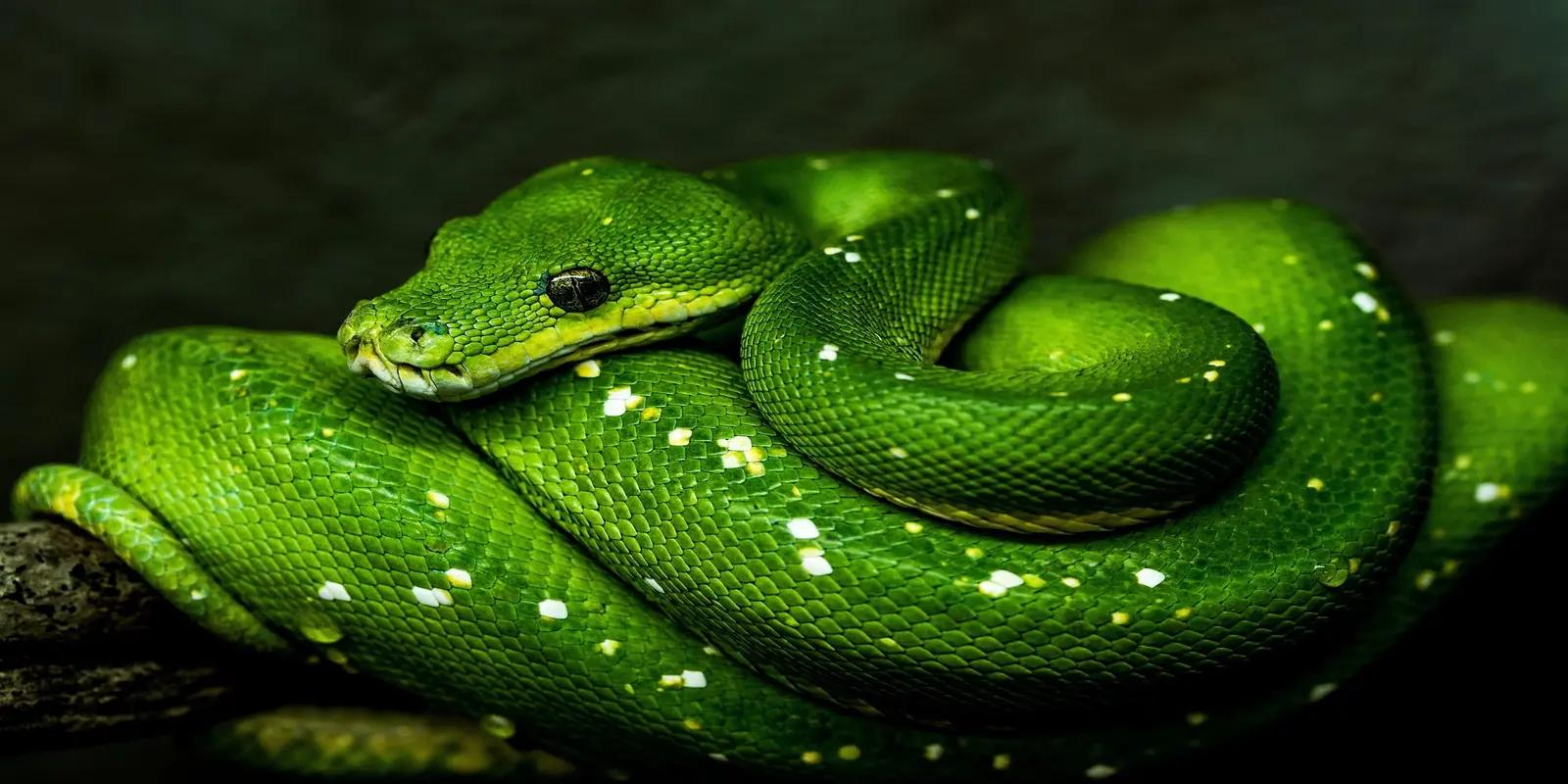
Green tree pythons are bright green because it helps them blend in perfectly with leaves in the rainforest.
Green tree pythons grip branches tightly with their strong bodies and tails, helping them stay secure in trees even when the wind blows in the rainforest!
Green tree pythons can go for weeks or even months without food when needed because their bodies store energy from big meals and use it slowly, helping them survive in the wild rainforest!
Green tree pythons can feel tiny vibrations through their belly scales when something moves nearby, helping them sense animals walking or climbing even before they see them!
When green tree pythons feel threatened, they can flatten and coil their bodies and raise their heads, making themselves look bigger and more alert to scare away danger!
Green tree pythons are great at hiding and can curl their flexible bodies tightly between branches and leaves, helping them stay safely hidden in the rainforest treetops!
When threatened, green tree pythons can make a hissing sound by pushing air out of their bodies, warning predators to stay away!
Conservation & Human Impact
Green tree pythons are protected by law in many countries, and international rules help control their trade to keep them safe in the wild rainforests!
Green tree pythons face challenges when rainforests are cut down, because they lose their homes, hiding places, and hunting areas in the trees they depend on!
Green tree pythons are important for controlling rodent populations in their habitat!