Basic Information
Easter Island, also called Rapa Nui, is a tiny island in the Pacific Ocean that belongs to Chile — it’s so remote that the nearest inhabited island is over 1,200 miles (1,931 km) away!

Did you know?
Search name of person, animal, place, thing, etc.
Share
Easter Island, also called Rapa Nui, is a tiny island in the Pacific Ocean that belongs to Chile — it’s so remote that the nearest inhabited island is over 1,200 miles (1,931 km) away!
The famous stone statues on Easter Island are called “moai,” and they were carved by the Rapa Nui people between 1250 and 1500 AD!
Easter Island became a UNESCO World Heritage Site in 1995, which means it’s protected as one of the world’s most important historical places!
Easter Island is shaped like a triangle and is about 15 miles long — but only about 7 miles wide at its widest point, which is like lining up around 250 football fields end to end!
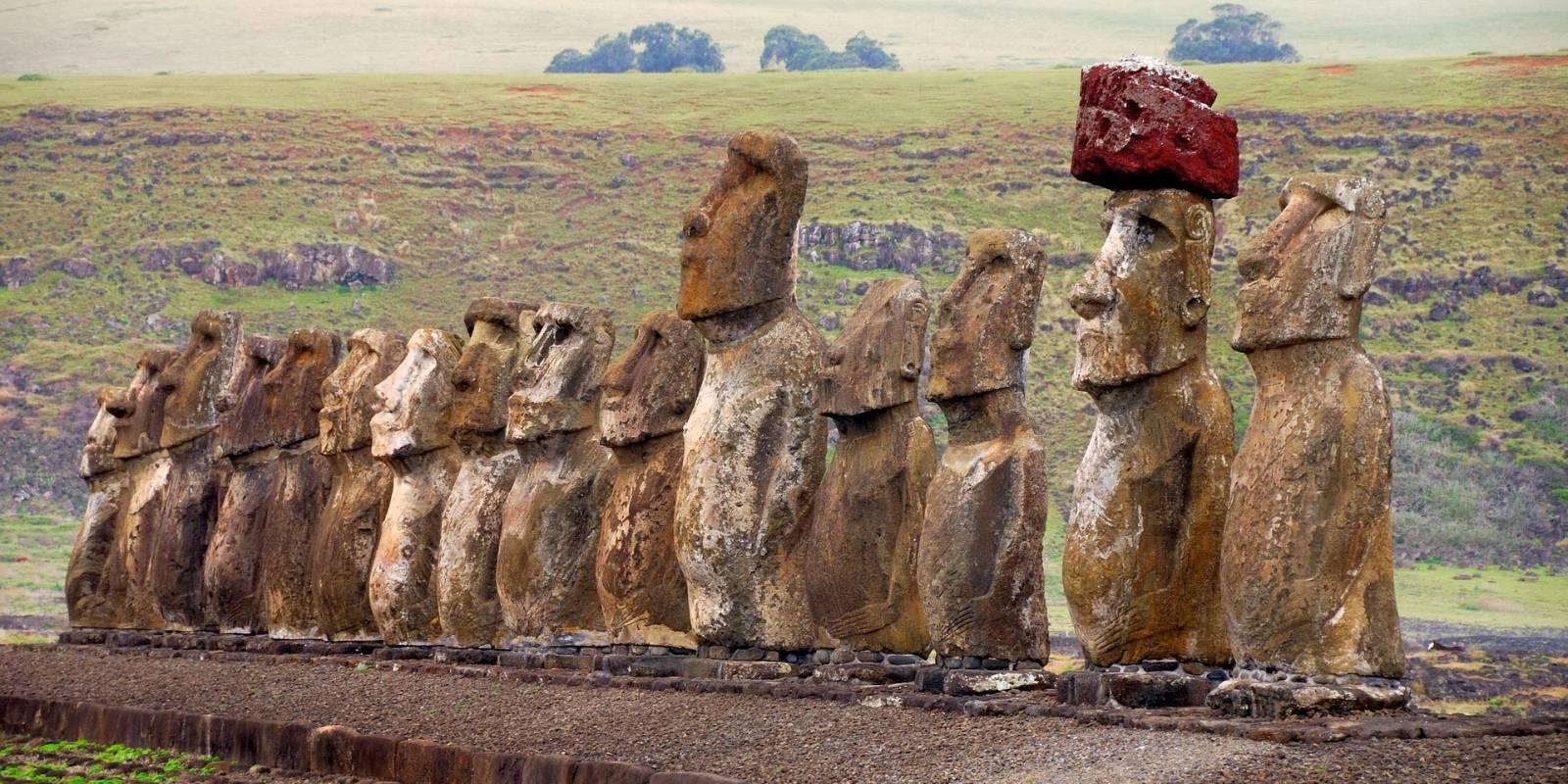
Nearly 1,000 moai statues can be found on Easter Island, and they're spread all around the island like giant stone guardians watching over the land!
Easter Island got its name when a Dutch explorer, Jacob Roggeveen, arrived there on Easter Sunday in 1722 — imagine finding a mysterious island full of giant statues on a holiday!
The moai statues stand on special stone platforms called “ahu,” which were like big ceremonial stages where people honored their important ancestors!
Easter Island was formed by three extinct volcanoes, and the soft volcanic rock there was perfect for carving the giant moai statues!
Easter Island is one of the most remote inhabited islands in the world – it's like being on a tiny dot in the middle of a giant blue ocean!
Easter Island has warm, mild weather all year round.
The Rapa Nui people carved the moai statues to honor important ancestors or leaders, and they believed the statues held spiritual power that helped watch over their villages and bring good fortune!
The oldest moai on Easter Island were carved more than 500 years ago — around the time when knights were still riding horses in medieval Europe!
Scientists believe it took a team of skilled carvers about one year to finish a single moai statue — imagine spending a whole year working on one giant stone sculpture!
The moai statues were mostly carved at a special quarry called Rano Raraku — like a giant stone statue workshop where hundreds of artists worked to create them!
On Easter Island, some moai were left unfinished in the Rano Raraku quarry, and those half‑made statues give archaeologists important clues about how the ancient island carvers made these massive stone figures!
Scientists believe the first Polynesian settlers reached Easter Island long ago — sometime between about 800 and 1200 AD!
On Easter Island, people carved the moai statues for hundreds of years — roughly from about 1250 to 1500 AD — which is still longer than the United States has been a country!
On Easter Island, moving each moai from the quarry to its final spot was hard work that might have taken days or even weeks — like carrying a huge, heavy puzzle across the whole island!
On Easter Island, the Rapa Nui people carved the moai using strong stone tools made mostly from basalt, and they also used volcanic glass called obsidian for other sharp tools.
By 1868 on Easter Island (Rapa Nui), all of the moai that had once stood upright on their stone platforms were toppled, but many have since been carefully restored and now stand tall again!
On Easter Island, the Rapa Nui people carved the giant moai out of volcanic tuff — a softer volcanic rock that was easier for them to shape into statues!
Each moai on Easter Island has its own serious‑looking face, and scientists think they were modeled after real ancestors or leaders from long ago!
On Easter Island, many moai wore giant red stone “hats” called pukao, and some of these powerful topknots could weigh as much as a small car — up to about 11–12 tons!
On Easter Island, the moai were carved lying down on their backs in the quarry. Archaeologists now think the Rapa Nui people moved them upright using ropes and a rocking “walking” motion — like giant statues taking tiny steps — instead of dragging them and lifting them up with wooden logs!
On Easter Island, some moai statues have detailed carvings on their backs showing ceremonial designs and symbols that look a bit like traditional Rapa Nui tattoo patterns!
On Easter Island, the moai statues were carved with long, straight noses as part of their distinctive style — a look that fits with the artistic traditions of the Rapa Nui people and reflects broader Polynesian sculptural influences!
On Easter Island, the stone platforms called ahu were built without any mortar — the Rapa Nui builders shaped and fitted the rocks so exactly that they stay in place on their own, a remarkable feat of stonework!
On Easter Island, some moai have carved designs on their backs and torsos that look similar to the island’s traditional tattoo patterns — and these markings give clues about Rapa Nui art and culture!
On Easter Island, the red pukao “hats” on some moai were made from a different type of volcanic rock called red scoria, which came from a special quarry called Puna Pau — separate from the quarry where the statues themselves were carved!
On Easter Island, the moai statues were carved with arms and hands resting against their bodies, and the long, slender fingers often reach down toward the lower belly where they meet near the loincloth (called the hami)!
On Easter Island, the tallest moai ever erected is called Paro, and it stands nearly 33 feet tall — as tall as a three‑story building!
On Easter Island, the heaviest moai that was actually erected on a stone platform weighs about 82 tons — that’s as heavy as roughly 12 full‑grown elephants! 🐘🐘🐘🐘🐘🐘🐘🐘🐘🐘🐘🐘
On Easter Island, the average moai statue is about 13 feet tall and weighs around 14 tons — that’s as tall as a small house and as heavy as about two big elephants! 🐘🐘
On Easter Island, the main quarry at Rano Raraku contains about 397 unfinished moai statues in various stages of carving — like a giant ancient art studio frozen in time!
On Easter Island, some moai statues were transported from the Rano Raraku quarry up to about 11 miles (around 18 km) to their final ceremonial sites — that’s like walking across about 220 football fields end to end!
On Easter Island, the largest moai ever carved — often called El Gigante or Te Tokanga — would have been about 71 feet (21.6 m) long if it had ever been finished and is longer than a school bus!
On Easter Island, the stone platforms called ahu that the moai stand on can be very long — the biggest ones reach about 500 feet (150 m) or more, which is roughly as long as one and a half football fields!
On Easter Island, some of the red pukao “hats” worn by moai weigh up to about 12 tons, which is as heavy as two large elephants! 🐘🐘
On Easter Island, the smallest complete moai that is still standing measures about 3.76 feet tall — not much taller than many kids!
On Easter Island, some of the big stones used to build the walls of ahu platforms weigh up to about 9–10 tons — heavier than a typical school bus!
On Easter Island, many moai once had eyes made of white coral with dark stone pupils (usually from obsidian or red scoria), which would have made the statues look more alive and watchful!
On Easter Island, some moai statues were painted with bright red and white colors, though most of the paint has worn away over hundreds of years!
On Easter Island, the moai statues are carved with elongated ears and carved earlobes that reflect the Rapa Nui tradition of stretching earlobes with ornaments, though the exact meaning isn’t 100% clear.
On Easter Island, some moai statues have petroglyphs (rock carvings) on their bodies or backs — and these designs show shapes like canoes and other symbols that give clues about ancient Rapa Nui life!
On Easter Island, archaeologists have found at least one moai in the Rano Raraku quarry with a carving of a ship on its chest — showing how important sea travel was to the Rapa Nui people and their memories of boats!
Some moai on Easter Island have special shaped tops where the red stone pukao “hats” were fitted so they could sit securely on the statue’s head — like a puzzle piece made of stone!
On Easter Island, some moai statues have special patterns and designs carved on their backs or lower bodies that may represent things like belts, tattoo motifs, or traditional Rapa Nui designs — like clues about ancient art and culture!
The Rapa Nui people believed that the moai statues on Easter Island held the spiritual power, or mana, of their ancestors — meaning the statues were seen as living links to the spirit and strength of those who came before!
On Easter Island, different families and clans had their own moai statues, and the Rapa Nui people believed these ancestors protected their villages and brought good luck and strength (mana) to their communities!
On Easter Island, almost all the moai statues face inland toward the villages — as if watching over and protecting the people — but there’s one special site called Ahu Akivi where seven moai look out toward the ocean instead!