Basic Information & Location
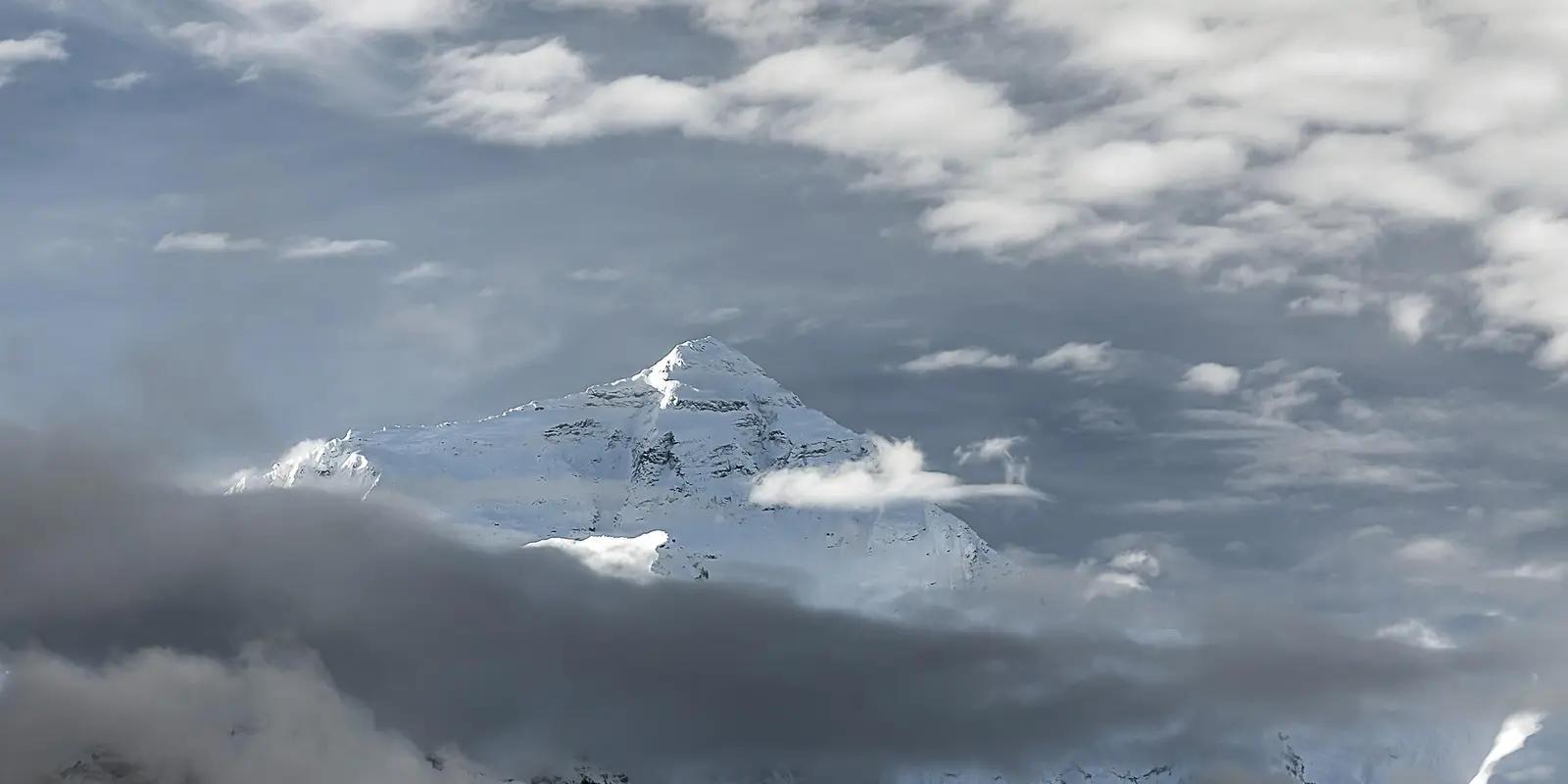
Mount Everest stands proudly between two countries — Nepal and Tibet (China), making it a mountain that brings different cultures together!


Did you know?
Search name of person, animal, place, thing, etc.
Share
Mount Everest stands proudly between two countries — Nepal and Tibet (China), making it a mountain that brings different cultures together!
Mount Everest got its English name in 1865 from Sir Andrew Waugh, who named it after Sir George Everest, but local people have their own special names for it — in Nepal, they call it “Sagarmatha,” which means “head in the sky” because the mountain’s peak reaches up into the sky!
Mount Everest is part of the famous Himalaya Mountains, which are like a giant wall of mountains stretching across Asia for 1,500 miles (2,414 km) — that’s as long as 26,400 football fields placed end to end!
he peak of Mount Everest is so high that it reaches about 29,032 feet (8,848.86 meters) above sea level — that’s like stacking about 250 school buses on top of each other up into the sky!
Mount Everest was officially recognized as a UNESCO World Heritage Site in 1979, making it a special place that the whole world agrees we need to protect!
Mount Everest keeps getting a tiny bit taller each year — about 2 millimeters (0.08 inches) — because the giant pieces of Earth’s crust beneath it are still pushing together and slowly lifting the mountain up!
The first time anyone reached the top of Mount Everest was on May 29, 1953, when Edmund Hillary and Tenzing Norgay made history by standing on the world's highest point!
The temperature at the top of Mount Everest never gets warmer than −2 °F (−19 °C) — that’s much colder than your freezer at home and stays below freezing all year long!
Mount Everest is so tall that even though big airplanes could fly higher than its peak, most commercial flights choose to go around the mountain instead of flying right over the very top, because the weather and safety rules make it smarter to stay a bit to the side!
The summit (top) of Mount Everest is covered in snow and ice all year round, even during the warmest summer days!
Scientists believe Mount Everest took over 60 million years to form – that's even longer than dinosaurs lived on Earth!
The first team to measure Mount Everest's height in 1856 used simple tools but got amazingly close to today's measurement – they were off by only 29 feet!
The mountain was formed when two giant pieces of Earth's crust crashed together like two slow-moving cars, pushing the rock upward over millions of years!
Before modern climbing equipment was invented, many people thought it would be impossible for humans to ever reach the top of Mount Everest!
The first helicopter landing on Everest's summit happened in 2005, but it only stayed for 3 minutes and 50 seconds because of the dangerous conditions!
The youngest person to climb Mount Everest was just 13 years old – Jordan Romero reached the summit in 2010!
The oldest person to reach the top of Mount Everest was Japanese climber Yuichiro Miura, who was 80 years old when he made it to the summit in 2013!
Before people knew how tall Mount Everest was, many thought Mount Kangchenjunga was the world's highest mountain!
The first woman to reach the top of Mount Everest was Japanese climber Junko Tabei, and she made it all the way to the summit in 1975, proving that mountain climbing isn’t just for boys.
In 2019, scientists installed a team of very high‑altitude weather stations on Mount Everest — including one almost at the "Balcony", just a little below the summit.
The rocks at the top of Mount Everest used to be at the bottom of an ocean millions of years ago – scientists found sea creature fossils there!
The summit of Mount Everest has about 66% less oxygen than at sea level, making it hard for climbers to breathe without special equipment!
There are two main routes to climb Mount Everest – the Southeast Ridge from Nepal and the North Ridge from Tibet!
The Khumbu Icefall near Everest’s base moves about 3–4 feet every day like a very slow frozen river!
The snow on Mount Everest can be many feet deep in some places — in the past, people measured spots with about 6 feet (around 2 meters) or more of snow.
Mount Everest has three sides (faces) – the Southwest Face, the East Face, and the Kangshung Face – each one looking different from the others!
There's a special cloud that sometimes forms over Mount Everest's peak that looks like a flag waving in the wind – climbers call it the "banner cloud"!
The wind at the top of Mount Everest can blow faster than 175 miles per hour in strong storms — that’s even stronger than a big hurricane!
Mount Everest’s peak is made of old sea limestone, and down below that are layers of metamorphic rocks like schist and gneiss that formed under intense pressure!
There are actually five major glaciers on Mount Everest – Kangshung, Rongbuk, East Rongbuk, West Rongbuk, and Khumbu!
Snow leopards live on the lower slopes of Mount Everest – they're like big cats that are perfectly adapted to the cold!
The Himalayan tahr, a type of wild goat that lives near Mount Everest, can climb steep mountain slopes up to around 16,000 feet high.
Tiny spiders called Himalayan jumping spiders live on Mount Everest at heights up to around 22,000 feet, making them some of the highest‑living land animals on Earth.
Special yellow-billed choughs, which are like smart black birds, live near Everest Base Camp and often visit climbers!
Musk deer, which are very shy animals smaller than regular deer, live in the forests around Mount Everest!
Special cushion plants, which grow as tiny, tightly packed green clumps, can live on Mount Everest’s high slopes up to around 20,000 feet.
Red pandas live in the forests at the base of Mount Everest – they're not related to giant pandas but are just as cute!
Himalayan black bears sometimes visit the lower regions of Mount Everest looking for food!
Each year, around 800 people try to climb Mount Everest during the main season, hoping to reach the top of the world!
The climbing season on Mount Everest is very short — most people try to climb it in April and May when the weather is least dangerous, with just a small window of good days to go for the top!
To climb Mount Everest, climbers must get a special permit from Nepal or China, and that permit can cost thousands of dollars — making it a big part of the adventure before the climb even begins!
There are now special doctors at Everest Base Camp who help climbers stay healthy during their journey!
Modern climbers use GPS devices to help them navigate on the mountain – very different from the first climbers who used maps and compasses!
The Sherpa people have lived in the Mount Everest region for hundreds of years and are famous for their mountain climbing skills!
Many Tibetan and Nepali people consider Mount Everest sacred and perform special ceremonies before climbing!
The Sherpa people call Mount Everest "Chomolungma," which means "Goddess Mother of the World"!
Geologists found that Mount Everest is still growing taller because India is still slowly pushing into Asia!
The fastest climb of Mount Everest took just 10 hours and 56 minutes by Lhakpa Gelu Sherpa — while most people take about two months to prepare and climb!
In 2024, Purnima Shrestha became the first person ever to climb Mount Everest three times in one climbing season!
The record for most climbs of Mount Everest is held by Kami Rita Sherpa — he’s reached the summit 31 times, more than anybody else in history!