Basic Information
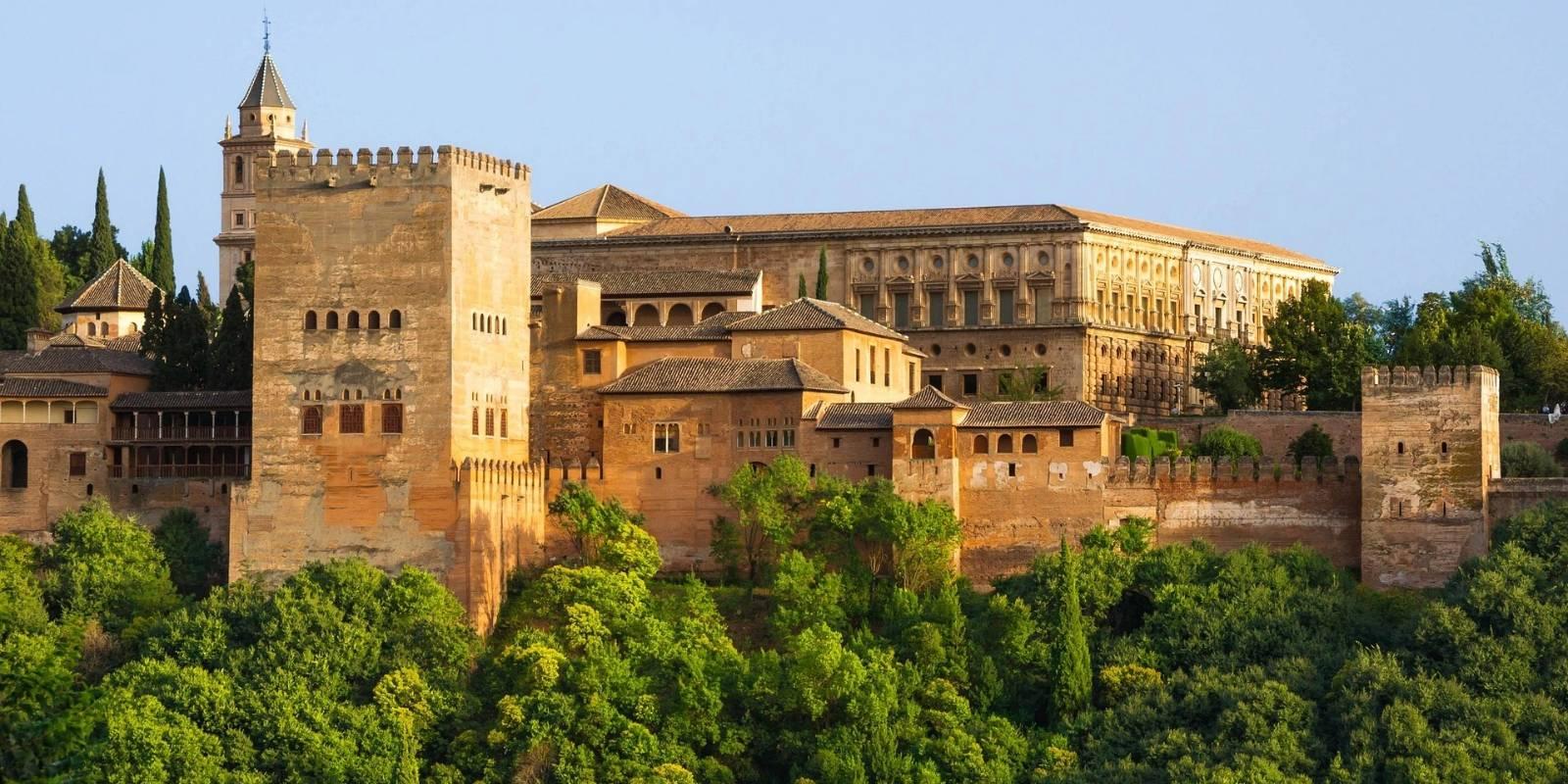
The Alhambra Palace sits like a giant crown on top of a hill in Granada, Spain, where it has watched over the city for more than 700 years!


Did you know?
Search name of person, animal, place, thing, etc.
Share
The Alhambra Palace sits like a giant crown on top of a hill in Granada, Spain, where it has watched over the city for more than 700 years!
In 1984, the Alhambra Palace became extra special when it was named a UNESCO World Heritage Site — that means people all over the world agree it’s super important and help care for it!
The Alhambra Palace is so big that it would take about 20 soccer fields to cover the same amount of space — it covers over 142,000 square meters!
The name “Alhambra” comes from Arabic al-Ḥamrāʼ, meaning “the red one” (often said as “the red fortress”) — it’s called that because its walls are reddish, made from clay and soil with iron in it, which gives them that red color.
More than 2.6 million people visit the Alhambra each year, and that’s more people than can fit inside the famous Rose Bowl football stadium in California!
The story of the Alhambra Palace began in 1238 when Muhammad I, the first Nasrid sultan, decided to turn a small fortress into a magnificent palace-city!
Building the Alhambra Palace was a long project that took more than 150 years, with different kings adding to the amazing palace-city over time! That is much longer than it takes to build a single modern skyscraper.
The Alhambra has a clever water system with fountains and pools, and many of them still flow today — more than 600 years after they were built!
In 1492, Christopher Columbus met with Queen Isabella and King Ferdinand to get their permission and money for his voyage to explore new lands. That important meeting happened in Santa Fe, a town near the Alhambra Palace.
The Alhambra had its own “mini-city” inside: people lived there, worked there, and it had shops, baths, a mosque, and homes.
The Alhambra has about 10,000 Arabic inscriptions all over — poems, prayers, and Qur’an verses are in there, but mostly messages like praises, blessings, or the motto “There is no victor but Allah”, which you’ll see hundreds of times!
The craftspeople who built the Alhambra Palace created special honeycomb-shaped decorations called muqarnas that make the ceilings look like they’re covered in sparkling stalactites!
The Alhambra Palace has a special room called the Hall of the Two Sisters, where the ceiling is made up of about 5,000 tiny pieces fitting together like a giant puzzle!
The walls of the Alhambra Palace were built using a special mixture of clay, lime, and pebbles called tabiya, which has helped them stay strong for centuries!
The Court of the Lions in the Alhambra Palace features 12 marble lion statues that once spouted water from their mouths like magical fountains!
The Alhambra has about 27 towers, and some were even used as little palaces! The biggest one, called the Watch Tower, is about 89 feet (27 meters) tall — that’s taller than a seven-story building!
The tallest tower at the Alhambra, called the Comares Tower, stands 45 meters high — that’s close to the height of a 12- to 15-story building, depending on the height of each story!
Some walls at the Alhambra are over 2 meters thick — that’s wider than many tall grown-ups can reach with arms wide open!
The Alhambra Palace has special windows called ajimeces that are divided into small sections, creating beautiful patterns with sunlight inside the rooms!
Inside the Alhambra Palace, there’s a room called the Hall of Ambassadors where the ceiling looks like a star-filled sky with around 8,000 pieces of wood fitted together!
The Court of the Myrtles in the Alhambra Palace has a huge reflecting pool that makes the building look twice as big when you see its reflection!
Deep in the Alhambra, people tell stories of a “whispering gallery” — a room where whispers might travel along curved walls or arches, so two people standing apart could hear each other secretly.
The Alhambra Palace has inspired countless stories and poems, including Washington Irving’s famous “Tales of the Alhambra” written in 1832 while he lived inside the palace for a few months!
People from all over the world study the beautiful Arabic calligraphy in the Alhambra Palace — some walls have poems written in such fancy letters that they look like lace!
The Alhambra used smart water tricks and its design (shaded gardens, pools, fountains) to keep things cooler before electricity existed.
The artists at the Alhambra used math to make patterns on the walls, floors, and ceilings that follow rules — shapes that repeat, mirror, spin, and slide.
Some of the cypress trees in the Alhambra Palace gardens are over 300 years old — they’re like living pieces of history!
The Fountain of the Lions in the Alhambra’s Court of the Lions operates using gravity and a clever hydraulic system, without any electricity.
The Hall of the Ambassadors (Salón de los Embajadores) in the Alhambra Palace was designed to make the sultan appear as though he were seated upon a throne floating in a sea of light.