Basic Information & Location
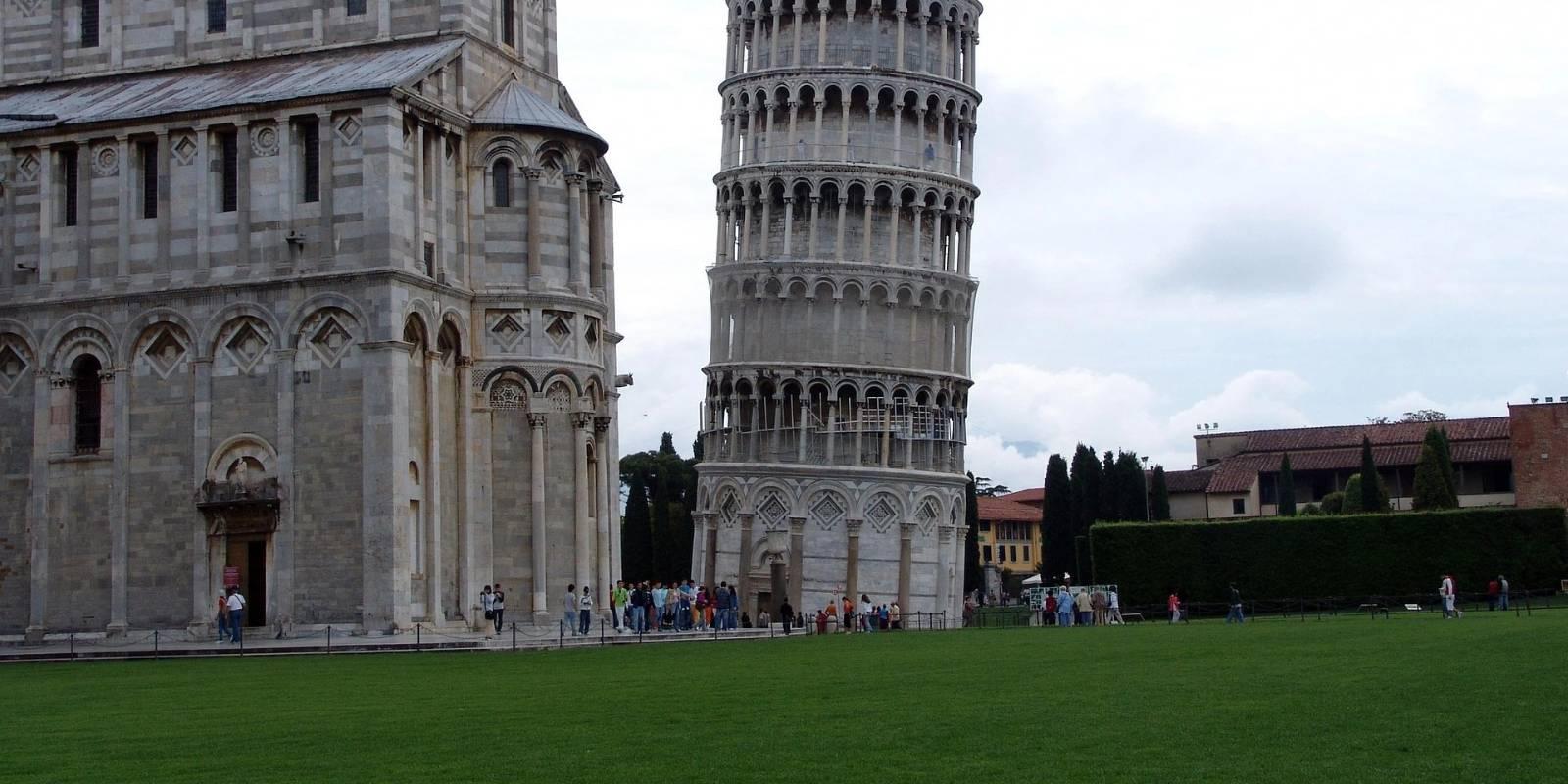
The Leaning Tower of Pisa stands in the city of Pisa, Italy — that’s right in the middle of Tuscany, a region famous for its beautiful countryside and delicious food!


Did you know?
Search name of person, animal, place, thing, etc.
Share
The Leaning Tower of Pisa stands in the city of Pisa, Italy — that’s right in the middle of Tuscany, a region famous for its beautiful countryside and delicious food!
The Leaning Tower of Pisa isn’t just a tower — it’s actually the bell tower (called a campanile) of the Pisa Cathedral, and it has seven giant bells at the top!
The Leaning Tower of Pisa became a UNESCO World Heritage Site in 1987, which means it’s so special that the whole world has promised to help protect it!
The base of the Leaning Tower of Pisa is just over 50 feet (about 15.5 meters) across, which is roughly as wide as a long school bus!
If you measured the Leaning Tower of Pisa from the ground to its tallest point, it would be about as tall as 18 kids standing on each other’s shoulders — about 186 feet (56.7 meters) tall!
Construction of the Leaning Tower of Pisa began way back in 1173 – that's about 850 years ago, when knights were still riding around on horses!
The Leaning Tower of Pisa took 199 years to complete – that's like waiting for your birthday to come around 199 times!
The Leaning Tower of Pisa started leaning during construction because it was built on soft soil made of clay, sand, and shells that couldn’t hold up the heavy stones evenly — kind of like building a tall tower on beach sand!
The Leaning Tower of Pisa was started by an architect named Bonanno Pisano, but he never saw the tower finished because building it took so long and he lived in the 1100s, long before it was completed in the 1300s!
During World War II, Allied soldiers almost blew up the Leaning Tower of Pisa because they thought German soldiers might be using it, but a U.S. Army sergeant decided not to call in the attack and the tower was left standing, in part because of its beauty and the uncertainty about whether anyone was inside.
The Leaning Tower of Pisa took so long to build partly because the city of Pisa was often fighting wars with other cities back then, and each time fighting happened, construction stopped for many years!
When workers continued building the Leaning Tower of Pisa in 1272, they made the next floors a little taller on one side to try to correct the lean, kind of like adjusting a crooked picture — but the tower still leaned and ended up with a slight curve!
Famous explorer Marco Polo was alive when the Leaning Tower of Pisa was being built, though we don't know if he ever visited it!
The Leaning Tower of Pisa has stood through at least four major earthquakes over the centuries — proving that its unusual tilt and strong building materials helped it stay standing even when the ground shook!
The Leaning Tower of Pisa is built from many thousands of stone blocks, including lots of white marble pieces — so many that if you tried to count them all, it would take a very long time!
The Leaning Tower of Pisa has about 296 steps leading up to the top, and those marble steps are a little worn down because so many people have climbed them over the centuries!
The Leaning Tower of Pisa has really thick walls at the base — about 8 feet (2.4 meters) thick — strong enough to help hold up the tall, leaning tower!
The Leaning Tower of Pisa has eight stories, and each of the upper ones is wrapped in pretty arches and columns that make it look like a tall, layered cake reaching for the sky!
The Leaning Tower of Pisa has 296 steps on one side and 294 on the other because the tilt changed how the stairs were made — kind of like climbing a staircase that leans with the tower!
The Leaning Tower of Pisa was built mostly from white marble taken from quarries near Pisa, along with other stones.
The Leaning Tower of Pisa leans at a funny angle all the way up, and because the builders made small changes as they continued to build, the tower has a slight curve — kind of like a banana shape — when you look at it from the side!
The Leaning Tower of Pisa sits on a foundation that’s only about 10 feet (3 meters) deep — about as deep as a tall adult is long — and because the ground was soft, that shallow foundation helped the tower begin to lean!
The Leaning Tower of Pisa was built from beautiful marble that was quarried from mountains close to Pisa and transported into the city using the kinds of tools and methods builders had in medieval times, such as boats on rivers and workers hauling heavy stones before cranes and machines existed!
The Leaning Tower of Pisa tilts at nearly 4 degrees, which is like building a tall stack of blocks that slants a little bit without falling over — pretty amazing for such an old and heavy stone tower!
Before engineers worked to stabilize the Leaning Tower of Pisa in the 1990s, it leaned at about 5.5 degrees — that’s about the same angle as when you’re climbing up a small hill without falling over!
The Leaning Tower of Pisa weighs about 14,500 tons — that’s as heavy as around 2,900 elephants standing on top of each other!
The Leaning Tower of Pisa leans so far that the top is about 12.5 feet (3.8 meters) off‑center from where it would be if it stood straight — imagine your chair tilting that far to one side!
Each year, more than 5 million people visit the Leaning Tower of Pisa — that’s like filling up many thousands of large elementary schools with excited visitors eager to see the famous leaning tower!
Before recent stabilizing work, the Leaning Tower of Pisa was tilting a tiny bit each year — about 1–2 millimetres, which is about as thick as a penny — even though the whole tower is huge and heavy!
The Leaning Tower of Pisa has about 294 steps inside its spiral staircase, and climbing them is a great little workout — it might burn about the same number of calories as eating one chocolate chip cookie, depending on your size and how fast you climb!
The Leaning Tower of Pisa has seven bells at the top, and their weights range widely — from about 300 pounds (around 300 kg / 661 lb) for the smallest bell up to about 3,620 kg (7,981 lb) for the largest one called L’Assunta. That means the heaviest bell weighs as much as a small car!
The Leaning Tower of Pisa has seven bells at the top, and each bell is tuned to a different musical note — so when they ring together, they can make a special melody of tones!
Inside the Leaning Tower of Pisa, there’s a spiral staircase that twists all the way to the top, and because the tower leans as you climb, it almost feels like walking up a giant curved slide inside a real medieval bell tower!
The Leaning Tower of Pisa stands in the city of Pisa, which is only about 10 km (6 miles) from the Mediterranean Sea, so on a very clear day you might spot the distant coast or sparkling water from the top!
The Leaning Tower of Pisa has 207 marble columns wrapped around its eight stories, and as the sun moves during the day, the columns cast cool shadows that dance all around the leaning tower!
The best time to take photos of the Leaning Tower of Pisa is early morning or late afternoon when the sun creates beautiful shadows!
Visitors who want to climb the Leaning Tower of Pisa must leave their bags in special lockers before going up because the stone steps and narrow staircase wouldn’t have room for big bags — and that helps everyone climb safely!
The Leaning Tower of Pisa’s tilt makes climbing its spiral stairs feel a little like walking on a leaning path or even a gently rocking boat, and some visitors notice a weird feeling or slight dizziness as they go up!
From the top of the Leaning Tower of Pisa, you can see all of Pisa’s other famous buildings — like the beautiful cathedral and baptistery — along with the red roofs of the city and the countryside in the distance!
The Leaning Tower of Pisa’s unique tilt makes it look slightly different from every angle, and playful optical tricks — like making it seem to lean more or appear straight in photos — are part of the fun of visiting!
Since the big engineering work around 2001, the Leaning Tower of Pisa has been straightening itself very slightly each year — just a tiny bit as the ground settles and the tower adjusts after the repair work (only a few centimetres over many years)!
Scientists discovered that the soft soil that made the Leaning Tower of Pisa lean also helped it survive earthquakes — the squashy ground softens the shaking so the huge tower doesn’t rock back and forth as much during quakes!