
Bush vipers adjust their hunting strategy based on prey size — quick strikes for small animals, longer holds for larger prey!
Bush Vipers - Facts for Kids
Did you know?
Search name of person, animal, place, thing, etc.
Share
Facts About Bush Vipers For Kids
Baby bush vipers are born ready to hunt! They come into the world with their own venom and hunting skills, just like their parents.
Bush vipers are like nighttime ninjas! They hunt when it’s a little dark, just before the sun comes up and just after it sets, because that’s when their favorite foods are out and about.
Life Cycle & Growth
Baby bush vipers are born already equipped with venom and can hunt independently from their first day of life!
Bush vipers usually give birth to 7–9 babies (sometimes 2–19), each about 6 inches (15 cm) long — roughly the length of a pencil.
Bush vipers shed their skin a few times a year, just like how we outgrow clothes. They do this to stay healthy and comfortable.
Bush vipers reach sexual (reproductive) maturity in about 2 years for males and 3½ years for females (for example, Atheris squamigera).
Bush vipers like Atheris squamigera usually reproduce once a year, especially during the wet season.
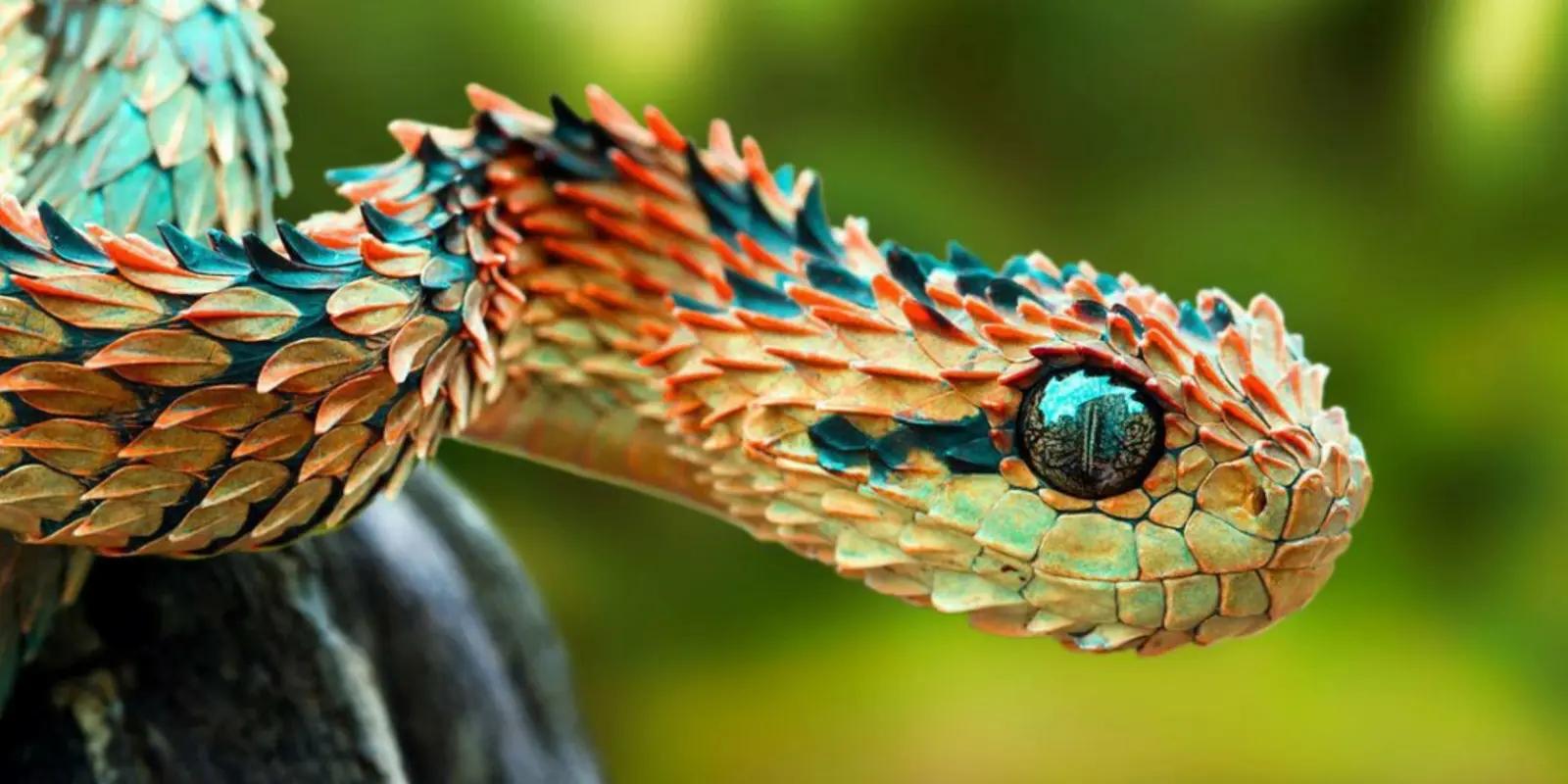
Baby bush vipers are born with different colors than adults, and their shades change as they grow, like watching crayons slowly turn into new colors!
Bush vipers often increase feeding just before and after mating, but many gravid females later reduce or stop eating during pregnancy.
Mother bush vipers provide no parental care after birth — babies are completely independent from day one!
Survival Skills
Bush vipers often stay perfectly still for long periods — lying motionless on branches or among foliage — so that their camouflage makes them nearly invisible to both prey and predators.
When threatened, bush vipers coil and raise their heads to look more dangerous, ready to strike if needed.
Bush vipers sometimes change from active to super still when they sense predators nearby, using their camouflage and freezing in place to avoid being seen.
Conservation & Human Impact
Bush vipers eat frogs, lizards, and small mammals and help keep prey populations in check, which supports balance in forest ecosystems.
Habitat destruction is the biggest threat to bush vipers, with deforestation reducing their living spaces each year!
Bush vipers rarely bite humans because they avoid conflict — most serious bites happen only when they are startled, stepped on, or cornered.