Basic Information
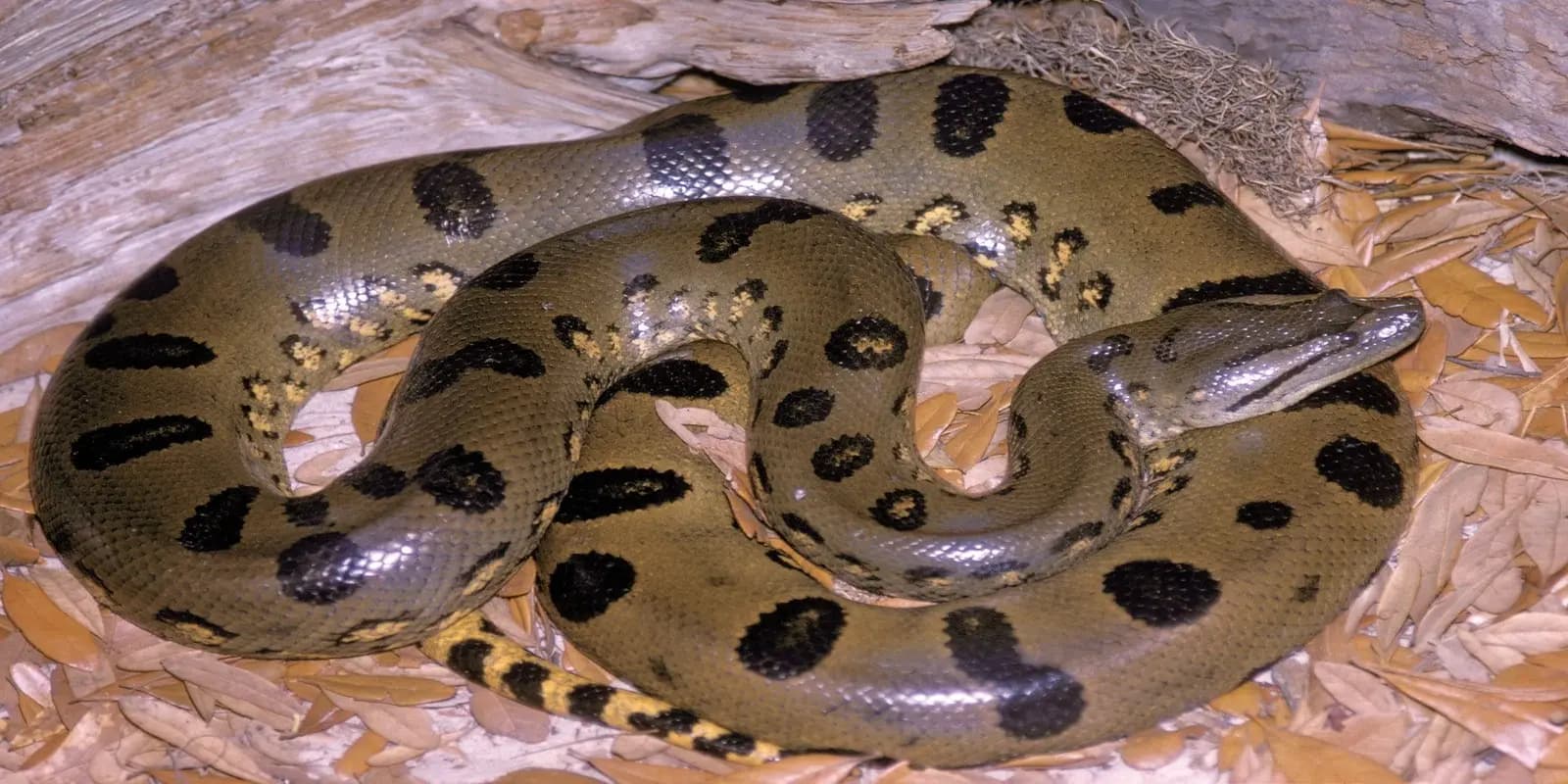
The green anaconda’s scientific name is Eunectes murinus, which means “good swimmer” in ancient Greek!


Did you know?
Search name of person, animal, place, thing, etc.
Share
The green anaconda’s scientific name is Eunectes murinus, which means “good swimmer” in ancient Greek!
Anacondas are part of the boa family (Boidae), making them cousins to other non-venomous snakes like the boa constrictor!
Unlike cobras and rattlesnakes, anacondas don't have any venom — they use their super-strong muscles to give big squeezes to their food instead!
Anacondas live in South America, especially in countries like Brazil, Venezuela, and Colombia, where they enjoy warm, wet places!
Anacondas don’t usually live in groups, but when snakes do gather, people may call it a “den,” “nest,” or “knot”.
In the wild, anacondas can live up to 10 years, but in zoos where they're well cared for, anacondas can live to be 30 years old!
The biggest reliably measured anacondas are about 20 to 23 feet long — that’s already as long as a small bus! Some reports say even bigger ones exist, but they haven’t been fully confirmed.
Scientists list anacondas as "Least Concern" for extinction, which means there are still plenty of these amazing snakes in the wild!
Female anacondas are much bigger than males — sometimes a female anaconda can be up to four times heavier than her mate!
There are four different species of anaconda: the green anaconda, yellow anaconda, dark-spotted anaconda, and Bolivian anaconda!
Anacondas have eyes on top of their heads, like little periscopes, so they can see above the water while swimming!
An anaconda's scales are like tiny suits of armor, protecting them as they move through rough vegetation!
Green anacondas have beautiful olive-green scales with black spots, helping the anaconda blend in with murky water and plants!
An adult female anaconda can sometimes weigh up to about 500–550 pounds — that’s about as heavy as a grand piano, but only the very biggest females reach that size!
Anacondas have special heat-sensing pits along their lips that help them find warm-blooded animals, even in the dark!
The pattern on each anaconda's scales is unique, like a fingerprint — no two anacondas look exactly alike!
Anacondas don’t unhinge their jaws — instead, their super-flexible jaws and stretchy ligaments let them “walk” their mouth over big prey, like slowly pulling a huge meal in step by step!
Baby anacondas are already about 2 feet long when they’re born — that’s taller than many toddlers and helps them survive right away in the wild!
Anacondas are excellent swimmers and can move faster in water than on land!
Anacondas are mostly active at night, making them nocturnal animals — the dark is when an anaconda really comes alive!
When an anaconda feels threatened, it releases a stinky smell that tells other animals to stay away — it's like the anaconda's own personal stink bomb!
After a big meal, an anaconda can go months without needing to eat again!
Young anacondas can climb trees, but adult anacondas are too heavy for that and prefer staying in the water!
Anacondas communicate with other snakes by releasing special chemical signals called pheromones!
When hunting, an anaconda can stay perfectly still for hours, waiting for the right moment to catch its prey!
Baby anacondas know how to swim as soon as they're born — no swimming lessons needed for a newborn anaconda!
Anacondas love spending time in swamps, marshes, and slow-moving streams!
Anacondas prefer warm water around 75–85°F — about as warm as a cozy bath — because it helps them swim, hunt, and stay comfortable in their tropical home!
During dry seasons, an anaconda can bury itself in mud to stay cool and moist!
Anacondas don't build nests — instead, an anaconda finds natural shelters like hollow logs or dense vegetation!
Anacondas are semi-aquatic snakes, meaning they spend a lot of time in water.
Anacondas help control the population of their prey animals, making them incredibly important for their ecosystem!
Anacondas prefer watery places with lots of plants growing around them because it helps them hide easily and sneak up on their prey!
During very hot days, anacondas spend lots of time in the water to stay cool and comfortable — sometimes most of the day — because water helps them avoid overheating in the hot sun!
Anacondas can eat animals as large as a capybara — the world's biggest rodent!
Anacondas use their tongue to “smell” by picking up scent chemicals from water or air and sending them to a special organ in their mouth that helps them find prey, even underwater!
After a really big meal, an anaconda might not need to eat again for several weeks or even months!
Anacondas don’t chew their food — they swallow it whole, then their strong stomach slowly digests it inside their body!
Baby anacondas are born fully independent, and they can hunt on their own immediately after birth.
Anacondas have strong stomach acid that helps them break down most parts of their prey — even bones — during digestion that can take many days or weeks!
Anacondas can feel tiny movements in the water from far away, helping them detect hidden animals even when they can’t see them!
Baby anacondas are born alive instead of hatching from eggs — the mother gives birth to fully formed baby snakes that can swim and hunt right away!
A mother anaconda can give birth to about 20 to 40 babies at once — and all the baby snakes are born ready to swim and survive on their own!
Female anacondas (and males as well) usually reach sexual maturity at about 3 to 4 years old.
An anaconda sheds its skin every few months as it grows — like swapping out an old outfit for a bigger one!
From the moment it's born, a baby anaconda is completely independent and ready to explore the world!
An anaconda's life cycle is closely tied to the rainy and dry seasons in its rainforest home!
Anacondas in zoos tend to live longer because they receive regular meals and veterinary care!
Anacondas can hold their breath underwater for about 10 minutes, letting them hide quietly while they wait for the perfect moment to hunt!
Anacondas can sense vibrations through the ground and water, helping them detect approaching animals before they're even seen!