
Wolverines need very large territories because their food sources are spread far apart!
Wolverines - Facts for Kids
Did you know?
Search name of person, animal, place, thing, etc.
Share
Facts About Wolverines For Kids
Wolverines sometimes eat berries when they’re ripe.
Wolverines can survive in temperatures as low as -40°F thanks to their special fur!
Wolverines sometimes shelter in caves, rock cracks, or other cozy hiding spots when weather gets rough or when they need a safe place to rest.
Wolverines create different types of dens for resting, storing food, and raising young!
Wolverines prefer areas with few human settlements and lots of wilderness!
Wolverines help maintain healthy ecosystems by controlling rodent populations!
Wolverines can survive in both forests and open tundra as long as it's cold enough!
Wolverines sometimes use abandoned beaver lodges or fox dens as temporary shelters!
Wolverines need connected habitat corridors to maintain healthy populations!
Life Cycle
Baby wolverines are born between February and April, usually when there's still snow on the ground!
Mother wolverines typically give birth to 2-3 kits at a time!
Baby wolverines are born blind and very tiny, weighing only about 3–5 ounces (about as light as a deck of cards) when they first enter the world. They also have white fur and closed eyes at birth.
Wolverine kits open their eyes when they're about 4 weeks old!
Young wolverines stay with their mother for up to 2 years before living on their own!
Female wolverines usually don’t have their first litter until they are about 3 years old.
Mother wolverines create special deep snow dens to protect their babies from predators and cold!
Wolverine kits start eating solid food when they're about 10 weeks old!
Young wolverines learn to hunt by practicing on small prey like mice and voles with help from their mom.
Wolverine kits start exploring outside their den at about 7–10 weeks old as they grow and get stronger.
Wolverine kits grow very quickly and are half their adult size by 7 months old!
Female wolverines usually have babies only about once every 2–3 years because it takes lots of energy to raise their kits.
Young wolverines grow fast and reach their adult size by about 7 months to a year old.
Mother wolverines sometimes move their kits to different dens while raising them to keep them safe and comfortable.
Young male wolverines usually travel farther than females when leaving their mother's territory!
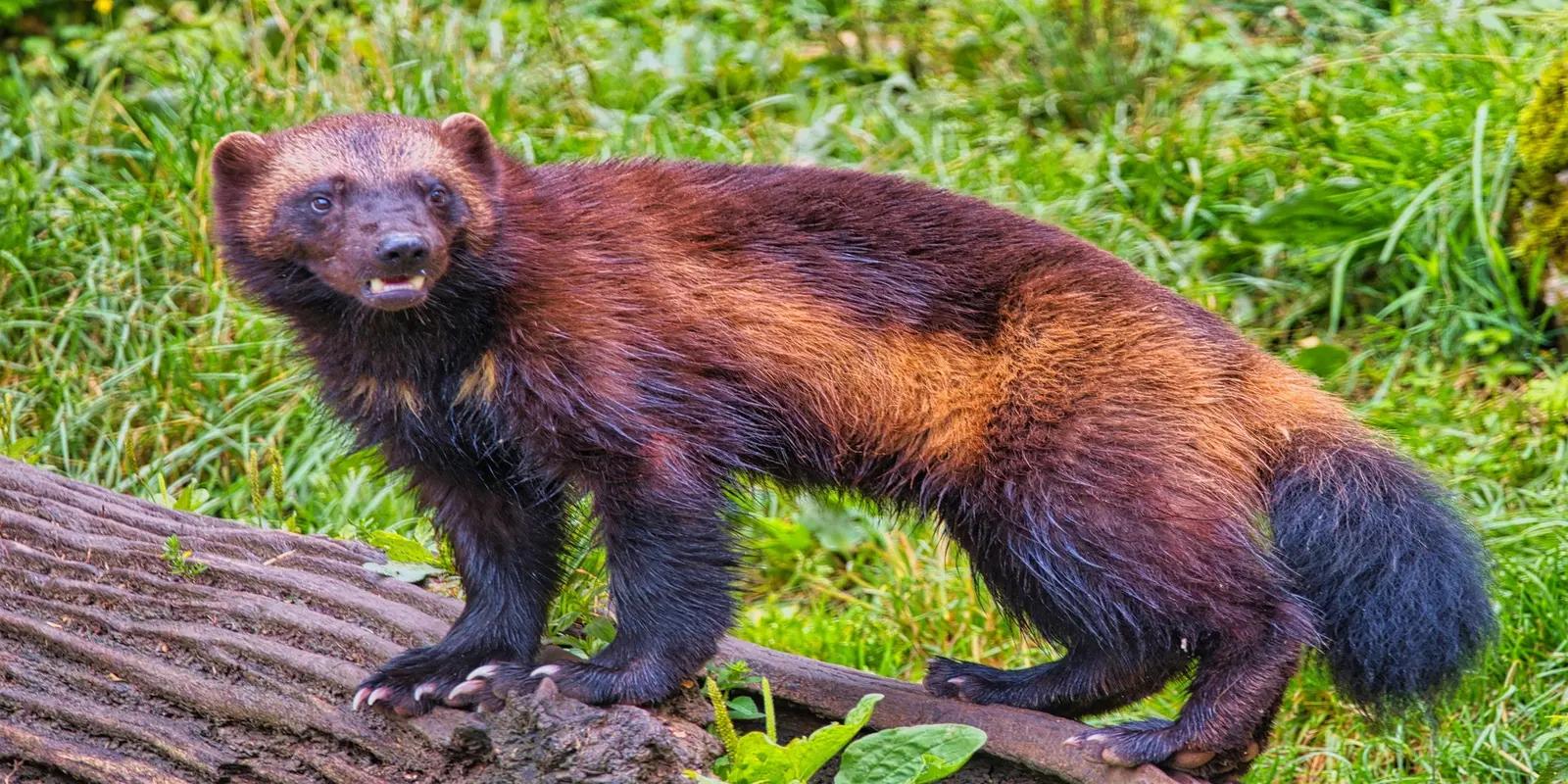
Wolverine kits are born with white fur that turns darker as they get older!
Mother wolverines are very protective and will defend their kits against much larger animals!
Diet & Feeding
Wolverines can eat big meals when food is found, chomping lots of meat and carrion at once because food can be scarce in the wild.
Wolverines are so strong and brave that they can kill big animals like adult caribou, especially when the caribou are tired, stuck in deep snow, or vulnerable — though they also scavenge a lot of food other animals leave behind.
Wolverines eat meat and can chew bones and fur to get extra nutrients when they feed on animal carcasses.
Wolverines hunt different prey in different seasons based on what's available!
Wolverines can eat frozen meat and get nutrients from it because their strong teeth and powerful stomach acids help them break it down.
Wolverines sometimes follow wolf packs to scavenge from their kills!
Wolverines store extra food by burying it in snow and cold places — the snow works like a natural freezer so the meat stays good for later!
Wolverines usually need to eat about 2–3 pounds of food each day to keep their energy up.
Wolverines sometimes eat berries and plant material when meat is scarce!
Wolverines can go several days without eating if they've had a large meal!
Wolverines often hunt where snow is deep because their wide feet let them move easily while big animals get stuck and slow down.
Wolverines sometimes raid human food caches and camping supplies if they find them!
Wolverines are super strong and can carry big pieces of meat — sometimes as heavy as their own body — on their way back to a hidden food stash!
Wolverines sometimes catch fish in shallow streams and rivers during the summer when fish are easy to find!
Conservation & Population
There are many wolverines in Canada and Alaska, but very few in the lower United States — they’re much rarer there.
Climate change is one of the biggest threats to wolverine survival because they need deep snow!
Wolverines are considered threatened or at risk in several areas — especially in the lower United States and parts of Canada — because their snowy homes are shrinking and there aren’t many of them there.