Basic Information
Hornets belong to the family Vespidae, making them close relatives to wasps and yellow jackets!


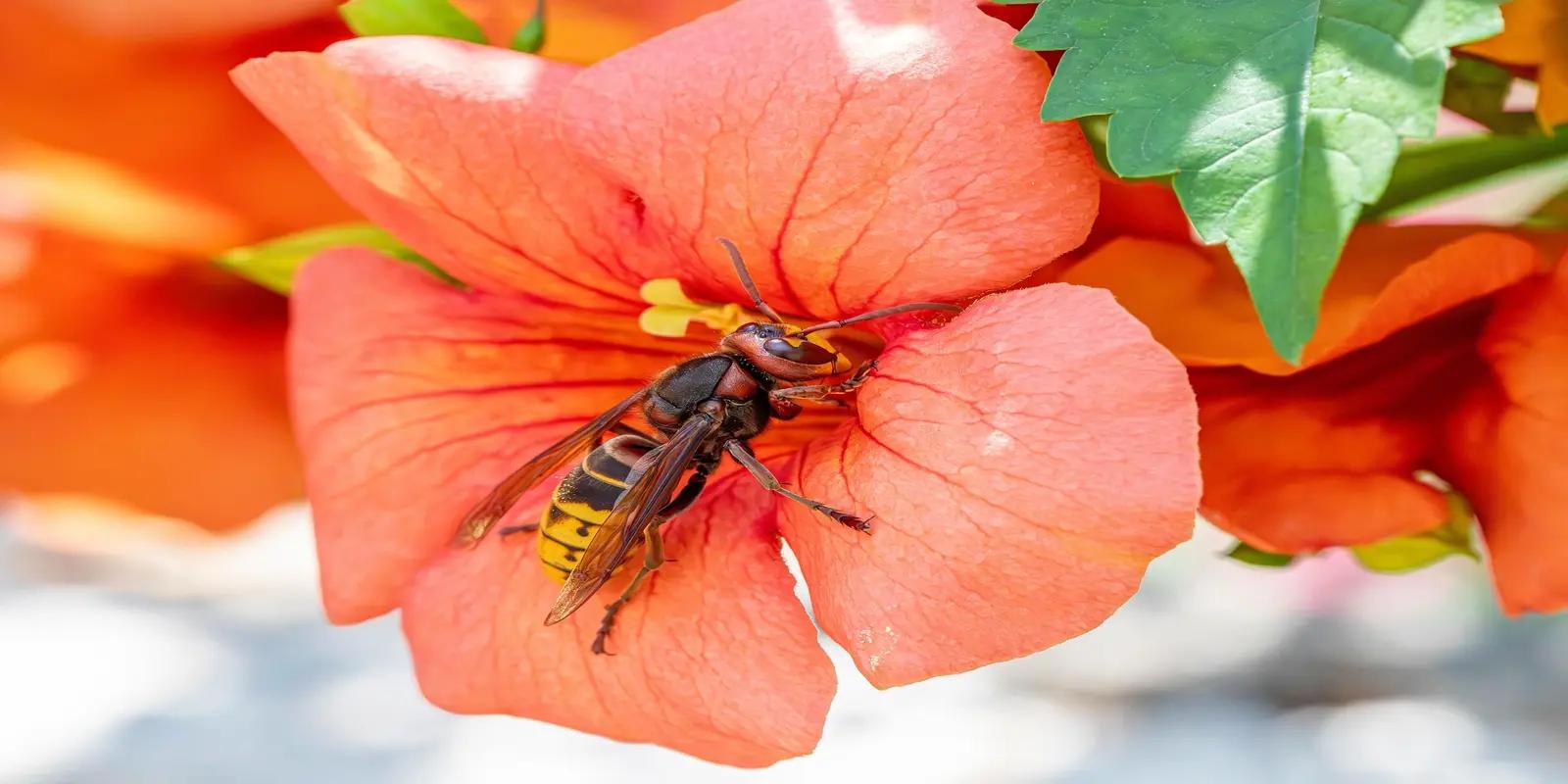
Did you know?
Search name of person, animal, place, thing, etc.
Share
Hornets belong to the family Vespidae, making them close relatives to wasps and yellow jackets!
The largest species of hornet is the Asian giant hornet (Vespa mandarinia), which can grow up to 2 inches (5 centimeters) long!
A group of hornets is called a "nest" or a "colony"!
Scientists have discovered about 22 different species of hornets around the world, all belonging to a special group called Vespa!
Hornets are social insects that live in colonies, and many colonies grow to several hundred members.
The European hornet (Vespa crabro) was one of the first hornet species scientists ever described, way back in 1758 by a scientist named Carl Linnaeus!
Hornets can sting multiple times because their stinger is smooth and doesn’t get stuck, unlike a honey bee’s barbed stinger.
Hornets are actually beneficial insects that help control pest populations in gardens and farms!
Worker hornets live for just a few weeks—usually around a month—while the queen hornet can live up to a whole year and start a new colony!
Worker hornets live for just a few weeks—usually around a month—while the queen hornet can live up to a whole year and start a new colony!
Hornets have two pairs of wings, with the front pair being larger than the back pair!
A hornet's body is divided into three main parts: the head, thorax, and abdomen!
Hornets have five eyes – two large compound eyes and three small simple eyes called ocelli!
Hornets are very light insects—most weigh less than a gram, and some are about as light as a small paper clip or even lighter!
Hornets are usually black and yellow (or sometimes black and white), and these bold colors act like a warning sign that tells animals, “Don’t mess with me—I can sting!”
A hornet's antennae are packed with thousands of tiny sensors that can detect smells and movements!
he queen hornet is usually much bigger than the workers in her colony—often about one-third to half larger, so she stands out as the biggest hornet in the nest!
Hornets have strong jaws called mandibles that they use to gather wood fibers for nest building!
A hornet's stinger is actually a modified egg-laying organ, which is why only female hornets can sting!
Hornets flap their wings extremely fast—about 100 to 150 times every second, which helps them hover, chase insects, and fly quickly through the air!
Hornets are most active during the day but can also fly at night if their nest is disturbed!
Hornets communicate with each other using chemical signals called pheromones!
Worker hornets do different jobs based on their age – younger workers care for larvae while older ones forage for food!
Hornets build nest cells that look like neat hexagons, but they don’t use measuring tools.
Hornets can help regulate their nest temperature, and they do this partly by wing fanning, which moves air around and helps cool the nest.
Guard hornets at the nest entrance check the identity of returning hornets by detecting their unique colony scent!
Worker hornets work together like a construction team when building a nest.
Hornets clean themselves often by using their legs and mouthparts to brush their bodies. This helps them stay healthy, keep their senses sharp, and remove dirt and germs from their bodies!
Hornets live on many continents around the world—including Asia, Europe, Africa, and North America—but you won’t find them in Antarctica because it’s too cold and doesn’t have the right conditions for them to survive!
Most hornet species prefer to build their nests in hollow trees or under building eaves!
Hornet nests start out small in spring, but as the colony grows and more hornets join in building, the nest can become as big as a basketball by late summer!
Hornets leave behind special chemical smells around their nest as they come and go. These scents act like a “home signal,” helping other hornets find their way back and recognize their colony!
During winter, the hornet colony dies except for young queen hornets. These queens hibernate in safe hiding places like tree bark, soil, logs, or wall cracks, waiting for spring to start new nests!
Hornets are fast flyers and can reach speeds of about 25 miles per hour (40 km/h), which helps them chase prey and defend their nest quickly through the air!
Some hornets build their nests underground in abandoned rodent burrows!
Hornets are great at finding their way home! They remember landmarks like trees and buildings and use them like a map to guide themselves back to their nest after searching for food.
Hornets are more active in warm weather and become sluggish when temperatures drop below 50°F (10°C)!
A new hornet colony starts each spring when a queen emerges from hibernation!
Hornet eggs hatch into larvae after about 5-8 days!
It takes about 4 to 6 weeks for a hornet to grow from an egg into an adult. They go through several stages—egg, larva, and pupa—before becoming a fully grown hornet ready to join the colony!
A queen hornet can lay hundreds of eggs in a single day during the busy summer season, helping the colony grow quickly.
Young hornet larvae are fed chewed-up insects by adult worker hornets, which helps them grow quickly inside the nest.
Male hornets, called drones, develop from unfertilized eggs laid by the queen hornet, while fertilized eggs become females like workers and future queens.
New queen hornets grow bigger because they are given extra-rich food as larvae by worker hornets, which helps them develop into strong, fertile queens that can start new colonies.
Worker hornets never reproduce – only the queen lays eggs!
Adult hornets eat mostly sugary foods like tree sap and fruit juices!
Hornet larvae are carnivorous and eat insects that workers bring back to the nest!
Hornets use their powerful jaws to catch and kill prey like flies, bees, and caterpillars!
Worker hornets are strong for their size and can carry prey that is very heavy—sometimes almost as heavy as their own body weight—back to the nest to feed the larvae.
Hornets help farmers by eating crop-destroying insects like caterpillars and flies!