Basic Information
Your eardrum’s scientific name is “tympanic membrane,” which comes from the Latin word “tympanum” meaning drum!


Did you know?
Search name of person, animal, place, thing, etc.
Share
Your eardrum’s scientific name is “tympanic membrane,” which comes from the Latin word “tympanum” meaning drum!
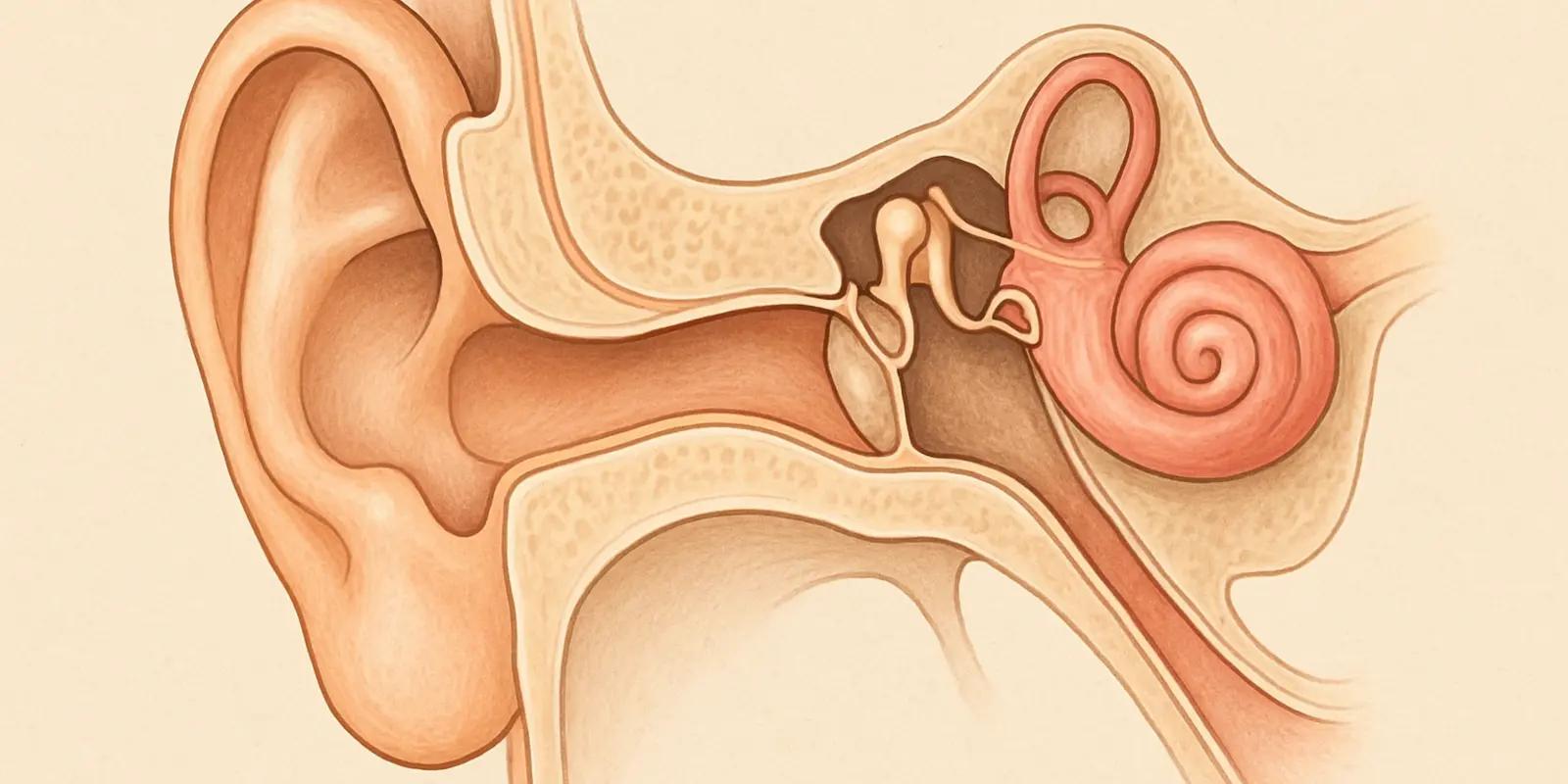
Your eardrum sits at the end of a tube inside your ear called the ear canal — about one inch (around 2.5 cm) from the outside. That’s a lot deeper than a pinky fingernail!
Your eardrum is like a tiny trampoline — when sound waves hit it, it bounces (vibrates), and those vibrations travel inside your ear and get turned into sounds by your brain!
Your eardrum is tiny — about 8 to 10 mm wide — roughly the size of a little blueberry!
Your eardrum is made of three special layers of tissue, just like a super-thin sandwich!
Your eardrum really is super thin — about as thin as tissue paper! And although it’s tiny and delicate, it’s also surprisingly tough for its size: it's built from strong, fibrous tissue that lets it vibrate freely and survive everyday wear.
Your eardrum begins forming when you’re a tiny embryo, mostly between weeks 6 and 9 of pregnancy!
Your eardrum is connected to three tiny bones called ossicles, which are the smallest bones in your entire body!
Your eardrum vibrates when sound waves hit it — and for the highest-pitch sounds people can hear, it could vibrate up to 20,000 times a second!
Your eardrum is shaped like a shallow cone, similar to a tiny satellite dish!
The outer layer of your eardrum is made of the same type of skin that covers the rest of your body!
Your eardrum is slightly see-through, letting doctors check its health with special lights!
The middle layer of your eardrum contains special fibers that make it both stretchy and strong!
Your eardrum has a special handle-like attachment called the malleus, which helps it move properly!
Your eardrum is actually tilted at about 55-degree angle in your ear canal!
The inner layer of your eardrum is covered in tiny cells that help keep it healthy!
The center of your eardrum is called the umbo, which means "shield boss" in Latin!
Your ear is amazingly sensitive — it can hear whisper‑quiet sounds that are billions of times softer than noises loud enough to hurt it!
Your eardrum helps protect your middle ear by acting like a security guard against germs!
When you yawn or swallow, your eardrum moves to help balance the air pressure in your ears!
Sometimes your eardrum can “fix itself” if it gets a tiny hole — like medicine-free healing if the ear stays clean and dry.
Your eardrum helps you hear, and your brain helps you ignore what you don’t need to hear.
Tiny muscles in your ear can tighten or loosen your eardrum — like turning up or down the springs — so it can handle soft whispers or loud noises without getting hurt.
Keeping cotton swabs away from your ears helps protect your delicate eardrum!
Your doctor can check your eardrum's health with a special tool called an otoscope!
Swimming with special earplugs helps protect your eardrum from water damage!
If your ear feels sore or you get a sharp ache — your eardrum might be telling you something’s wrong, like too much pressure, water, or germs sneaking in.
Your eardrum is already almost adult‑sized before you’re a year old — but your ear keeps growing and changing for years after, like a house that gets small tweaks as it settles.
Your eardrum still works while you sleep, catching sounds even if your brain ignores most background noise.