Basic Information and Location
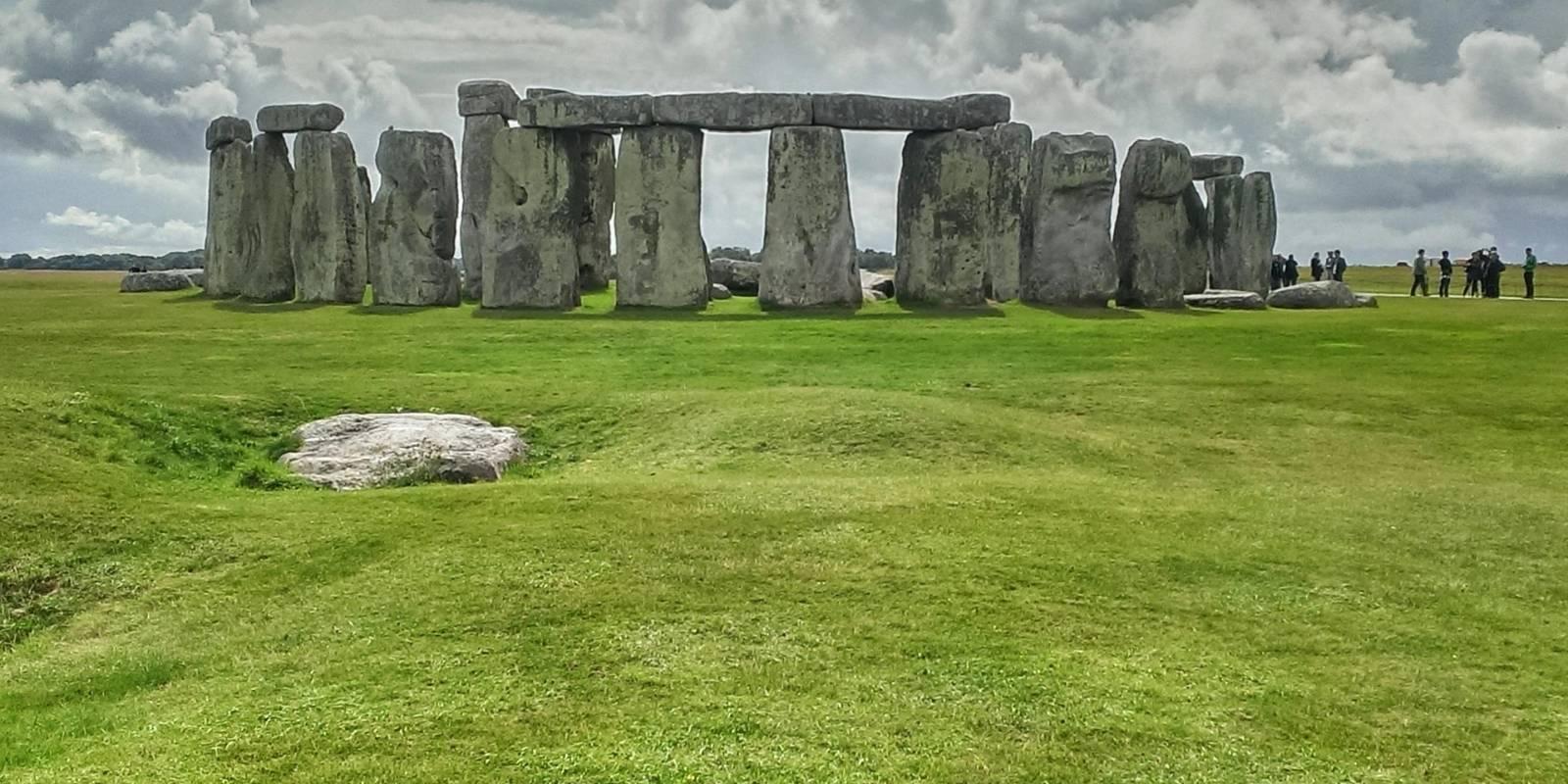
Stonehenge stands proudly in Salisbury Plain, Wiltshire, England, about 88 miles (142 km) southwest of London — that’s about as far as 1,550 football fields lined up end to end!


Did you know?
Search name of person, animal, place, thing, etc.
Share
Stonehenge stands proudly in Salisbury Plain, Wiltshire, England, about 88 miles (142 km) southwest of London — that’s about as far as 1,550 football fields lined up end to end!
Stonehenge became an official UNESCO World Heritage Site in 1986, which means it’s so special that the whole world works together to protect it!
The main circle of big standing stones at Stonehenge is about 108 feet (33 meters) across from one side to the other — that’s roughly the length of three school buses parked nose-to-tail.
Each of the giant stones at Stonehenge weighs about as much as four grown elephants or more, with the biggest stones weighing closer to 30 tons!
The biggest stones at Stonehenge stand about as tall as a two‑story room (about 22–23 feet) — that’s like stacking three or four tall adults on top of each other!
Stonehenge wasn’t built as a perfect circle that magically hits the sunrise every year, but the ancient builders set the stones so the sun rises in just the right spot on the longest day of the year — a smart way to track the seasons!
More than a million people visit Stonehenge each year, coming from all around the world to see its giant stones!
Scientists discovered that Stonehenge wasn’t built all at once — ancient builders worked on it in several phases over many hundreds of years, starting around 3000 BCE and continuing for a long time!
The whole ancient landscape around Stonehenge is huge — about 6,500 acres, which is much bigger than 4,900 football fields!
Stonehenge is looked after by English Heritage, a group that also protects more than 400 other amazing old places in England so people today and in the future can learn about history!
The very first part of Stonehenge was built about 5,000 years ago when people in Britain were still in the Stone Age and making stone tools, and a few centuries later bronze tools were first used in the area!
The first builders of Stonehenge dug the big round ditch by hand using tools made from deer antlers and animal bones instead of metal shovels.
Some of Stonehenge's stones came from Wales, nearly 200 miles away!
The people who built Stonehenge didn't have wheels or metal tools yet, but they still managed to move and lift massive stones!
Archaeological evidence shows that thousands of people gathered at Stonehenge for midwinter feasts, bringing animals from as far as Scotland!
The builders of Stonehenge were the same people who built the first farms in Britain and kept cattle, sheep, and pigs!
The people who built Stonehenge didn’t live in stone castles — they lived in little villages of wooden homes with walls woven from sticks and straw roofs, just like cozy prehistoric cottages!
Stonehenge was built in several stages over hundreds of years, with each generation of builders adding or moving stones and new features to the monument instead of building it all at once!
Scientists found piles of ancient animal bones near Stonehenge, with lots of pig bones from thousands of prehistoric pigs, showing that big feasts with many people and animals happened there long ago!
There are two types of stones at Stonehenge: the bigger sarsen stones and the smaller bluestones!
The giant sarsen stones at Stonehenge were moved from the Marlborough Downs region, about 15 miles away.
Many of the smaller stones at Stonehenge were brought from the Preseli Hills in Wales, more than 140 miles away — an amazing long journey for people without wheels!
The stones at Stonehenge are fitted together using joints like giant puzzle pieces, similar to how we build with LEGO bricks today!
At Stonehenge, the builders carved special shapes called “tongue and groove” joints into the stones so they fit snugly together — a bit like putting together a wooden toy or a puzzle!
Some of the stones at Stonehenge have ancient carvings of Bronze Age axes and daggers on them, etched by people long after the stones were first set up.
Originally, Stonehenge had 30 huge sarsen stones in its outer circle – that's enough to make a really big game of ring-around-the-rosy!
Each of the big sarsen stones at Stonehenge is about 13 feet high — taller than a giraffe’s head! And some of the biggest uprights in the middle are even taller!
Even the smallest bluestones at Stonehenge are huge and heavy — about as heavy as two cars stacked together!
The earthwork around Stonehenge was about 360 feet across — big enough that if 120 kids held hands in a ring, they could almost make a circle that size!
The heel stone at Stonehenge weighs about 35 tons – as heavy as 7 full-grown elephants!
There are about 83 stones you can still see at Stonehenge today — some standing tall, some fallen, and some broken — try counting the sarsens, bluestones, and stumps when you visit!
There are ancient burial mounds all around Stonehenge that look like small hills in the landscape!
Scientists have found evidence of huge feasts at Stonehenge, with leftovers from barbecues that happened 4,500 years ago!
There is a circle of 56 chalk holes at Stonehenge called the Aubrey Holes, and they’re named after the 17th‑century antiquarian John Aubrey, who first noticed depressions in the ground there!
Archaeologists have found thousands of ancient tools near Stonehenge, including axes made of flint!
The ground around Stonehenge is full of buried treasures, including ancient pottery and tools!
Scientists think Stonehenge was once closer to a complete circle than what we see today.