Basic Information & Location
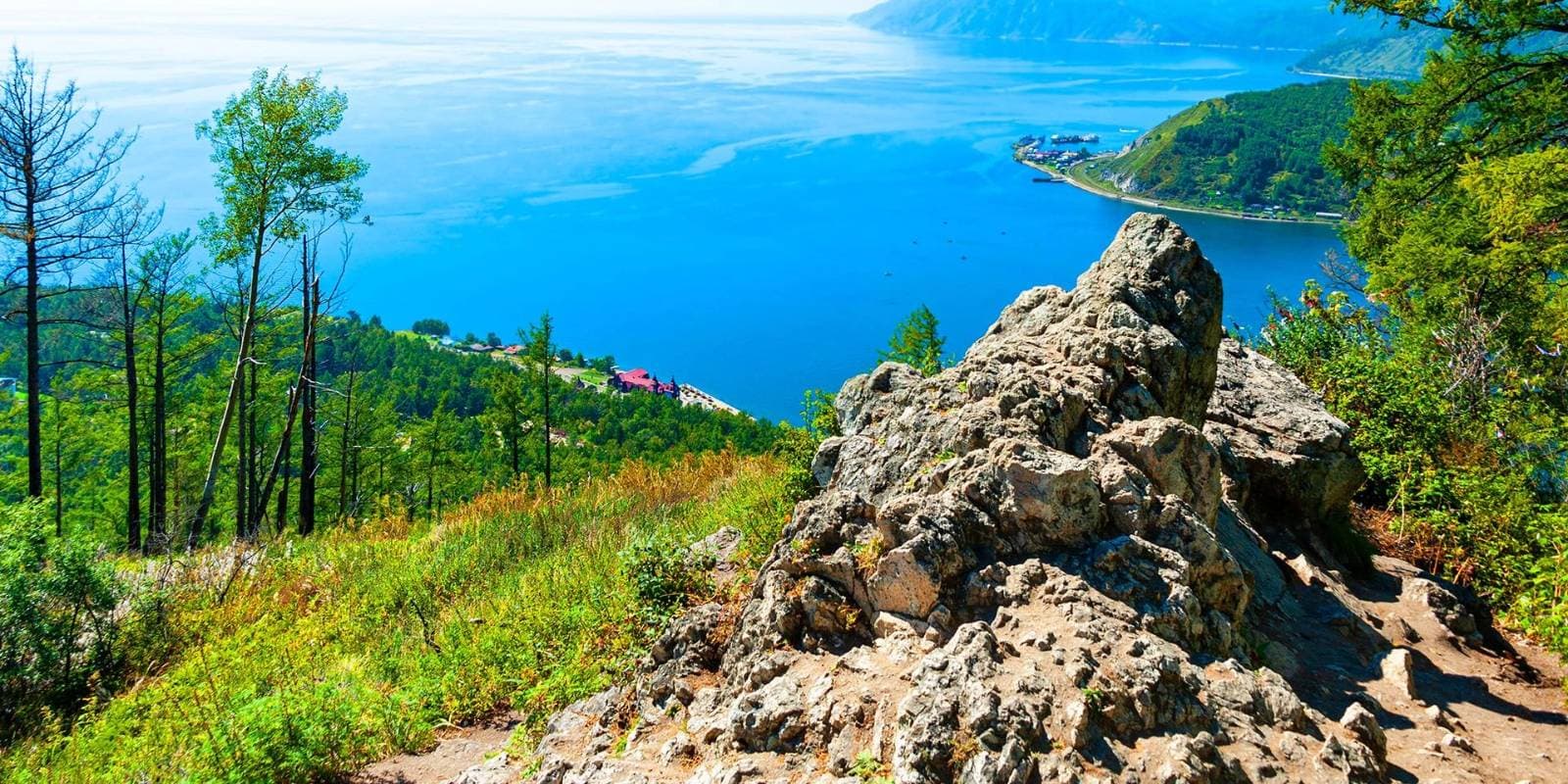
Lake Baikal is located in beautiful Siberia, Russia, and it’s so big you can see it from space — it looks like a giant blue crescent moon on Earth!


Did you know?
Search name of person, animal, place, thing, etc.
Share
Lake Baikal is located in beautiful Siberia, Russia, and it’s so big you can see it from space — it looks like a giant blue crescent moon on Earth!
Lake Baikal was formed about 25-30 million years ago, making it not just the deepest lake, but also the oldest lake in the whole world!
Lake Baikal became a UNESCO World Heritage Site in 1996 because it’s so special — it contains about 20% of all the unfrozen fresh water on Earth!
Lake Baikal holds so much water that it contains about one-fifth of all the fresh surface water on Earth — more than all the Great Lakes in North America combined!
Lake Baikal is shaped like a crescent moon and stretches about 395 miles (636 km) — that’s roughly as long as driving across an entire U.S. state like California!
Lake Baikal is surrounded by beautiful mountains that rise more than 6,600 feet (2,000 meters) high — that’s about as tall as stacking over 1,400 giraffes on top of each other!
The water in Lake Baikal is so clear that on a calm day, you can see up to 130 feet (40 meters) deep – that's as deep as a 12-story building is tall!
Lake Baikal holds more water than all five of North America’s Great Lakes combined — it contains about one-fifth of the world’s unfrozen freshwater!
The name “Baikal” comes from the Turkic words “Bai-Kul,” which mean “rich lake” — a perfect name because the lake is full of amazing plants, animals, and fresh water!
The first written record of Lake Baikal was made in 1643 by a Russian explorer named Kurbat Ivanov, who drew the first map of the lake!
Native Buryat people have lived around Lake Baikal for thousands of years and see it as a sacred place — they lovingly call it the “Sacred Sea”!
In the early 1900s, workers built a railway along part of Lake Baikal’s shore. They dug about 40 tunnels and built hundreds of bridges to complete the amazing route!
In the early 1900s, workers laid train tracks right on Lake Baikal’s frozen ice in winter, and horses pulled rail cars across until the railway around the lake was finished!
Lake Baikal is home to more than 2,500 animal species — and most of them can’t be found anywhere else on Earth!
The Baikal seal, also called the nerpa, lives only in Lake Baikal. It’s the only seal species in the world that lives only in freshwater.
Lake Baikal has a special fish called the golomyanka (or Baikal oilfish) that has a nearly transparent body — you can see right through it like a glass marble!
In winter, Lake Baikal’s surface freezes all the way across, and the ice can get so thick (about 3–6 feet/1–2 meters) that special ice roads are made — and cars and trucks can safely drive over it!
Lake Baikal is so deep that its deepest point (about 5,387 feet/1,642 meters) is like stacking about 4.5 Empire State Buildings on top of each other!
Lake Baikal holds about 5,670 cubic miles (≈23,000 km³) of fresh water — more than any other lake on Earth and about one‑fifth of the world’s fresh surface water!
Lake Baikal’s shoreline stretches about 1,300 miles (2,100 km) — that’s a bit like driving from Los Angeles all the way to Dallas and beyond!
Lake Baikal’s surface covers about 12,248 square miles (31,722 km²) — that’s even bigger than the whole country of Belgium!
Lake Baikal has about 27 islands, and the biggest one — Olkhon — is huge! It’s around 730 km², making it bigger than the main island of the Mediterranean island of Malta!
Around Lake Baikal there are real hot springs where warm water bubbles up and stays unfrozen in winter.
Lake Baikal has its own version of the Loch Ness Monster! Locals tell stories about a mysterious water creature called “Lusud‑Khan,” which means “Water Dragon Master.” Some old petroglyphs and legends describe it as a giant, sturgeon‑like beast that lives deep in the lake!
Lake Baikal is sometimes called the “Galapagos of Russia” because it has so many strange and unique plants and animals found nowhere else on the planet!
Lake Baikal is often called the “Pearl of Siberia” because Russians treasure its beauty and importance, and it shows up in many famous Russian songs and poems about nature and life!
Lake Baikal is home to a tiny shrimp-like creature called an epischura that helps keep the lake's water crystal clear by filtering out tiny particles!
The omul fish that lives only in Lake Baikal is super special — it’s one of the most famous parts of the lake, loved by people in Siberia and Russia for its tasty meat and long history there!
More than 300 rivers and streams flow into Lake Baikal from the mountains and forests around it, but only one river — the Angara — flows out of the lake and carries its water toward the Arctic Ocean!
Earthquakes happen frequently under Lake Baikal because it lies in a big crack in Earth’s crust, but most of them are so tiny that people usually can’t feel them!
Under Lake Baikal’s water floor, scientists have found about 7 kilometers (around 4 miles) of soft rock and mud built up over millions of years.
Lake Baikal’s water is cold most of the year, but in summer the surface can warm up — in many places it reaches about 12–17 °C (54–63 °F), and in shallow bays it can even climb to around 20–24 °C (68–75 °F)!
Lake Baikal is so big that it helps shape the local climate — near the lake, winters tend to be a bit warmer and summers a bit cooler than in nearby Siberian towns!
Lake Baikal has special local winds with names, and the strongest one — called the Sarma — can blow so hard it makes giant waves on the water and even tosses boats and trees!