Lightning - Facts for Kids

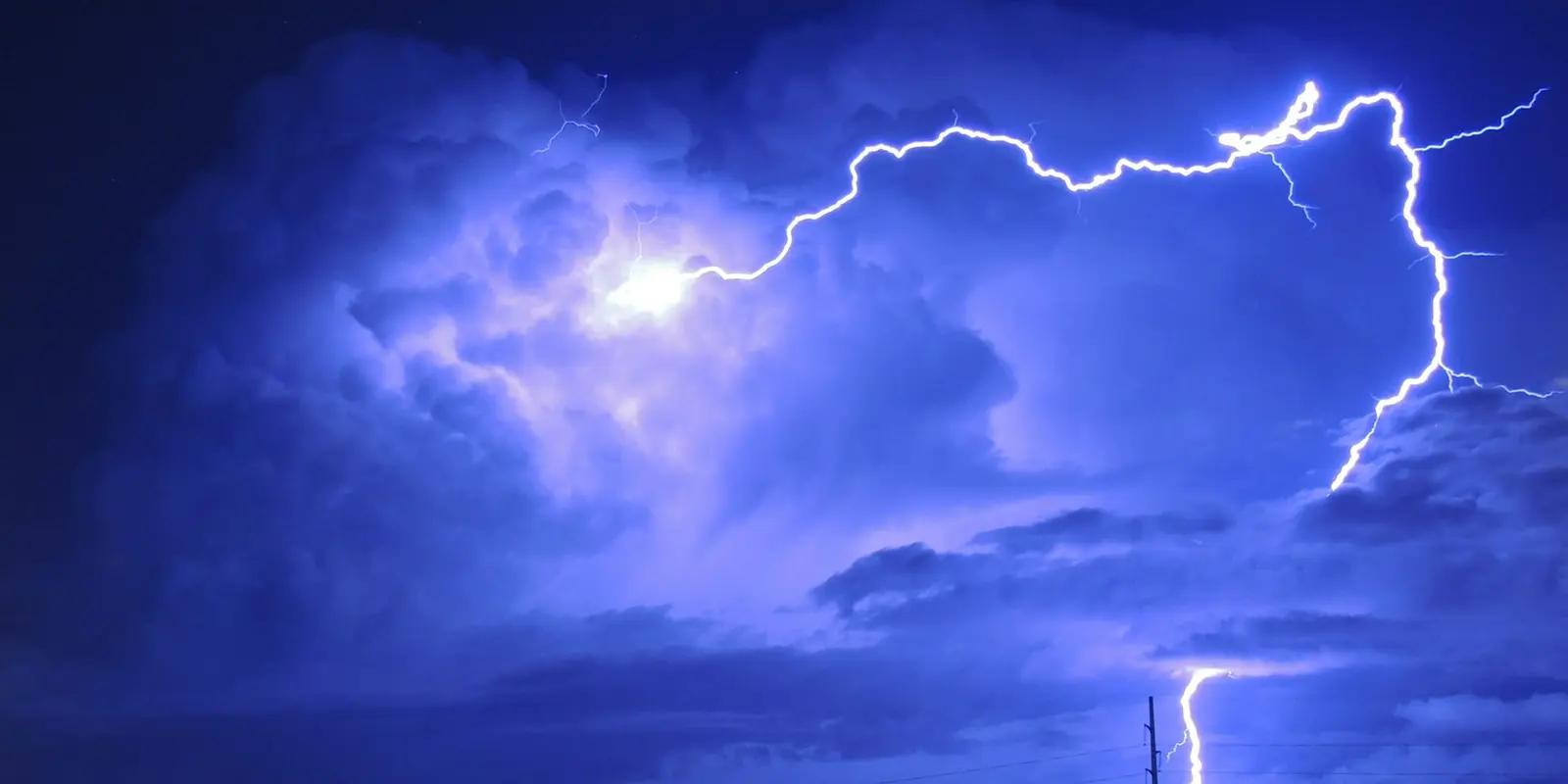
Lightning bolts striking through dramatic blue storm clouds illuminating night sky with bright white electrical discharge.

Did you know?

Search name of person, animal, place, thing, etc.

Share

Facts About Lightning For Kids

Formation & Science

Lightning is a giant spark of electricity that happens when tiny bits of ice and water inside a storm cloud collide and create electric charges. When the charge builds up enough, electricity jumps between the charged parts of the cloud or between the cloud and the ground — and that big spark is lightning!
A lightning bolt has a huge burst of energy — so big that, in theory, it might equal what a house uses in a month.

Lightning happens when positive and negative charges build up in different parts of a storm cloud, sort of like how rubbing a balloon on your hair makes static electricity — but on a much bigger scale! When those opposite charges try to connect, the electricity jumps through the air as lightning.

When lightning flashes, it heats the air around it to about 50,000 °F — that’s about five times hotter than the surface of the Sun! That super‑hot air expands fast and makes the sound we hear as thunder.

Every lightning flash actually contains multiple strikes happening so fast they look like one!

Lightning bolts can be up to 300 million volts – that's way more powerful than any battery you've ever seen!The process of lightning formation happens in less than one second!

Cold and warm air moving inside clouds creates the perfect conditions for lightning!

Lightning can occur between clouds, inside a single cloud, or between a cloud and the ground!

Characteristics & Features

Most lightning bolts are only a few miles long, but in rare cases lightning can stretch 60 miles (97 km) or more across the sky. Some “megaflash” lightning events have even stretched over 500 miles!

Lightning can appear in different colors including white, yellow, pink, and even blue!

A single lightning strike flashes by in less than half a second, but because lightning is so bright, you can sometimes see the flash from very far away — even over 100 miles on a clear night!

Lightning doesn't always go straight down – it can move sideways or even upward!

The zigzag pattern you see in lightning comes from something called a stepped leader, which travels down in lots of tiny jumps and branches before the bright bolt appears. Each little jump heads where the electric charges and air let it go, so the path looks jagged instead of straight!

Lightning can split into multiple branches, creating a beautiful tree-like pattern in the sky!

A lightning strike usually flashes by in less than half a second, and the thunder that follows travels through the air at about 767 miles per hour (1,234 km/h) because that’s how fast sound moves!

Lightning bolts are actually thinner than a pencil, but they look bigger because they're so bright!

Some lightning bolts can be seen striking up from tall buildings or mountains into the clouds!

Light from a lightning bolt (or any light) moves so fast that, in one second, it could zoom all the way around Earth about 7½ times!

Geographic Patterns

At Venezuela’s Lake Maracaibo, powerful lightning storms called Catatumbo lightning happen nearly every night — often up to about 300 nights in a year — making it one of the most lightning‑struck places on Earth!

Florida gets more lightning than any other U.S. state — about 1.2 million lightning strikes every year — which is why it’s known as the lightning capital of the United States!

Africa’s Congo Basin has some of the most lightning on Earth and is one of the top places for thunderstorms.

Lightning is more common in the summer months when the air is warmest!

Mountains are more likely to get struck by lightning than flat ground because their tops are closer to the charged part of the storm cloud and because storms often form right over them. That means the electric spark has less air to jump through — so mountains get hit more often!

Lightning happens most often in the afternoon and early evening during warm storm season — usually from around the middle of the day into the early evening — because the warmest air helps build the strong storm clouds that make lightning!

In countries near the equator, warm and wet air often makes big storm clouds almost every day. That means places close to the equator can have lightning storms many days of the year!

Effects & Impact

Lightning can help plants grow! When lightning strikes, it turns tiny bits of air nitrogen into special forms of nitrogen that rain washes into the soil.

When lightning hits sand, it can melt and fuse the grains so fast that the sand turns into glass — forming long, hollow tubes called fulgurites.

Lightning can help clean the air in one way: its energy makes special chemicals in the sky that can break down some harmful gases.

A single lightning strike packs a huge burst of energy — enough in theory to keep a 100‑watt light bulb glowing for more than three months if you could somehow catch and use all of it!

Lightning sometimes travels through the wet sap and water inside a tree, and that can help the bolt reach the ground. But most of the time that damages the tree, and many trees die or get badly hurt.

Safety & Protection

If you can hear thunder, you're close enough to be struck by lightning – go inside!

Lightning can strike even when the sky is blue, up to 10 miles away from a storm!

Cars can be safe during a lightning storm because the metal body lets the lightning’s electricity travel around the outside and into the ground, keeping the people inside safe — as long as the car has a metal roof and sides, all windows are closed, and you don’t touch metal parts!

Tall buildings have lightning rods that safely guide lightning strikes into the ground!

The "30-30 Rule" says to count to 30 after seeing lightning – if you hear thunder before reaching 30, go inside!

Lightning can strike the same place more than once! Tall buildings like the Empire State Building get hit by lightning many times each year because they’re tall and make an easy path for the electricity.

Rubber shoes don't protect you from lightning – that's another myth!

During a lightning storm, the safest place to be is inside a solid building with electricity and plumbing — like your home or school!

Scientific Tools & Terms

A "keraunic level" is the number of days per year when thunder is heard in a specific location!

Scientists who study lightning are called "fulminologists"!

A special type of lightning called anvil crawler lightning moves sideways across the bottom of a thunderstorm’s big anvil cloud instead of straight down. It can look like the lightning is “crawling” across the sky!

There are special kinds of lightning called sprites and elves that happen way up above thunderstorms! Sprites are quick, red flashes high in the sky, and elves are very fast glowing rings even higher up.

A "bolt from the blue" is lightning that travels up to 10 miles away from its storm!

"Ball lightning" is a rare type of lightning that looks like a glowing sphere floating in the air!

"Positive lightning" is 10 times stronger than regular lightning but only makes up 5% of all strikes!

Weather Connections

Thundersnow is a rare weather event when lightning happens during a snowstorm!

Volcanic eruptions can create lightning in their ash clouds!

Forest fires can create their own lightning storms called "pyrocumulonimbus clouds"!

In huge, powerful thunderstorms, lightning can flash really fast — sometimes well over 100 times in one minute in just that storm! That’s because the storm’s electric charges are extremely strong and fire off again and again.

Lightning often occurs at the same time as heavy rain, but not always!

Sources:

Explore More