Basic Information
Meerkats are actually part of the mongoose family, not the cat family at all!


Did you know?
Search name of person, animal, place, thing, etc.
Share
Meerkats are actually part of the mongoose family, not the cat family at all!
Scientists call meerkats by their Latin name, Suricata suricatta!
A group of meerkats is called a mob or a gang — when lots of these furry friends hang out together, that’s the name!
Meerkats live in dry regions of southern Africa, including the big sandy areas of the Kalahari Desert!
In the wild, meerkats usually live about 5 to 15 years. In zoos, with extra care, they can live around 12 to 20 years!
An adult meerkat weighs about 1.4–2.1 pounds (0.6–0.97 kg), which is about the same as a pineapple!
Meerkats are small animals that grow to be about 12 inches (30 cm) tall when standing on their back legs!
A baby meerkat is called a pup. But unlike pigs, we don’t use special words like ‘sow’ or ‘boar’ for female or male meerkats — they’re just called a male meerkat or a female meerkat.
Meerkats are omnivores, which means they eat both plants and animals!
Meerkats have been around for millions of years! Their ancestors appeared about 1.8 million years ago — long after the first mammals!
Despite their small size, meerkats are related to larger carnivores like mongooses and civets!
The word ‘meerkat’ comes from Dutch (meer + kat), which literally means “lake cat”, even though these animals don’t live near lakes or swim!
Meerkats can be found in four African countries: Botswana, Namibia, South Africa, and Angola!
A typical meerkat mob has between 20–50 members living together!
Meerkats are active during the day, which scientists call “diurnal”!
A typical meerkat mob lives in a territory of about 2 to 5 square kilometres (roughly 0.8 to 2 square miles) — though in some cases it can be larger!
Meerkats are perfectly adapted to life in the desert, where temperatures can range from below freezing at night to over 100°F (38°C) during the day!
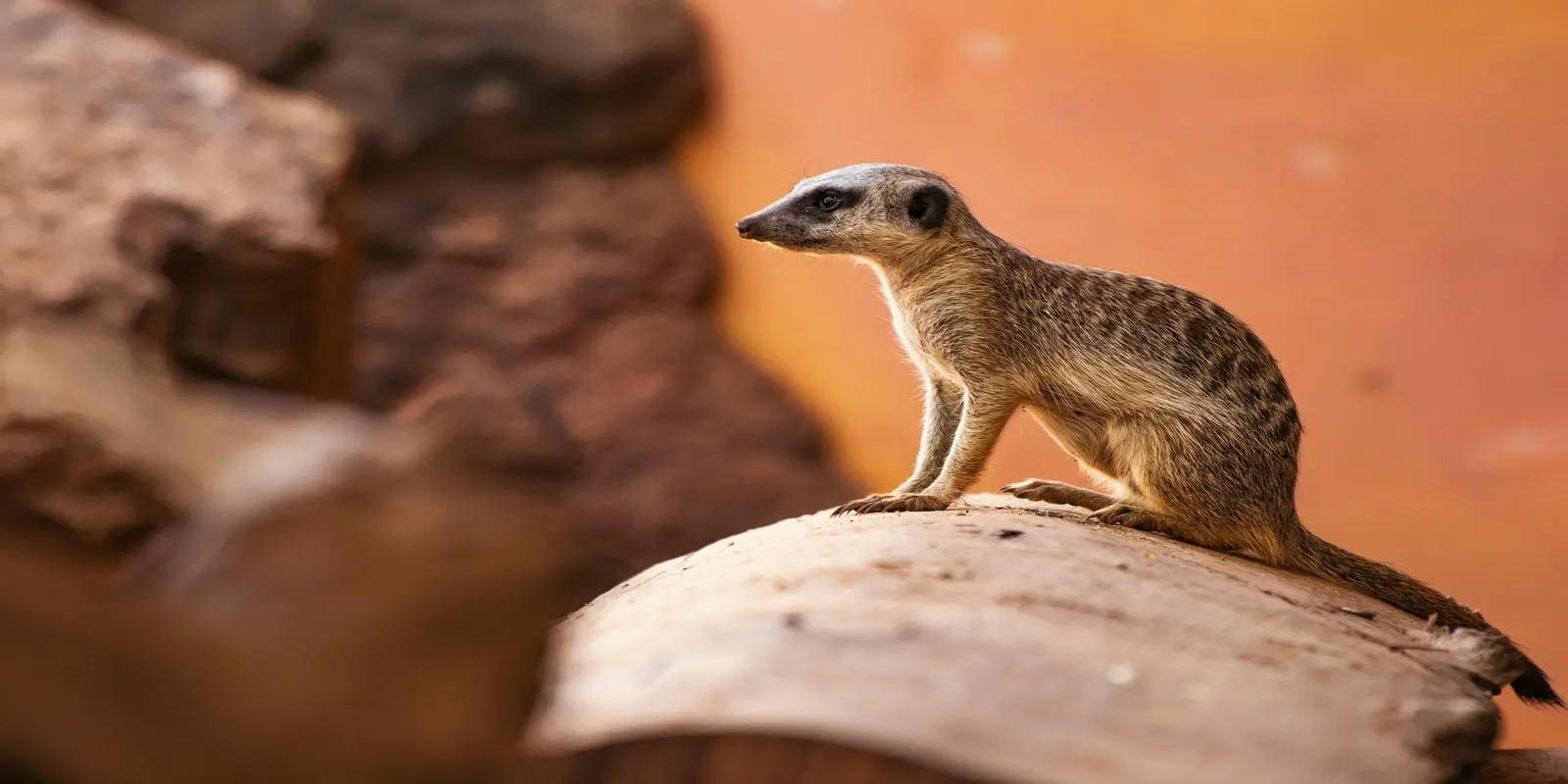
Meerkats have dark patches around their eyes that help reduce glare from the sun, just like a baseball player’s eye black!
A meerkat can close its ears completely when it’s digging so that sand and dirt don’t get in!
Meerkats have a special thin membrane (called a nictitating membrane) that can cover the eye and help keep out sand when they’re digging.
A meerkat’s claws can grow up to 2 centimeters long, which helps them dig through hard desert soil!
A meerkat has a long, thin tail (about 17–25 cm or 7–10 inches) which helps it balance when it stands upright — almost like a third leg!
Meerkats have very good eyesight and can spot birds of prey like eagles from hundreds of metres away.
A meerkat has a super-keen nose that helps it sniff out food hidden underground — scientists have found they can detect hidden prey using smell alone, even when it’s buried!
A meerkat has four toes on each foot and strong, non-retractable claws that grow continuously (just like a dog’s nails).
A meerkat’s fur is sandy-brown with faint stripes, helping it blend in with the desert soil so predators have a harder time spotting it, which scientists call camouflage!
A meerkat has excellent hearing and can pick up the faintest sounds of danger nearby — helping its group-mates stay safe!
Meerkats have special scent glands (for example under their tails and around their cheeks) that let them mark their territory and recognize friends and family in their group.
Meerkats take turns being the lookout, with individuals standing guard for up to about 20 minutes!
Meerkat pups learn hunting skills through a “school” system where adults teach them how to catch prey safely!
Meerkats use more than 30 different calls and sounds to talk to each other!
When a meerkat spots danger, it makes a special bark sound that tells others to run and hide!
Meerkats work together to dig burrows, with some digging while others remove the loose soil!
In a mob of meerkats, one dominant female and one dominant male do most of the breeding, while other females rarely get their pups to survive because the dominant female strongly suppresses their breeding.
Meerkats perform a special “war dance” when they encounter rival mobs, stamping their feet and raising their tails!
Young meerkats learn to handle scorpions by practicing with dead ones brought back by adults!
Meerkats share babysitting duties, with adults taking turns watching the pups while others go hunting!
A meerkat mob works together to groom each other, helping to remove ticks and fleas!
Meerkats teach their young how to eat scorpions by removing the stinger first!
When foraging, meerkats stay in contact by making soft peeping sounds called “contact calls”!
Meerkats can recognize individual mob members by their unique calls!
A meerkat mob follows a strict hierarchy, with each member knowing their place in the group!
When a predator is spotted, meerkats will mob together and try to appear larger to scare it away!
A meerkat mob lives in a large underground home called a burrow, which usually has about 15 entrance and exit holes, so they always have an escape route if danger appears.
A meerkat’s burrow can go down about 5 feet (1.5 m) and has lots of tunnels and rooms!
Meerkats create special toilet chambers in their burrows to keep their living areas clean!
The social group of meerkat lives with several burrow systems and will move to different burrows from time to time — especially when food is low or they sense danger.
Meerkats prefer areas with hard, sandy soil that’s perfect for digging burrows!