Augmented Reality (AR) - Facts for Kids

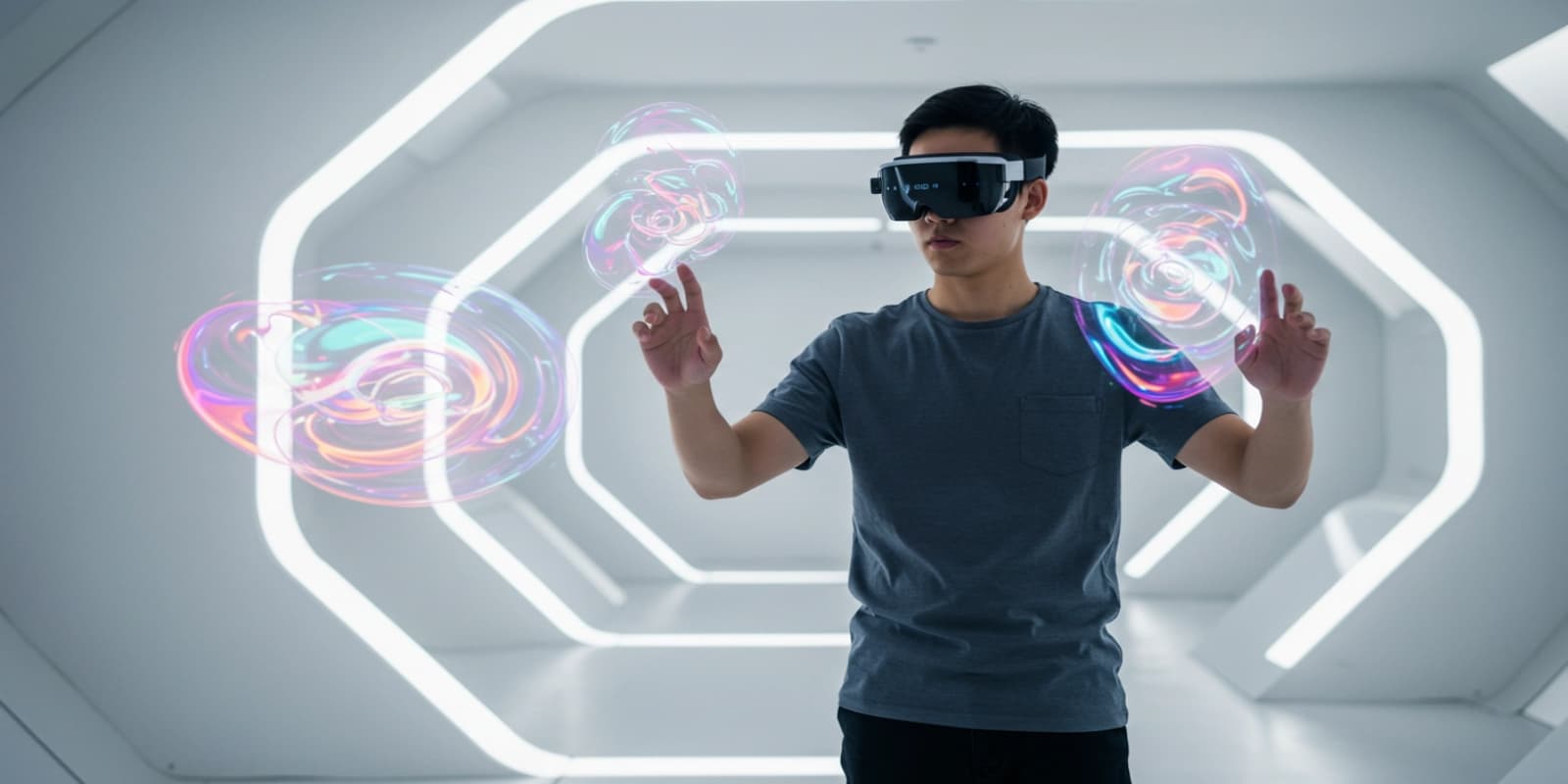
A person wearing a VR headset and interacting with digital, swirling graphics that appear to be floating in front of them.

Did you know?

Search name of person, animal, place, thing, etc.

Share

Facts About Augmented Reality (AR) For Kids

History & Development

Augmented Reality (AR) was first invented in 1968 when Ivan Sutherland created a head-mounted display called “The Sword of Damocles” that could show computer graphics over the real world — like magic glasses that add things that aren’t really there!


The phrase “Augmented Reality” was first used by Boeing researcher Tom Caudell around 1990 when he and a colleague designed a system to help airplane workers by showing computer graphics over real parts.

In 1992, scientists at the U.S. Air Force created one of the first real augmented reality systems called “Virtual Fixtures.” It helped people see virtual guides over real tasks to make complex work easier.

The very first AR game was ARQuake in 2000, but it wasn’t played on smartphones — players had to wear special gear. The first AR games on phones came later in the mid-2000s, long before Pokémon GO made AR famous!

Pokémon GO, released in 2016, became one of the most popular AR games ever. Over the years it has been downloaded more than 1 billion times — more than the population of North America and Europe combined!

In 1998, TV sportscasters started using special computer technology to draw a bright yellow “first down” line on football fields during broadcasts. It looks like it’s on the grass, but it’s really added into the TV picture — the players on the field can’t see it!

In 2017, Apple and Google shared special AR toolkits (ARKit and ARCore) that let most smartphones use their cameras to mix computer graphics with the real world. This helped make AR apps much more common and fun on phones!

Scientists experimented with “smart” contact lenses for years, but the first real augmented-reality contact lenses that could show digital images on the eye were tested in the early 2020s — hinting at a future where AR might work without bulky glasses!

NASA began using augmented reality on the International Space Station around 2015–2016 with special AR headsets to help astronauts see 3D instructions and guides as they worked on equipment — so they could fix things more easily in space!

In 2012, Google showed off Google Glass — one of the first AR glasses people could try. It looked like ordinary glasses but had a tiny computer screen in the corner to show info right in front of your eye!

The U.S. military started serious AR development in the 1990s, spending millions of dollars to create helmets that could show soldiers important information during training.

How It Works

AR uses your device's camera like a window, then adds computer-generated images on top of what the camera sees in real-time.

Special sensors called accelerometers and gyroscopes inside your phone tell AR apps which way you're holding your device and how fast you're moving it.

AR apps use a technology called "computer vision" that helps devices recognize real objects the same way your brain recognizes your friend's face.

Most AR systems work by placing invisible digital "anchors" in the real world that computer graphics stick to, like invisible thumbtacks holding up posters.

Your phone’s AR system updates where it thinks the device is many times every second — often around 60 times per second — so the virtual objects stay in the right place as you move!

AR devices use something called SLAM (Simultaneous Localization and Mapping) which helps them build a 3D map of a room while figuring out where they are in it.

Your phone’s GPS helps outdoor AR apps know where you are on Earth, and in good outdoor conditions it can usually pinpoint your spot within about 5 meters (16 feet) — close enough to place digital objects in the right places!

AR glasses contain tiny projectors that can beam images directly into your eyes, making digital objects appear to float in the real world around you.

Advanced AR systems can track the position of your hands and fingers, letting you "touch" and move virtual objects with just your bare hands.

AR technology uses powerful processors that can perform billions of calculations per second to keep virtual objects looking realistic as you move.

Some AR systems use depth sensors that shoot out thousands of invisible infrared light dots to measure exactly how far away objects are.

Cool Capabilities

Some advanced AR systems today use computer vision to recognize and track many different object types around you. With the right software, they can detect dozens of objects in a scene and keep virtual content attached to them as you move!

Modern AR apps can let you scan your room with your phone and then place virtual furniture that looks real in your space. Once the phone has mapped the room, you can walk around and see how chairs, couches, and tables would look before you buy them!

AR technology can translate foreign language signs in real-time, showing you English words floating right over the original text through your camera.

Some AR apps can make you look like different animals or characters by tracking 50+ points on your face and changing them in real-time.

Some AR navigation apps can show big virtual arrows and signs floating over the sidewalk or street in front of you through your phone camera. These help you follow walking directions more easily, but they still rely on GPS and camera data, so you need the right phone and good signal for them to work well.

Some educational AR apps let you “bring dinosaurs to life” in your room using your tablet or phone. You can place giant dinosaurs like a T‑rex — about 12 meters (40 feet) long — and walk around them as if they were really there!

Some AR art apps let you create virtual graffiti, paintings, or sculptures and “stick” them to real places. If other people use the same app and go to that spot, they can see your art floating in the world through their camera — like invisible murals that come to life!

Some AR games can turn your entire neighborhood into a playing field covering several square kilometers of real-world space.

Real-World Uses

Some surgeons use AR glasses to see medical images and patient data near the surgical site, so they can keep their eyes on the patient.

Some museums use AR so you can point your tablet or phone at a dinosaur skeleton and watch a moving, life‑like dinosaur appear on your screen as if it were walking around the exhibit!

Some furniture stores like IKEA have AR apps that let you point your phone at your room and see virtual versions of furniture before you buy it — with thousands of pieces you can place and try first!

Firefighters are testing AR helmets that can see through smoke using thermal imaging and show building layouts during emergencies.

Some fashion stores use AR mirrors that let you try on hundreds of different outfits without actually changing clothes.

Some dentists use AR so you can look at your own smile on a screen and see what your teeth might look like after treatment — like braces, whitening, or veneers — before the dentist starts working!

Many airplanes use special AR‑like displays in the cockpit that project flight info (like speed, height, and direction) right into the pilot’s view on the windshield or helmet screen, so they can keep their eyes on the sky while still seeing important data.

Teachers use AR apps to show 3D models of everything from atoms to planets, making science concepts easier to understand.

Real estate agents use AR to show empty houses with virtual furniture, helping buyers imagine how rooms could look decorated.

Some theme parks use AR tech so you can wear special glasses or use an app and see virtual characters or effects added to a roller coaster ride — like digital racers, creatures, or game action floating in front of you as you ride!

Some emergency responders use AR tools that show building floor plans and layouts right in their view, helping them find the best way inside and around a burning or damaged building during a rescue!

Extra AR Fun Facts

One of the biggest Pokémon GO AR events in 2017 was Pokémon GO Fest in Chicago, where about 20,000 players gathered together in the park to play in person — one of the largest live AR game events at the time!

Some of the most advanced AR headsets cost thousands of dollars — like around $3,500 for pro devices — while you can make a simple AR viewer out of cardboard for just a few dollars!

The first widely used AR marker system was part of ARToolKit, created in 1999. It used special black-and-white square patterns that cameras could recognize to help place virtual objects in the real world.

In 2008, BMW ran one of the first commercial augmented reality print ads where people could hold the magazine page up to a computer webcam to see a 3D BMW MINI model appear on the screen and interact with it.

The first widely known augmented reality children’s book using AR technology was Parrot Carrot, published in 2011, where characters and scenes could come to life when viewed through a camera-enabled device.

By 2015, Snapchat’s AR Lenses were used in about 10 million snaps per day, helping change how people shared fun photos and videos.

AR displays help your brain see depth by showing each eye a slightly different picture, so virtual objects look like they belong in the real world.

Some AR systems use machine learning so they can learn from what they see and get better at recognizing real-world objects, helping virtual things fit more naturally into the real world.

Some AR plant identification apps can recognize tens of thousands of plant species just by looking at their leaves or flowers through your camera, depending on how big their plant database is.

Sources:

Explore More