Basic Information
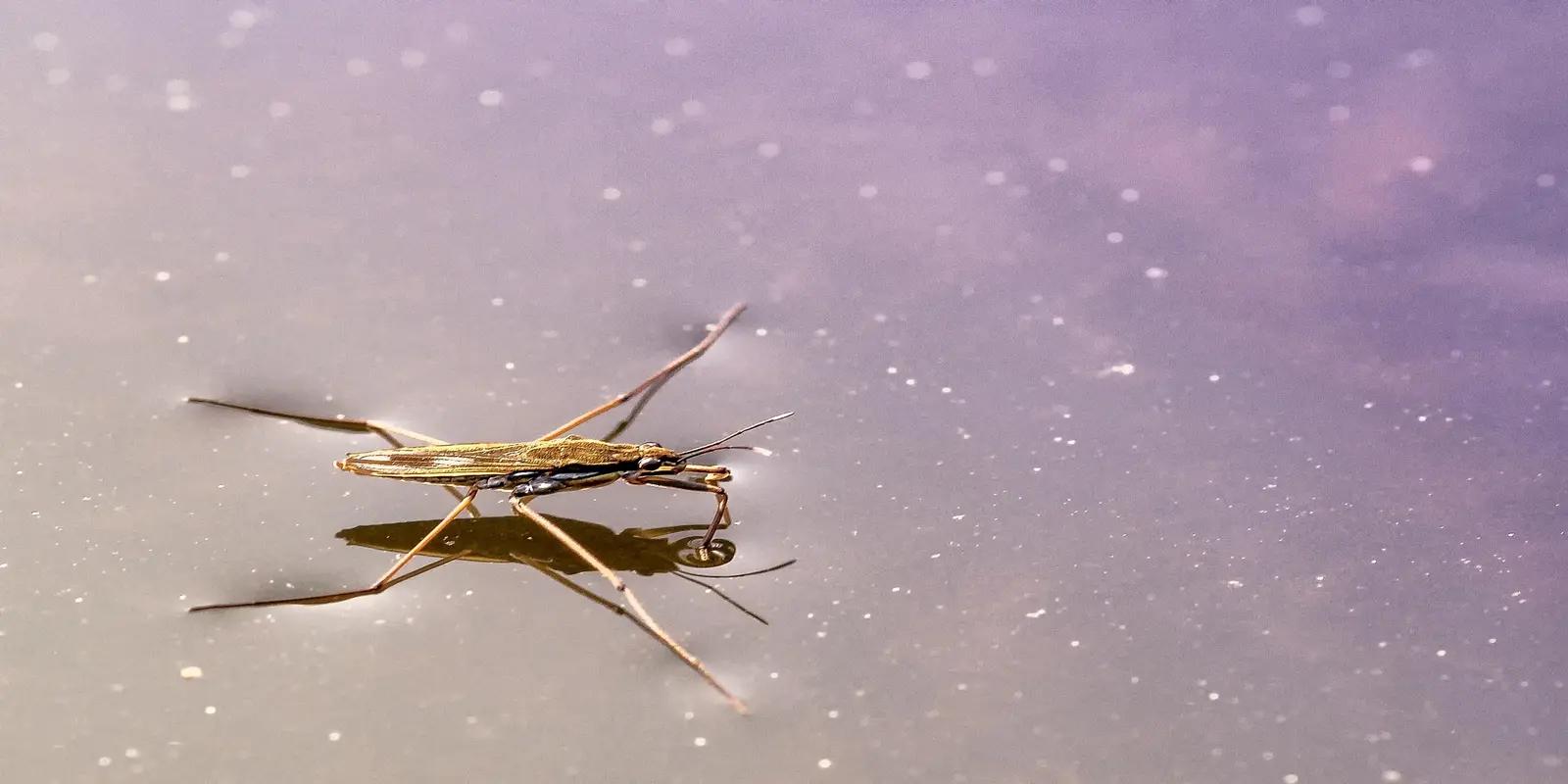
Water striders belong to the family Gerridae, and scientists sometimes call them “pond skaters” or “Jesus bugs” because they can walk on water!


Did you know?
Search name of person, animal, place, thing, etc.
Share
Water striders belong to the family Gerridae, and scientists sometimes call them “pond skaters” or “Jesus bugs” because they can walk on water!
Water striders can be found on every continent except Antarctica, making them one of the most widespread water-dwelling insects in the world!
A water strider is super light — many weigh only a few hundredths of a gram (about as heavy as a small grain of sand!), which helps them skate on water without sinking.
In many water-strider species, the female water striders are a bit bigger than the male ones.
Baby water striders are called "nymphs," and they look like tiny versions of their parents when they hatch!
Water striders are predators that eat small insects that fall onto the water's surface, making them important helpers in controlling bug populations!
There are about 1,700 different species of water striders found around the world!
Water striders have been around for many, many millions of years — scientists have found fossils and amber-preserved water-strider bugs that lived 80–100 million years ago or more.
Water striders have special water-repelling hairs on their legs and body that help them stay dry even when they're on water!
A water strider's legs are covered in thousands of tiny grooves that trap air bubbles, helping them float on water!
The middle pair of a water strider's legs acts like oars on a boat, helping them push themselves across the water's surface!
Some water striders can leap a few centimetres — enough to jump off the water surface really quickly when danger strikes.
A water strider's front legs are shorter than its other legs and are used like arms to catch prey!
Water striders have tiny claws set back on their legs and water‑repelling hairs that let them grip the surface without sinking.
Water striders communicate by making tiny ripples on the water's surface that other water striders can feel through their legs!
In winter, adult water striders hide under leaves, logs, or plants near the water and stay dormant until spring.
Water striders prefer calm water like ponds and slow-moving streams because it's easier to detect prey's movements!
Some water striders can leave a drying pond by walking — or flying if they have wings — to find new water. But most water striders don’t live well on land, so they only try this when their pond dries up.
Water striders can survive on any water surface that's tension is strong enough to hold their weight!
Different species of water striders have evolved to live in different water conditions, from tiny puddles to large lakes!
Female water striders lay their eggs on underwater plants or floating objects, and the eggs hatch in about 1-2 weeks!
Water strider nymphs molt (shed their skin) five times before becoming adults!
Most water striders take around two months to grow from an egg — through several baby (nymph) stages — into a full‑grown adult.
Water striders don't go through a pupal stage like butterflies – they gradually grow bigger through molting!
Baby water striders can walk on water as soon as they hatch!
Water striders can produce multiple generations in a single year if conditions are favorable!
Some water strider species can switch between having wings or being wingless depending on environmental conditions!
Water striders use their front legs like chopsticks to grab and hold their prey!
Water striders are greedy little hunters — they catch and eat small insects and insect larvae whenever they can.
Water striders inject digestive juices into their prey to dissolve it before drinking the liquified nutrients!
Water striders help control mosquito populations by eating mosquito larvae that come to the water's surface!
Water striders can catch flying insects that accidentally land on the water's surface!
Some water striders act like tiny water‑watchers: by studying the chemicals in their bodies, scientists can tell whether a pond or stream is polluted.
Some water‑strider species are in danger when people fill in or drain ponds, streams, and wetlands — because those water bodies are their homes.
Pollution from soap and detergents can break the water's surface tension, making it impossible for water striders to "walk" on water!
Water striders are part of the food web, feeding on insects and being eaten by fish and birds!
The name “Gerridae” comes from the genus “Gerris,” which is based on a Greek word for “water strider.”
Water striders inspired scientists to create robots that can walk on water!
The largest water strider species, called Gigantometra gigas, is found in Asia and is a giant! It can have a leg span of up to 30 centimeters—that’s almost the length of a school ruler!
Water striders can walk on water because each of their legs can hold up to 15 times their body weight!