Basic Information
Dung beetles belong to the superfamily Scarabaeoidea, and there are more than 7,000 different species of these fascinating insects living across the world!


Did you know?
Search name of person, animal, place, thing, etc.
Share
Dung beetles belong to the superfamily Scarabaeoidea, and there are more than 7,000 different species of these fascinating insects living across the world!
Dung beetles belong to a special group inside the scarab beetle family. But the shiny "June bugs" you see in your garden are cousins — they’re scarabs too, only in a different subgroup.
Some dung beetles in the genus Heliocopris grow huge — almost the size of a small toy car! For example, Heliocopris beetles can reach nearly 7 cm long.
Some dung beetles are tiny — about as small as a pencil’s eraser! Some species measure just about 2 millimetres long.
Baby dung beetles are called larvae, and they look like tiny white grubs with curved bodies!
Some dung beetles can live several years — under good conditions, a few might reach 2 or 3 years — but many only live a few months to a year once they become adults.
In ancient Egypt, dung beetles were considered sacred, and their image was carved into jewelry and tombs over 4,000 years ago!
Dung beetles can be found on every continent except Antarctica, making them one of the most widespread insect groups in the world!
Some dung beetles can pull up to 1,141 times their own body weight, making them proportionally stronger than any other animal on Earth!
Dung beetles come in many different colors, including shiny black, metallic blue, green, and even copper-colored!
Some dung beetles grow little horns on their heads. The males use their horns like tiny shovels or shields — sometimes to dig tunnels, but mostly to tussle with other beetles when they’re fighting over dung or looking for a mate.
Dung beetles have specially adapted front legs that are broad and spiky, perfect for digging through soil and shaping dung balls!
The eyes of nocturnal dung beetles are extra large and sensitive, helping them see in the dark when they're most active!
Dung beetles have sensitive antennae that can smell fresh dung from far away!
Some dung beetles have wings hidden under their hard wing covers, allowing them to fly and search for fresh dung piles!
Dung beetles have a strong, waxy shell that helps keep them dry when digging in wet dung or during rainy days.
Dung beetles come in all sizes — some are tiny, just a few milligrams, while larger ones can weigh a few grams, about as heavy as a small paperclip.
Dung beetles have special mouthparts called mandibles that are perfectly shaped for eating and working with dung!
Dung beetles use the Milky Way to navigate at night, making them the only known insects to use stars for orientation!
Before rolling away, some dung beetles climb on top of their dung ball and do a little spin — like checking the sky with a compass — so they know which way to go!
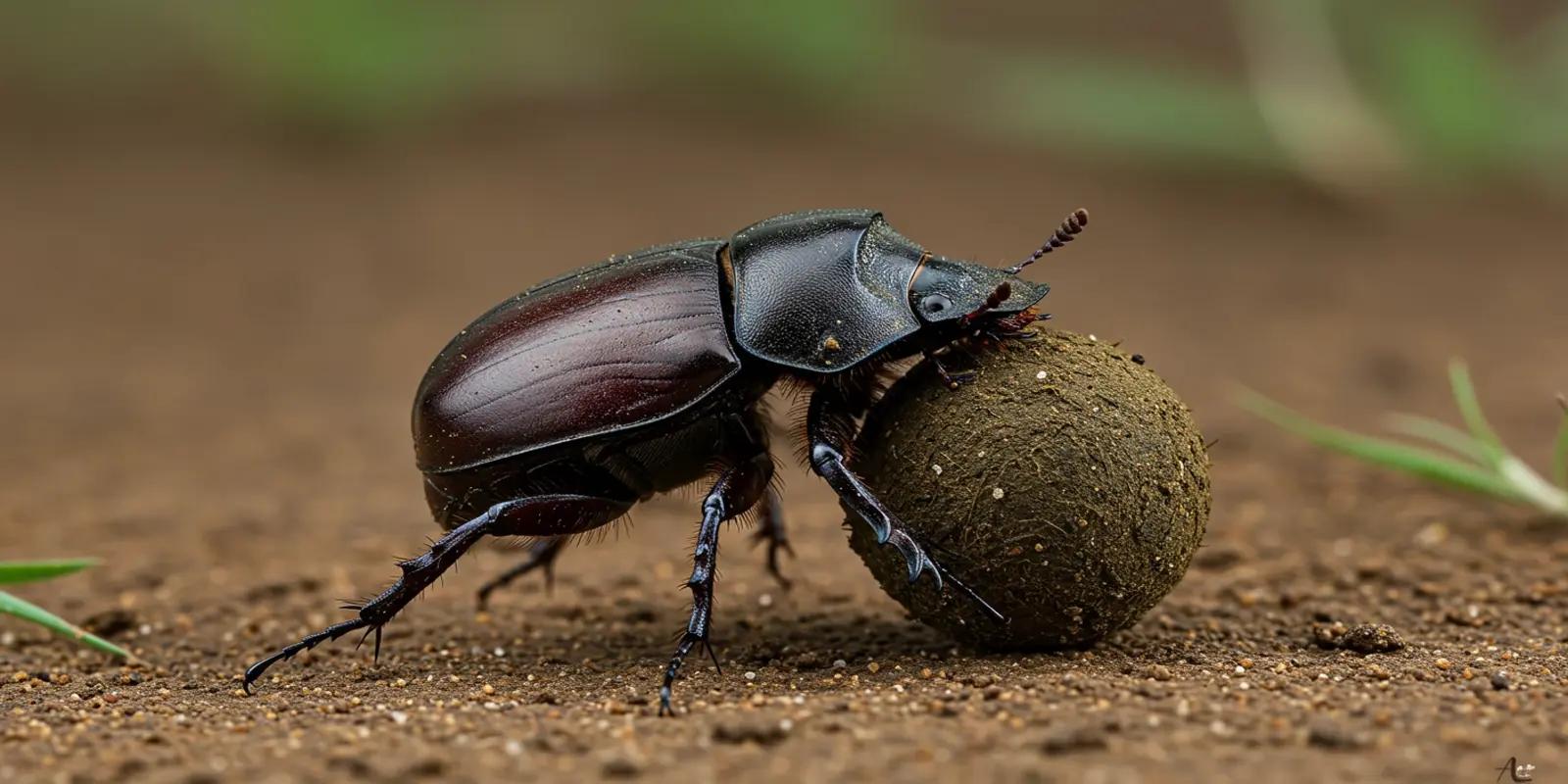
Dung beetles can roll their dung balls in a straight line while walking backward, using their back legs to push and their front legs to guide!
Different species of dung beetles have different jobs: some roll balls, some tunnel underground, and some live inside the dung pile!
In some dung beetle species, a male and a female team up. The male rolls the dung ball while the female may ride on top — or help push — to move their dung treasure together!
Many dung beetles sniff the air for fresh dung — and when they find it, they rush over!
Dung beetles don’t need a ruler or compass — they use their legs, head, and antennae like sculpting tools to squish and smooth dung until it becomes a nearly perfect ball!
When the sun makes the ground super hot, some dung beetles climb on top of their dung ball and do a little cooling ritual — spreading water, turning around, and sun‑dodging to keep their legs from burning under the heat.
Dung beetles live almost everywhere — in forests, grasslands, deserts, farms, and even near animal homes — as long as there’s fresh dung, they’ll be there!
Some dung beetles are picky — they prefer dung from certain animals, like cows or horses.
Some dung beetles that live in dry, hot places survive very hot days by using clever tricks — like rolling their dung into a moist ball and climbing on top of it to cool off when the ground gets too hot.
Dung beetles help prevent flies from breeding by quickly removing dung from the ground's surface!
Some tunnelling dung beetles dig tunnels under dung that go deep into the soil — often several inches to about 1 metre (about 3 feet) deep.
Some dung beetles scoop up animal dung — often full of tiny seeds — and bury it in the soil. By doing that, they move seeds into safe, nutrient-rich places where plants are more likely to grow.
Some dung beetles help improve soil quality by bringing nutrients underground as they bury their dung balls!
Dung beetles help control parasites by removing dung that might contain harmful parasite eggs!
Many dung beetle moms lay exactly one egg inside each dung ball they bury — that way the baby has the whole ball to eat while it grows.
“Many dung‑beetle moms lay one tiny egg inside each dung ball. The eggs are very small — about 2 mm long — and usually hatch in about 5–7 days.
After hatching, baby dung beetles (larvae) eat the dung inside their ball and grow for a few weeks to a few months before turning into adult beetles.
When a dung‑beetle larva is ready to become an adult, it stays buried under the soil in its dung‑ball home and changes inside a special hidden chamber until it’s a grown‑up beetle.
When a dung‑beetle larva turns into a pupa underground, it usually takes a couple of weeks — often around 10 to 15 days — for it to grow into an adult beetle.
Young adult dung beetles stay underground for several days until their exoskeleton hardens completely!
Dung beetle larvae go through three growth stages called instars before becoming pupae!
Baby dung beetles eat their way out of their dung ball home when they're ready to emerge as adults!
Adult dung beetles often sip the juicy, liquid part of fresh dung — that watery dung is packed with tiny nutrients they can use. But the baby beetles (larvae) inside dung‑balls chew up the harder dung bits so they grow big and strong.
Some dung beetles are super strong — they can bury dung that weighs hundreds of times more than they do in just one night!
Many dung beetles like dung from plant-eating animals best — because it's full of leftover plant bits they can eat or bury.
Adult dung beetles carry helpful bacteria in their guts. These tiny helpers break down the tough bits in dung, turning hard plant fibers into food the beetle can use.
Some dung beetles are super‑strong — they can roll dung balls that weigh dozens of times more than their own body! In some cases, that’s as much as 50 times their weight.
Sometimes an elephant dung pile attracts thousands of hungry dung beetles — in a short time — because they smell the dung from far away.
Some dung beetles dig tunnels under dung piles and stash extra dung underground — like a pantry — so they have food in dry times or when dung is hard to find.
There are many thousands of different kinds of dung beetles — almost 10,000 species around the world.