Basic Information
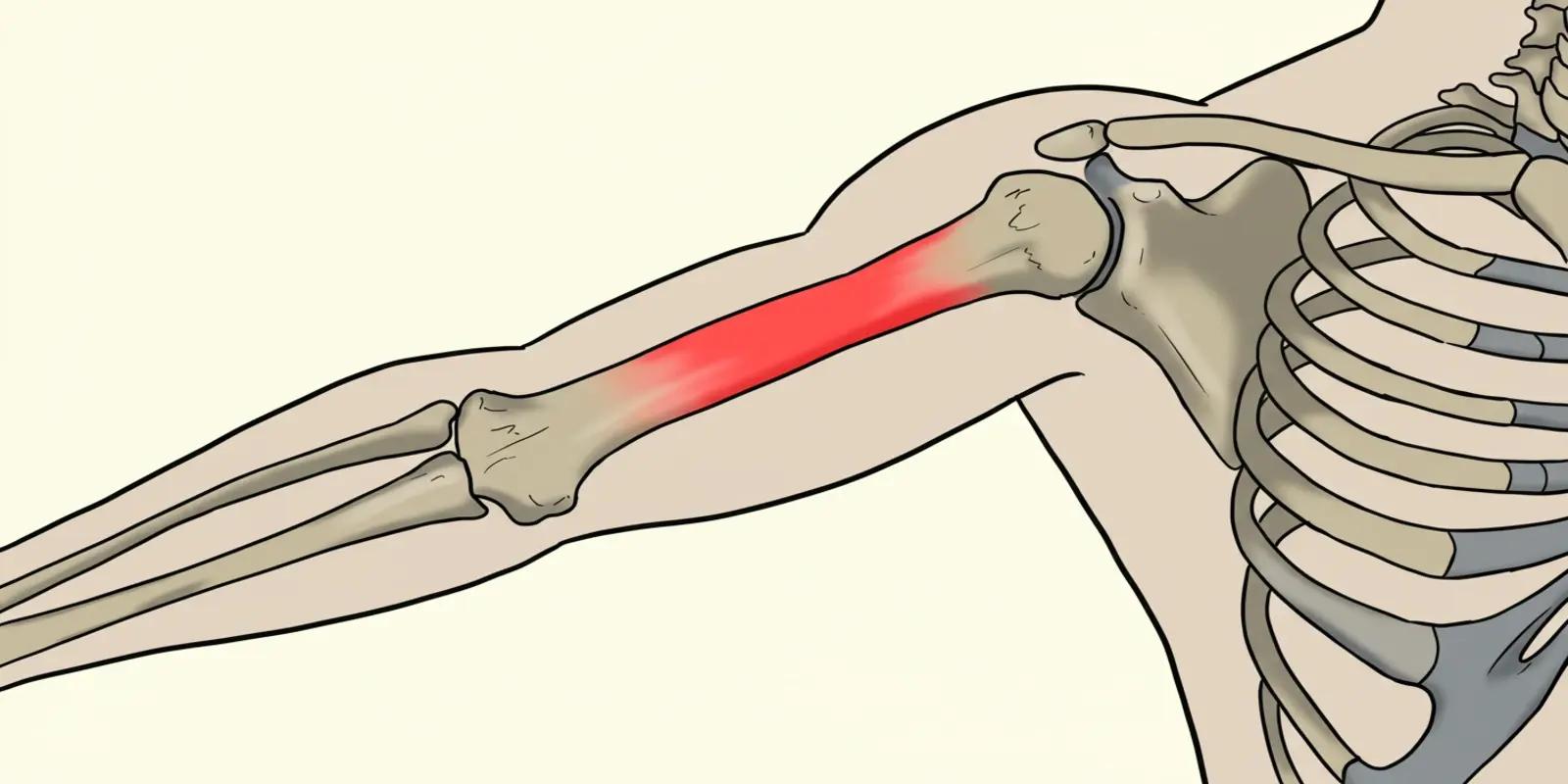
The humerus is the scientific name for your upper arm bone, and it’s the longest and strongest bone in your arm!

Did you know?
Search name of person, animal, place, thing, etc.
Share
Your humerus is like a supporting pillar that connects your shoulder to your elbow, helping you move your arm in all directions!
An adult’s humerus is usually about as long as a regular ruler — roughly 12–13 inches.
The humerus is classified as a long bone, which means it has a special design with a hard outer shell and a spongy inside filled with bone marrow!
The bone marrow inside your humerus helps make new blood cells, working together with the marrow in other bones to create billions of fresh red blood cells every day!
The name “humerus” comes from the Latin “umerus,” which long ago meant “upper arm” or “shoulder” — that’s why we still use it today!
Your humerus begins growing while you’re still in your mother’s tummy — and as you grow up, it keeps getting longer and stronger until roughly your late teens, when it becomes a full, solid adult bone.
Your humerus connects to two major joints — your shoulder and your elbow! It helps your arm swing, lift, bend, and straighten, while the bones in your forearm twist on their own to help you turn your hand.
Your humerus has special growth plates near its ends that help it get longer as you grow — like secret zones that tell your bones how tall to become!
The head of your humerus is shaped like a ball that fits perfectly into your shoulder socket, like a baseball in a glove!
Your humerus has a smooth, cylindrical shaft that's perfectly designed to support your arm muscles!
The outer layer of your humerus is made of compact bone, which is super strong and lightweight, giving your arm the support it needs to lift, push, and move!
Your humerus has tiny holes called nutrient foramina that allow blood vessels to bring food to your bone cells!
The top of your humerus has special bumps called tubercles where important muscles attach!
Your humerus has a special groove called the intertubercular sulcus where a major tendon runs, like a rope in a pulley!
The bottom of your humerus spreads out like a paddle to form your elbow joint!
Your humerus has special ridges on its surface that help muscles attach firmly, like Velcro for your muscles!
Inside your humerus, there's a network of tiny beams called trabeculae that make the bone both light and strong!
The surface of your humerus is covered with a special membrane called periosteum that helps it grow and heal!
Your humerus acts as a lever that helps you lift objects, just like a see-saw at the playground!
Your humerus works with many muscles in your shoulder and arm to help you lift, swing, bend, and rotate your arm in lots of directions!
Your humerus helps protect important nerves and blood vessels that run down your arm, like a bony shield!
The humerus stores minerals like calcium and phosphorus that your body can use when needed!
The humerus is designed to absorb shock when you fall, helping protect your body from injury!
Your humerus helps you give hugs by allowing your arms to wrap around people you care about!
The humerus works with your shoulder blade to help you reach things above your head!
Your humerus gets stronger when you exercise, just like muscles get stronger when you work out!
Drinking milk and eating calcium-rich foods helps keep your humerus strong and healthy!
The humerus can heal itself if it gets broken, growing new bone cells to repair the damage!
Your humerus needs vitamin D from sunlight to stay strong and healthy!
Regular physical activity helps your humerus maintain its strength and density!
Wearing protective gear during sports helps prevent injuries to your humerus!
Your doctor can check the health of your humerus using special X-ray pictures!
The humerus has an amazing blood supply that brings it oxygen and nutrients to stay healthy!
Your humerus needs proper posture and alignment to work correctly with other bones!
Your humerus starts as soft cartilage before turning into hard bone while you're still in your mother's womb!
Your humerus grows really fast during puberty, thanks to special growth plates that help your arms get longer!
Your humerus usually reaches its full adult length sometime between ages 16 and 20, though everyone grows a little differently!
The humerus grows from special areas called growth plates at both ends of the bone!
Your humerus (and all your bones) are alive and keep renewing themselves bit by bit — over about 10 years, many of the bone parts get replaced so your bones stay healthy and strong!
The humerus continues to adapt and change throughout your entire life!
Even though a T‑rex was enormous, its humerus was much shorter than the humerus in many humans.