History & Origins
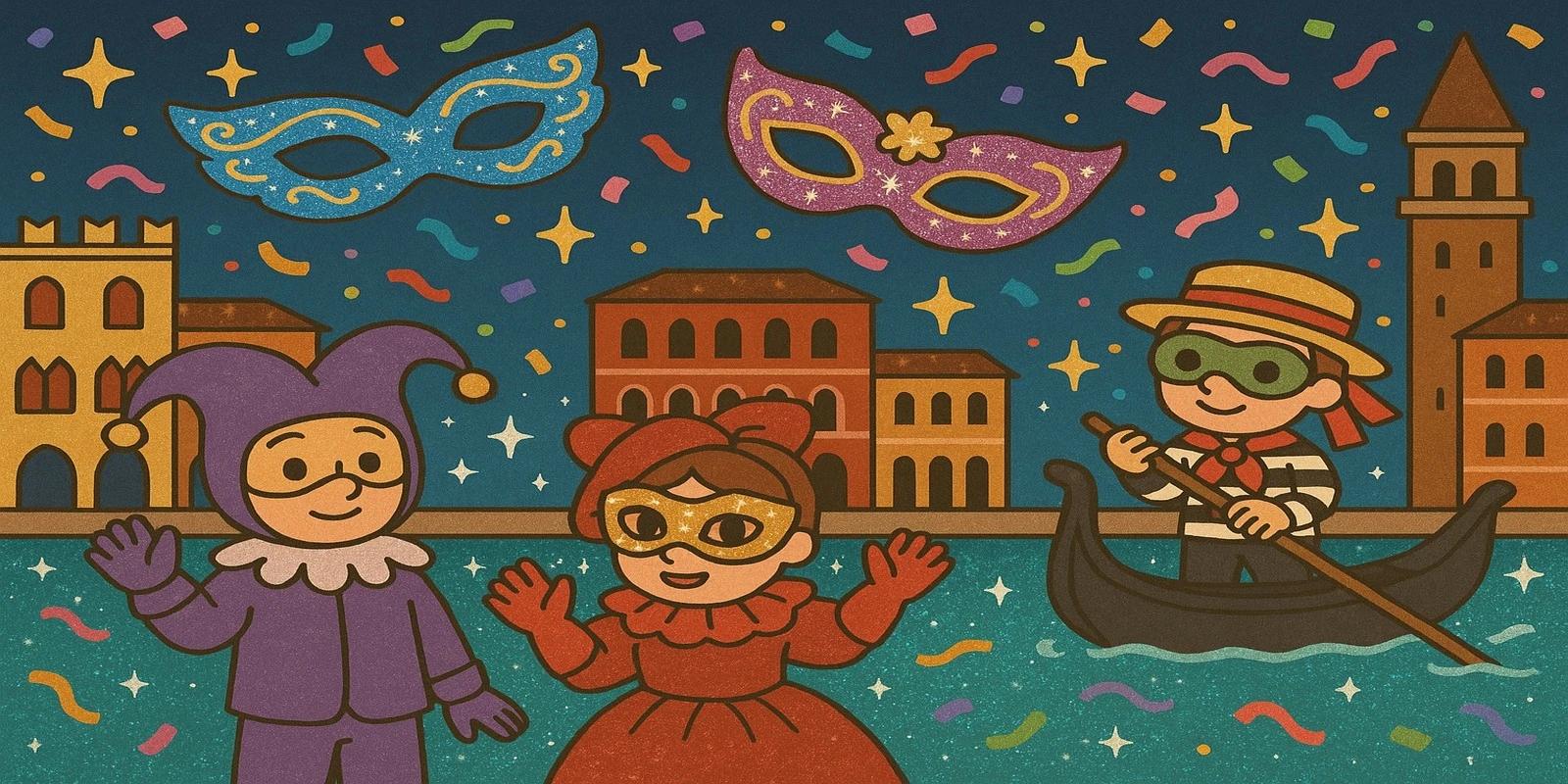
Venice Carnival began over 900 years ago, starting in the year 1162 when people celebrated a military victory with dancing in Saint Mark’s Square!


Did you know?
Search name of person, animal, place, thing, etc.
Share
Venice Carnival began over 900 years ago, starting in the year 1162 when people celebrated a military victory with dancing in Saint Mark’s Square!
The word Carnival comes from the Italian carnevale and originally meant “to take away meat” because it was the last big party before the Lenten season when people stopped eating meat!
In the 1700s, Venice’s Carnival was so popular that people were allowed to wear masks and join in the fun for many months of the year — sometimes from autumn all the way into spring.
Venetian masks were first mentioned in the 1200s in Venice, and people wore them to hide who they were — so rich and poor could mix and enjoy parties without anyone knowing their social rank!
The tradition of wearing masks became so popular that special craftsmen called "mascherari" (mask-makers) formed their own guild in 1436!
Napoleon Bonaparte stopped the carnival celebration in 1797 when he conquered Venice, and it wasn't brought back until almost 200 years later in 1979!
The first Venice Carnival masks were simple white masks called "larva," which means "ghost" in Latin!
During old Venice Carnival celebrations, brave tightrope walkers once crossed on ropes from near St. Mark’s Bell Tower toward the Doge’s Palace to amaze the crowds — a daring show that inspired the Flight of the Angel tradition!
The Venice Carnival traditionally ends on Shrove Tuesday (also called Fat Tuesday), the day before the Christian period of Lent begins!
Every carnival begins with the "Flight of the Angel," where someone dressed in costume glides down on a rope from Saint Mark's Bell Tower!
Carnival participants throw confetti called "coriandoli," which were originally made from sugar-coated coriander seeds!
People greet each other during carnival by saying "Buon Carnevale!" which means "Happy Carnival" in Italian!
During Venice Carnival, a colorful boat parade called the water parade floats through Venice’s famous canals on the Grand Canal, with decorated boats and masked rowers showing off before the big celebrations!
Every year at the Venice Carnival, there’s a fun competition called “La Maschera più Bella” in St. Mark’s Square where judges pick the most beautiful and creative masks and costumes during special parades!
All through the Venice Carnival, street performers – like jugglers, magicians, musicians, clowns, and other fun artists – entertain crowds in the squares and streets, making the festival even more exciting!
The most famous carnival treat is "frittelle alla veneziana," sweet fried doughnuts filled with cream or raisins!
Galani are special ribbon‑shaped sweet pastries covered in powdered sugar that Venetians enjoy during Carnival time.
Castagnole are tiny, golden fried dough balls that look a bit like chestnuts, and they’re a classic sweet treat people enjoy during Carnival time in Italy!
Crostoli are crispy fried pastries that look like thin ribbons or bow‑like strips covered in powdered sugar, and Venetian children enjoy them as tasty sweets during Carnival time!
Many Carnival foods are fried because long ago before Lent people enjoyed every last bit of fat, oil, and sweet ingredients before the fasting period began — and frying was a tasty way to use them up!
The famous Venetian mask called "Bauta" has a square jaw design so people could eat and drink without removing it!
The Colombina is a famous Venetian Carnival mask that covers only the top half of the face and is often beautifully decorated with gold, silver, crystals, and feathers — and it’s named after a witty character from old Italian comedy plays!
The Venetian Plague Doctor mask has a long beak that doctors once stuffed with herbs and flowers because people long ago thought the nice smells would keep them safe from illness — that’s why the mask looks like a bird’s beak!
During Venice Carnival, people decorate with the winged lion, the famous symbol of Saint Mark and the city of Venice, and you can see it on flags, banners, and in special events like the Flight of the Lion in St. Mark’s Square!
The Moretta was a special Venetian mask held on by biting a button inside it, so the person wearing it couldn’t talk — a mysterious and quiet look during Carnival!
The Volto mask — also known as the Citizen mask — was a very popular full‑face mask at Venice Carnival that covered the whole face and was often decorated by the person wearing it so it matched their costume and style!
Over three million people visit Venice each year during carnival time!
During Venice Carnival, people can join fun mask‑making workshops where a local craftsman shows them how to decorate and create their own Venetian Carnival mask — and they get to take their special mask home!
People anywhere in the world can watch Venice Carnival events online, because many shows and fun moments are streamed live or shared on the official Carnival channels and social media so you don’t have to be in Venice to enjoy the festivities!
The carnival celebrates Venice's nickname "La Serenissima," which means "The Most Serene"!