History & Origins
Mexico‘s Independence Day celebration begins at 11:00 PM on September 15th, when the President of Mexico rings the same bell that Father Miguel Hidalgo rang in 1810 to call for independence!

Did you know?
Search name of person, animal, place, thing, etc.
Share
Mexico‘s Independence Day celebration begins at 11:00 PM on September 15th, when the President of Mexico rings the same bell that Father Miguel Hidalgo rang in 1810 to call for independence!
The famous "Grito de Dolores" that started Mexico's Independence Day happened in the small town of Dolores, which is now called Dolores Hidalgo to honor Father Hidalgo's brave cry for freedom!
Mexico's Independence Day on September 16th marks the beginning of an 11-year war for freedom that lasted from 1810 until 1821, which is much longer than many children spend in elementary school!
The independence bell celebrated on Mexico's Independence Day was actually moved from Dolores to the National Palace in Mexico City, where it rings every year to remember that historic moment!
Father Hidalgo, the hero honored on Mexico's Independence Day, used a banner with the image of the Virgin of Guadalupe as his flag during the fight for independence!
Mexico's Independence Day commemorates a movement that started so early in the morning that many people were still in their pajamas when they joined Father Hidalgo's call for freedom!
Before Mexico became independent, it was called New Spain and was ruled by Spain for nearly 300 years — a period longer than the United States has been a country!
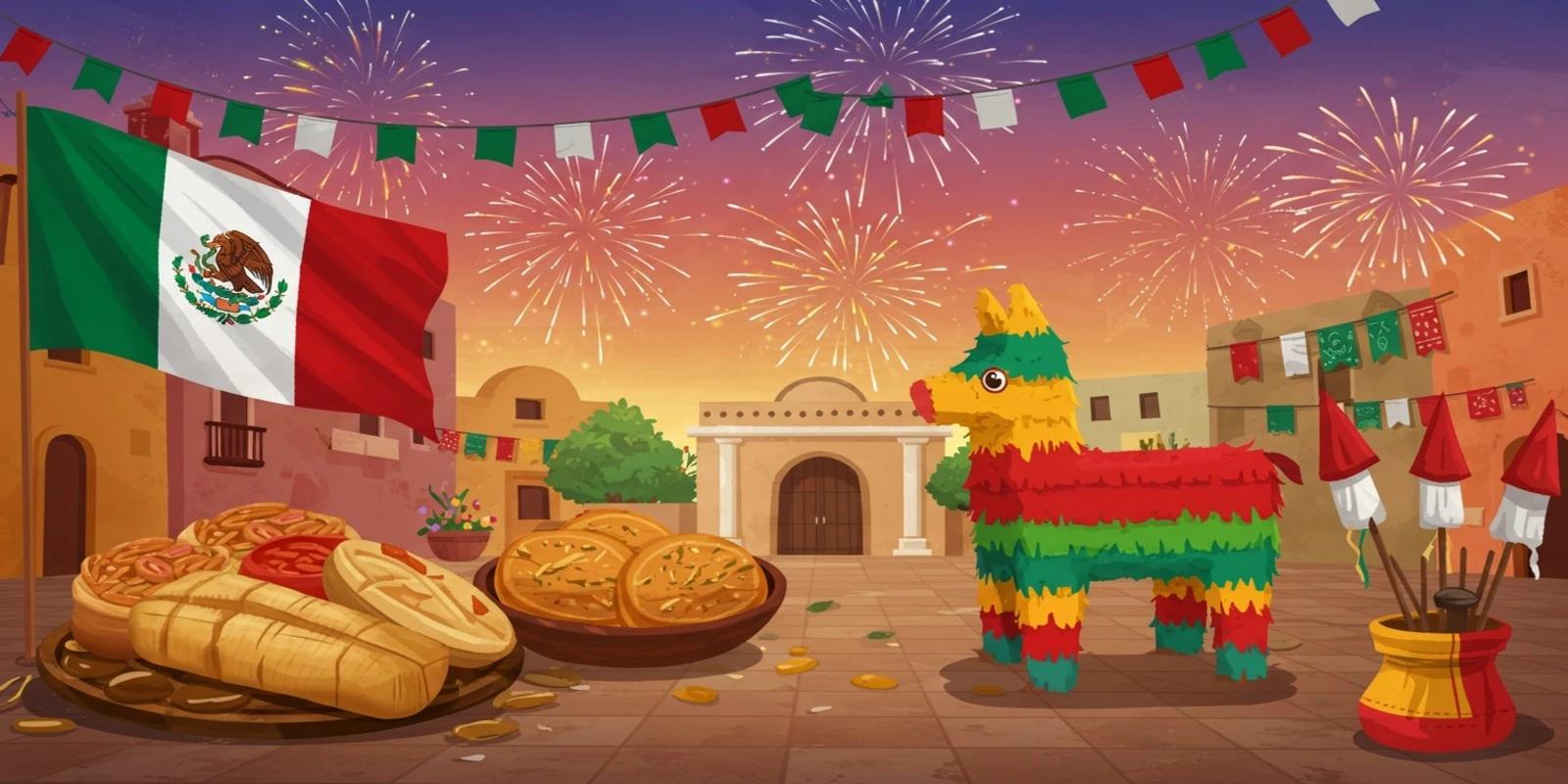
The colors of the Mexican flag seen everywhere on Mexico's Independence Day (green, white, and red) were chosen after independence to represent hope, unity, and the blood of national heroes!
Mexico's Independence Day honors heroes including a famous female spy named Josefa Ortiz de Domínguez who helped start the secret independence movement!
On Mexico's Independence Day, every town and city has its own celebration, with the biggest party happening in Mexico City's main square, the Zócalo!
During Mexico's Independence Day celebrations, people gather in town squares wearing the colors of the Mexican flag and shout "¡Viva México!" which means "Long live Mexico!"
For Mexico's Independence Day school celebrations, children often dress up as independence heroes and heroines, complete with fake mustaches and traditional Mexican dresses!
In many towns, people organize "charreadas" (traditional Mexican rodeos) as part of Mexico's Independence Day celebrations!
The most famous Mexico's Independence Day dish is "chiles en nogada," which has the colors of the Mexican flag: green chiles, white walnut sauce, and red pomegranate seeds!
For Mexico’s Independence Day, many families enjoy pozole, a tasty corn soup that comes in red, white, or green versions — and when you think of all three together they match the green, white, and red of the Mexican flag!
Mexican families make "agua fresca" drinks for Independence Day in the three colors of the flag: lime (green), horchata (white), and jamaica flower (red)!
During Mexico’s Independence Day celebrations, many people enjoy elotes — grilled corn on a stick covered with toppings like lime (green), cheese (white), and chile (red) — and those colors match the Mexican flag, making elotes a fun and delicious part of the festivities!
The Mexican eagle eating a snake on a cactus, which appears on flags during Mexico's Independence Day, comes from an ancient Aztec legend!
During Mexico's Independence Day, houses and buildings are decorated with "banderas" (flags) of all sizes, from tiny paper ones to huge cloth flags!
Mexican communities around the world celebrate Mexico's Independence Day on September 16th with special parties called "fiestas patrias"!
The United States has some of the biggest Mexico's Independence Day celebrations outside of Mexico, especially in cities like Los Angeles and Chicago!