
Makloubeh is a Palestinian dish where rice, vegetables, and meat are cooked in one pot and then flipped upside down to serve!
Palestine - Facts for Kids
Did you know?
Search name of person, animal, place, thing, etc.
Share
Facts About Palestine For Kids
Traditional Palestinian breakfast includes labneh (thick yogurt), olives, tomatoes, and fresh herbs from the garden!
Palestinians make a sweet sesame candy called "halawa" that melts in your mouth and comes in many flavors!
History & Heritage
Palestine is home to some of the world's oldest cities, including Jericho, which is over 10,000 years old!
The city of Bethlehem in Palestine is known around the world as the place where Jesus Christ was born, and people from many countries visit its holy sites every year!
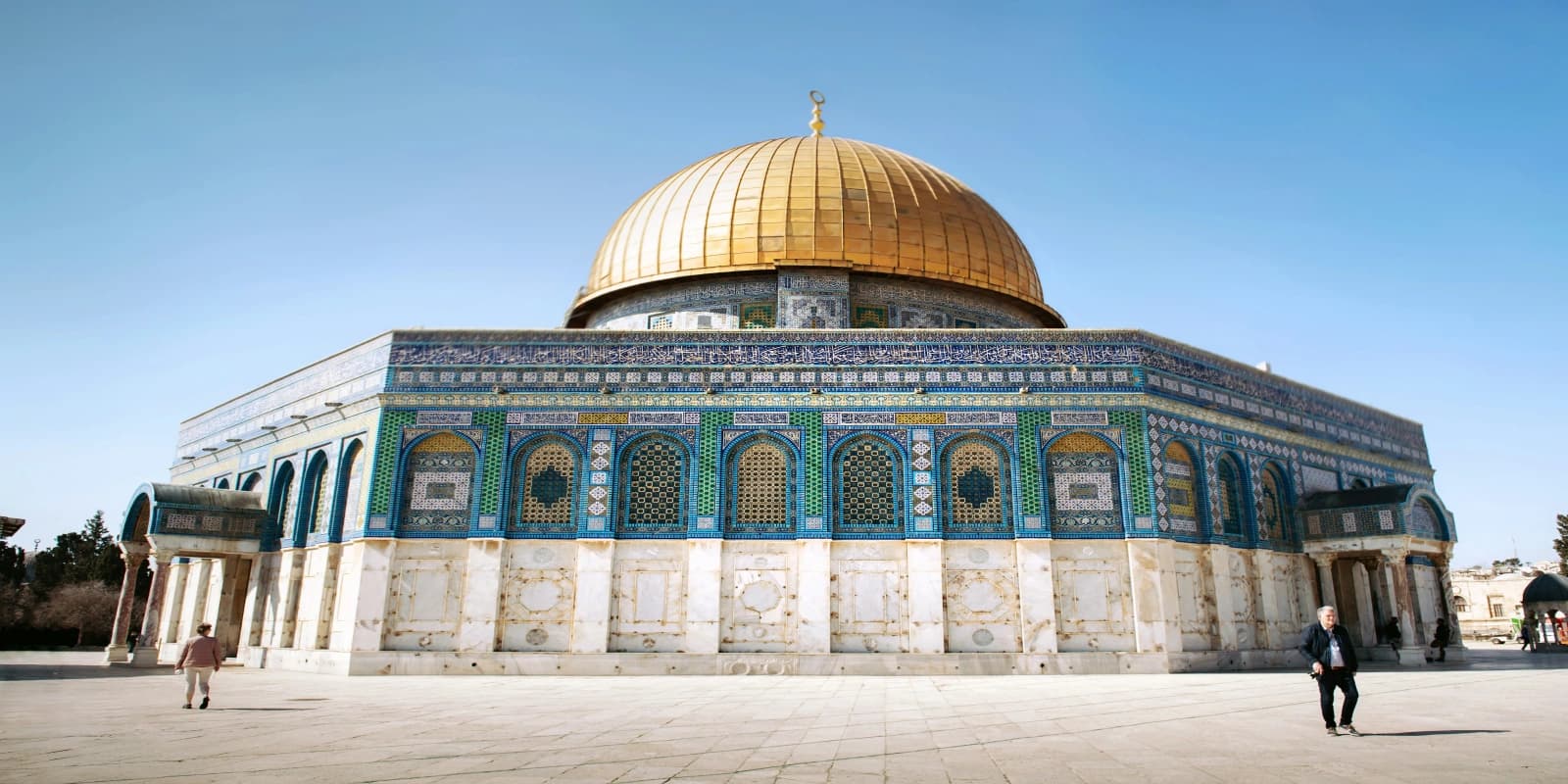
The Dome of the Rock in Jerusalem is a stunning golden building that’s more than 1,300 years old and is one of the most famous historical landmarks in Palestine!
Palestinian farmers have been growing olives for thousands of years — one of the oldest farming traditions in the world — and olives and olive oil are an important part of their culture and food!
Palestine is mentioned in many ancient books and stories, including the Bible, making it one of the most historically significant places on Earth!
The ancient city of Gaza was once a major port where ships from Egypt, Greece, and other countries came to trade!
Palestinian artisans have been making beautiful pottery, glass, and crafts for thousands of years, with skills passed down through families!
The Via Dolorosa is an ancient path in Jerusalem’s Old City that many people walk every year to remember the journey Jesus took long ago, stopping at special stations that mark important moments in the story!
The ancient Palestinian city of Sebastia has ruins from Roman, Byzantine, and Islamic periods all in one place!
The Church of the Nativity in Bethlehem is one of the oldest continuously operating churches in the world!
In ancient times, people along the Mediterranean made a special “royal purple” dye from sea snails that became very valuable. Traders from the coast of the Levant — especially Phoenician cities — sold it far and wide to kings and rich people!
The ancient Palestinian city of Caesarea had one of the world's first concrete harbors, built by Roman engineers!
Some Palestinian archaeological sites like Jericho contain pottery and tools that show people have lived there continuously for over 10,000 years!
Fun & Interesting Facts
Palestinians are incredibly welcoming to guests and will often invite visitors to share a meal, even if they've just met!
Palestinian olive oil is well‑known for its quality and flavor, and there are Palestinian olive oils exported to Europe, North America, and other regions through fair‑trade and organic brands, where they’re sold in specialty food markets and restaurants abroad.
The Palestinian city of Hebron is famous for making beautiful glass products that are blown by hand and painted with bright colors!
Palestinian children often have huge extended families with lots of cousins, aunts, and uncles who all live close together!
The Palestinian embroidery tradition is so special that UNESCO recognized it as an important cultural treasure of the world!
Palestinian soap made from olive oil has been famous for over 1,000 years and is still made the same traditional way today!
In some Palestinian and Arab traditions, when a child’s baby tooth falls out, they might toss it up toward the sun or sky and say a wish for a strong new tooth to grow in its place!
The city of Nablus in Palestine is famous for its delicious kanafeh dessert — a sweet cheese‑filled treat — and many people travel there to try it in the city’s old sweet shops!
Many Palestinian children speak Arabic at home and learn English in school, and some also learn Hebrew or other languages depending on where they live and their school.
Palestinians have a saying "Ahlan wa sahlan" which means "welcome" and shows how much they love having visitors and making new friends!