Basic Information
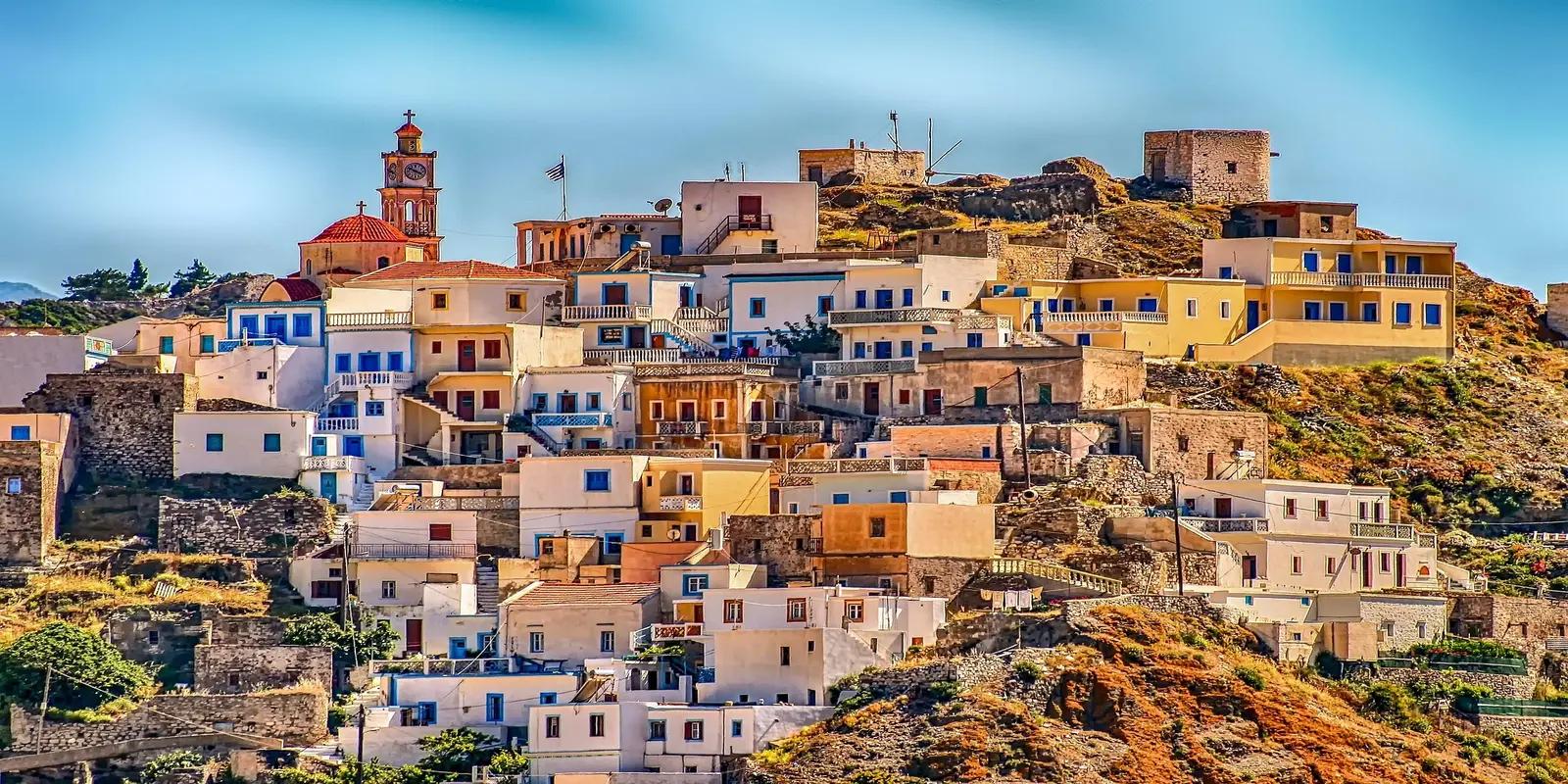
Greece’s official name is the Hellenic Republic, but Greeks call their country “Hellas” or “Ellada” in their own language!


Did you know?
Search name of person, animal, place, thing, etc.
Share
Greece’s official name is the Hellenic Republic, but Greeks call their country “Hellas” or “Ellada” in their own language!
Athens, the capital city of Greece, has been lived in for at least about 5,000 years, making it one of Europe’s oldest continuously inhabited capitals.
Greece has about 10.4 million people, which is close to the population of the State of Georgia in the U.S., which has about 11 million people.
Greece is located in southeastern Europe, surrounded by three different seas: the Mediterranean, Aegean, and Ionian Seas!
The official language of Greece is Greek, and it’s one of the oldest written languages in the world — people have been writing in Greek for over 3,400 years!
Greece uses the euro as its currency, but before 2002, they used a currency called the drachma, which was one of the world’s oldest currencies!
In Greece, the people pick representatives in elections — those representatives go to Parliament and choose the Prime Minister and government who make the country’s decisions.
The Greek flag has nine blue and white stripes, representing the nine syllables in the phrase “Freedom or Death” in Greek!
The national animal of Greece is the dolphin, which appears in many ancient Greek stories and artwork!
Greece has a very long coastline — about 13,676 km (8,498 miles) — which is one of the longest in Europe.
Mount Olympus, Greece’s highest mountain at 2,917 meters (9,570 feet), was believed by ancient Greeks to be the home of their gods!
Greece has about 6,000 islands and islets, and only about 227 of them are inhabited.
The Mediterranean climate in Greece means hot, dry summers and mild, rainy winters — perfect weather for growing olives and grapes!
The Greek island of Santorini (also called Thera) was formed by one of the largest volcanic eruptions in recorded history, which happened about 3,600 years ago!
The Mediterranean monk seal, one of the world’s rarest seals, lives along the Greek coastline!
Greece grows well over 100 million olive trees, and some of those trees are more than 2,000 years old!
The Prespa Lakes in northern Greece are home to the largest pelican colony in Europe!
Greeks celebrate “Name Days” instead of birthdays – each day of the year is dedicated to a saint, and people celebrate on the day of their namesake saint!
Greeks celebrate “Name Days” instead of birthdays – each day of the year is dedicated to a saint, and people celebrate on the day of their namesake saint!
In Greece, people often dance together in a circle (or line) holding hands or shoulders, and follow traditional steps that tell stories of old times!
In Greece, men’s traditional costume called the fustanella is a white, skirt‑like outfit with about 400 pleats — each one said to stand for a year of Ottoman rule!
Greeks invented the Olympic Games over 2,800 years ago in 776 BCE, and they were held every four years in Olympia!
Greek children often receive their Easter eggs dyed bright red, symbolizing the blood of Christ and renewal!
The Greek word “kefi” describes the spirit of joy, enthusiasm, and high spirits that Greeks believe is important in life!
Sometimes in Greece people will smash plates at a big celebration — it’s a loud way of saying ‘We’re so happy!’ and of showing they have plenty to share.
The evil eye, or “mati,” is a blue glass bead that Greeks wear to protect themselves from bad luck!
Greek families often spend several hours at the dinner table, enjoying food and conversation together!
Souvlaki, small pieces of meat grilled on a skewer, is Greece’s most popular street food!
In the past, many Greek schoolchildren wore a blue smock-apron (‘podia’) over their clothes, but today most public schools in Greece do not use uniforms.
The Greek salad (called “horiatiki”) doesn’t include lettuce — it’s made with tomatoes, cucumbers, onions, olives, and a big piece of feta cheese!
Greeks are famous for their hospitality — it’s common to offer visitors food and drinks, even if they drop by unexpectedly!
The Parthenon in Athens was built about 2,450 years ago (around 447‑432 BCE) using white marble and clever mathematical design.
The ancient Greeks invented democracy, and the word democracy comes from two Greek words meaning ‘people’ (dêmos) and ‘power’ or ‘rule’ (kratos)!
Ancient Greek children played with yo-yos, which were made from wood, metal, or painted terra cotta!
The Greek alphabet has been used for over 2,800 years, and it was the first alphabet with separate letters for both consonants and vowels!
Ancient Greeks invented the theater, and actors wore large masks so people sitting far away could see their expressions!
The ancient Greeks had a machine called the Antikythera Mechanism that could predict astronomical events and was built over 2,000 years ago!
Herodotus was a Greek writer who lived over 2,400 years ago. He wrote The Histories about the Persian Wars, and people often call him the “Father of History.”
In ancient Greece, students practiced writing on wax tablets using a stylus. When they wanted to erase something, they could smooth or melt the wax — just like using an eraser — and write again!
The famous Trojan Horse story comes from Greece, and it tells how Greek soldiers hid inside a giant wooden horse to enter the city of Troy!
Greeks are among the world’s biggest consumers of olive oil — they use about 12 liters per person each year, on average.
Legend says that Archimedes once stepped into a bath, saw the water rise, and realised he could use that to measure the volume of an object. Excited, he shouted ‘εὕρηκα!’ (‘Eureka!’ — ‘I have found it!’) and ran through the streets!
Greece gets a lot of sunshine — many parts average 250–300 sunny days a year, depending on the region.
A long time ago, the Greeks invented a kind of alarm clock using water! As the water filled a container, it pushed out air and made a whistling sound — just like an old kettle — to wake people up.
The word ‘school’ comes from the ancient Greek scholē, which meant ‘leisure’ or free time — because the Greeks believed the best thinking and learning happened when you weren’t working.
The Greek island Ikaria is famous for its old people — a very large portion of its residents live past 90 years, making it one of the world’s ‘Blue Zones’ of longevity.
The Greek city of Meteora has monasteries built on top of giant rock pillars — some as high as 40-story buildings!
The Greek word “gymnasium” originally meant a place where people exercised naked!
Ancient Greek engineers invented a version of the crane around the late 6th century BCE to help lift heavy stones when building temples.