Formation & Science
A cyclone is like a giant spinning dance of air that forms over warm ocean waters!


Did you know?
Search name of person, animal, place, thing, etc.
Share
A cyclone is like a giant spinning dance of air that forms over warm ocean waters!
Cyclones need ocean water that's at least 26.5°C (80°F) warm to form – that's about as warm as a swimming pool!
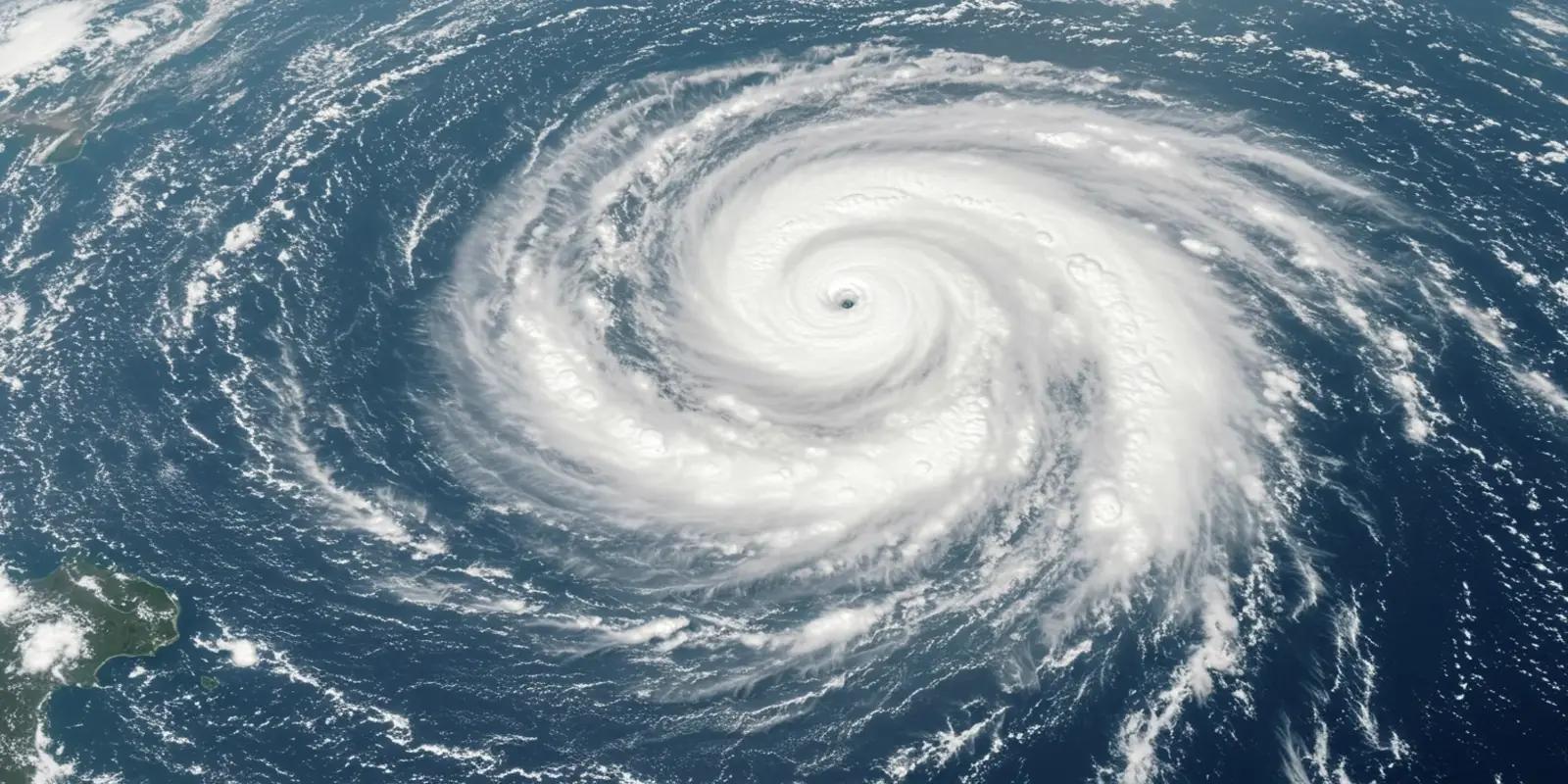
The center of a cyclone, called the "eye," is surprisingly calm and clear, like being in the middle of a giant stadium with storms all around!
Cyclones spin counterclockwise in the Northern Hemisphere and clockwise in the Southern Hemisphere due to Earth's rotation!
The warm ocean water acts like fuel for a cyclone, providing energy through a process called evaporation!
A big tropical cyclone can release a mind-blowing amount of energy every day — so much that if you tried to compare it to fireworks, it’s like a big explosion happening again and again over one whole day!
The air pressure inside a cyclone's eye can be lower than anywhere else on Earth's surface.
Some of the biggest cyclones have storm clouds that stretch up into the sky about 50,000 feet high — that’s even taller than Everest!
A cyclone can dump a lot of rain — sometimes billions of gallons every day over huge areas.
Cyclones form when warm, moist air rises rapidly, creating a low-pressure area that more air rushes to fill!
The eye of a cyclone can be about 30–65 km (20–40 miles) wide.
Some of the strongest cyclones on Earth have winds that blow even faster than 200 miles per hour — that’s super strong and much faster than any roller coaster!
The bands of rain in a cyclone look like giant spiral arms from space, similar to a pinwheel!
The strongest winds in a cyclone are found in the eyewall, which forms a circle around the calm eye!
The word cyclone comes from the Greek word for "circle" — because cyclones spin in circles. That’s why we call those big storms cyclones!
A cyclone’s rainbands can fan out like giant arms over the ocean, reaching hundreds of miles from the storm’s center.
The eye of a cyclone is so clear that you can sometimes see blue sky and stars above!
Scientists use special airplanes called "Hurricane Hunters" to fly into cyclones and gather data!
Satellites take pictures of cyclones every 15-30 minutes to track their movement!
Weather buoys floating in the ocean help measure wind speeds and wave heights during cyclones!
The Saffir-Simpson scale rates cyclones from Category 1 to 5, with 5 being the strongest!
Today, scientists often can guess where a cyclone will move even a week ahead.
Special instruments called anemometers measure cyclone wind speeds!
Barometers help track the extremely low air pressure in cyclones!
Most tropical cyclones start their lives in a belt around Earth — usually a bit away from the Equator — between about 5° and 20–30° latitude north or south.
The Atlantic hurricane season officially runs from June 1st to November 30th!
The Pacific Ocean has the most cyclones of any ocean basin!
Cyclones rarely form directly on the equator because they need Earth's rotation to start spinning!
Long ago in Australia, people sometimes called big storms ‘willy‑willies.’ But now they mostly call them ‘cyclones.’
The Bay of Bengal has some of the deadliest cyclones because of its shape and population density!
Different regions have different names for cyclones – hurricanes in the Atlantic, typhoons in the Pacific!
Many Atlantic hurricanes travel right through the Caribbean Sea on their way to islands or land.
Cyclones are like Earth’s giant weather‑machines: they lift warm, wet air from hot oceans up into the sky, move it around, and spread heat and rain across far‑away places.
Sometimes a huge cyclone blows so hard that even very old, giant trees can be pulled out of the ground or snapped in two.
A cyclone's storm surge can push seawater up to 20 feet above normal levels!
Cyclones can change ocean temperatures by mixing warm surface water with cooler deep water!
The first weather satellite to track cyclones (and weather generally) was TIROS-1, launched in 1960.
The first widely accepted manned flight into a cyclone was on July 27, 1943.
The longest-lasting cyclone ever recorded spun for 36 days!
The largest cyclone ever measured was Typhoon Tip in 1979, spanning 1,380 miles!
The deadliest cyclone in history occurred in Bangladesh in 1970!
Special computers called “supercomputers” create cyclone forecast models!
Drones can now fly into parts of cyclones that are too dangerous for planes!
Scientists give cyclones names to help people remember and track them better!
The lowest air pressure ever recorded in a cyclone was 870 millibars!
The smallest cyclone eye ever measured was about 2.3 miles wide!
The record for the farthest-travelled cyclone is held by Hurricane/ Typhoon John — it went more than 8,100 miles during its life.
The most expensive cyclone damage was $125 billion from Hurricane Harvey!
The eye of a cyclone is largely created by a process called subsidence (sinking air).