Basic Information
Canada is the second-largest country in the world, after Russia. It covers about 9.98 million square kilometers of land—so huge that you could fit around 15 million Disneylands inside it!


Did you know?
Search name of person, animal, place, thing, etc.
Share
Canada is the second-largest country in the world, after Russia. It covers about 9.98 million square kilometers of land—so huge that you could fit around 15 million Disneylands inside it!
Canada’s capital city is Ottawa, located in the province of Ontario. About 1 million people live in Ottawa, making it one of the country’s biggest cities!
Canada has two official languages – English and French – and over 200 other languages are spoken throughout the country!
The Canadian dollar is sometimes called a “loonie” because the $1 coin has a picture of a loon—a water bird—on one side!
Canada is part of North America and shares the world’s longest international border with the United States, stretching about 8,891 kilometers (5,525 miles)!
Canada has ten provinces and three territories, and each one has its own unique culture, cities, and landscapes—from snowy Arctic lands to forests, mountains, and oceans!
The maple leaf on Canada’s flag represents the maple trees that grow across the country and has long been a symbol of Canada. These trees are also famous for producing sweet maple syrup!
Canada’s national animal is the beaver, a busy builder famous for making dams in rivers and lakes across the country!
Canada’s national anthem is called “O Canada.” It was first sung in 1880, but it didn’t become Canada’s official national anthem until 1980—exactly 100 years later!
More than 41 million people live in Canada today—about the same number of people as the entire U.S. state of California!
Canada has the longest coastline of any country in the world, stretching over 202,000 kilometers (125,000 miles) and touching three oceans—the Pacific, Atlantic, and Arctic!
Niagara Falls, located between Ontario in Canada and New York State in the United States, sends so much water over its edge every second that it could fill tens of thousands of bathtubs!
Wood Buffalo National Park in Alberta is so huge that it’s bigger than the country of Switzerland, and it’s home to the world’s largest beaver dam—stretching about 850 meters (2,788 feet) long!
The Bay of Fundy in Nova Scotia has the highest tides in the world. The water level can rise and fall by about 16 meters (52 feet)—as tall as a four-story building!
Canada has more lakes than any other country in the world, with over 2 million lakes spread across the country!
The Northern Lights (Aurora Borealis) can be seen from many places in Canada, lighting up the night sky with magical waves of green, purple, and pink colors!
Churchill, Manitoba is known as the “Polar Bear Capital of the World.” In the fall, polar bears gather near the town—and sometimes even wander through it while waiting for the sea ice to form!
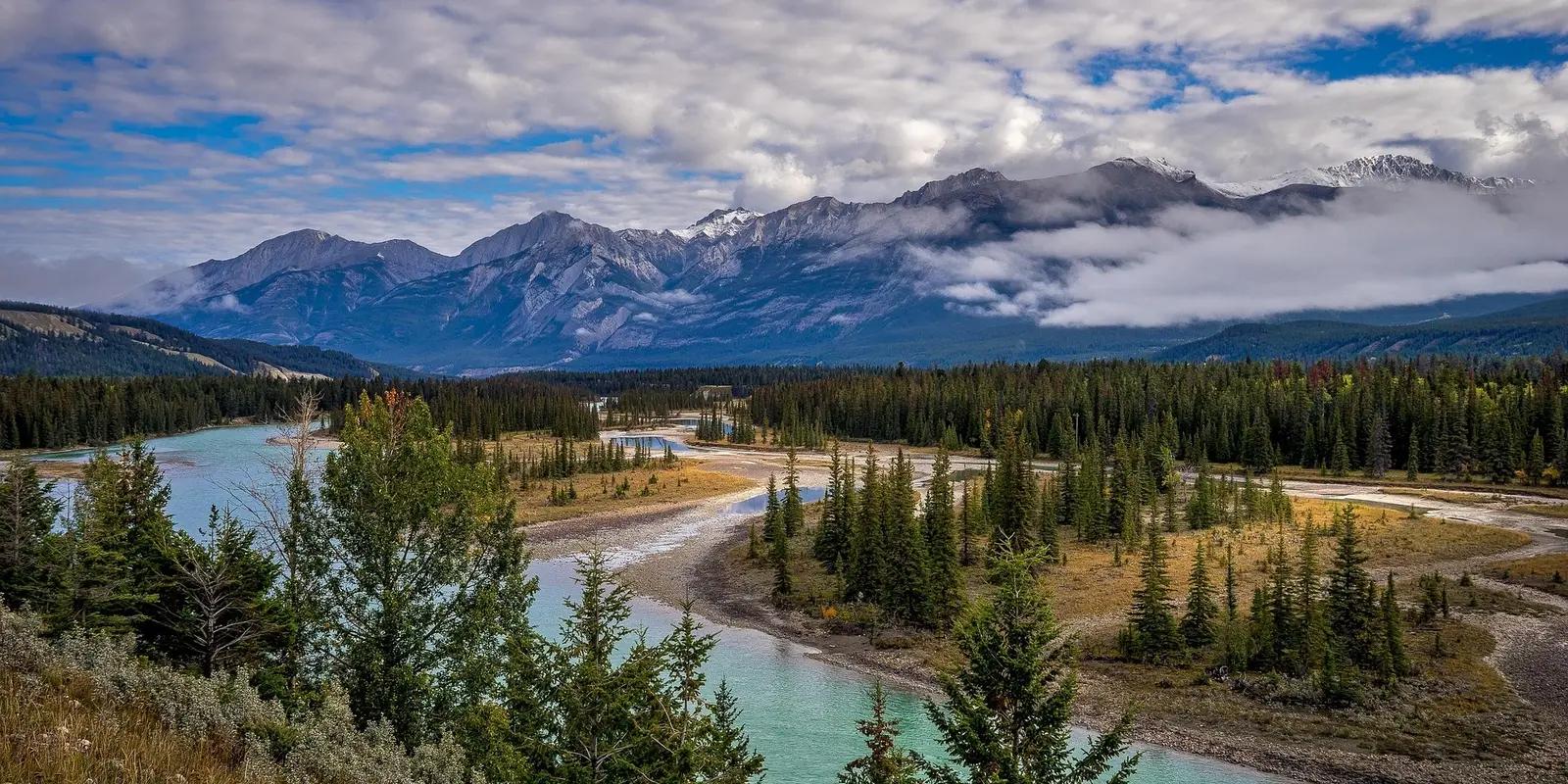
The Rocky Mountains stretch about 4,800 kilometers (3,000 miles) from northern Canada all the way to New Mexico in the United States—long enough that you could line up thousands of school buses end to end across the mountains!
Some of Canada’s oldest trees grow in British Columbia, and many are over 1,000 years old—making them older than many castles in Europe!
Castleguard Cave in Alberta is one of Canada’s longest cave systems, stretching more than 21 kilometers (13 miles) underground—longer than about 200 soccer fields placed end to end!
Hockey is Canada's national winter sport, and lacrosse is the national summer sport!
Canadians celebrate Canada Day on July 1 with parades, fireworks, music, and lots of red and white decorations—the colors of the Canadian flag!
The Calgary Stampede is a huge 10-day festival celebrating cowboys and western culture, where even business people wear cowboy hats!
Poutine, a tasty dish of french fries covered in gravy and cheese curds, was invented in Quebec in the late 1950s and is now one of Canada’s most famous foods!
Inuit languages have special words for different kinds of snow—like falling snow, drifting snow, or snow on the ground—because snow is an important part of life in the Arctic!
Canadian kids often enjoy making maple syrup taffy by pouring hot maple syrup onto fresh snow, where it cools and turns into a sweet, chewy candy on a stick!
Tim Hortons, a famous Canadian coffee and donut shop, was started by a hockey player!
The Royal Canadian Mounted Police (Mounties) wear bright red uniforms and are recognized around the world!
Every winter, Ottawa turns part of the Rideau Canal into the world’s largest skating rink. The frozen path is about 7.8 kilometers (4.8 miles) long—about the same size as 90 hockey rinks!
Canada’s CN Tower in Toronto was once the world’s tallest free-standing structure. At 553 meters tall, it’s about as tall as 147 giraffes stacked on top of each other!
Canadian scientists helped create the world's first successful insulin treatment for diabetes in 1922!
Canada's SkyTrain in Vancouver is one of the world's longest automated train systems – it drives itself without any drivers!
Canadian kids in Scouts and Girl Guides can earn special badges by learning outdoor skills, helping their community, and trying new activities!
Basketball was invented in 1891 by James Naismith, a Canadian teacher who created the game so his students could play a fun sport indoors during the winter!
Many Canadian classrooms use smart boards instead of chalkboards, and students often start learning simple coding skills in elementary school!
Montreal has an underground city with 32 kilometers (20 miles) of tunnels connecting shopping centers, metro stations, and buildings so people can avoid the cold winter!
Canada launched its first satellite, Alouette 1, in 1962. This made Canada the third country in space after the Soviet Union and the United States!
Canada’s Wonderland near Toronto has some of the world’s biggest roller coasters. One of them, Leviathan, is over 93 meters (306 feet) tall and races along at about 148 km/h (92 mph)!
Canadian children often bring their winter boots to school and keep indoor shoes in their lockers!
Maple syrup was first made by Indigenous peoples, who discovered how to tap maple trees for sweet sap and later taught European settlers how to make syrup from it!
Many Canadian schools offer English and French immersion programs, where kids learn their regular subjects in both languages and grow up speaking English and French!
Butter tarts are a famous Canadian dessert, and one of the earliest recipes was written in Ontario around 1900. These sweet treats have a gooey filling made with butter, sugar, and eggs inside a flaky pastry shell!
Canadian kids often go "tobogganing" – sliding down snowy hills on special sleds – during winter recess!
Canadian families love to go camping and often make "s'mores" – a treat made with graham crackers, chocolate, and roasted marshmallows!
Many Canadian schools celebrate "Winter Carnival" with fun outdoor activities like snowshoe races and ice sculpture contests!
Canadian kids sometimes get “snow days” when heavy snowfall or icy weather makes it unsafe to travel to school—so classes are cancelled for the day!
Most Canadian students bring packed lunches to school in lunchboxes, often including healthy snacks and sandwiches!
Many Canadian families go "cottage camping" in summer, staying at lakeside cabins and swimming every day!
In Quebec, many families eat dinner earlier in the evening, often between 5:00 and 7:00 PM, and they call dinner “souper” in French!
Many Canadian schools hold a “Terry Fox Run” each year to raise money for cancer research, honoring Terry Fox—a brave Canadian hero who ran across the country to help people with cancer!