Early Life & Background
Yayoi Kusama was born on March 22, 1929, in Matsumoto City, Japan, where she grew up surrounded by beautiful mountains and nature.


Did you know?
Search name of person, animal, place, thing, etc.
Share
Yayoi Kusama was born on March 22, 1929, in Matsumoto City, Japan, where she grew up surrounded by beautiful mountains and nature.
Yayoi Kusama grew up in a family that ran a plant nursery where they grew seeds and flowers to sell.
Yayoi Kusama had three older brothers and sisters, so she was the youngest child in her family. She grew up with her siblings on their family’s plant nursery!
Yayoi Kusama’s mother didn’t want her to be an artist and often took away her drawings and paints. Her mom hoped she would follow a more traditional path instead of becoming a painter.
Yayoi Kusama started drawing and painting when she was about 10 years old, even though her family didn't approve at first.
As a young child, Yayoi Kusama began seeing colorful dots and patterns everywhere in her mind and around her, and those early visions grew into the bold, polka-dot art she became famous for!
Yayoi Kusama grew up during a difficult time in Japan's history when there was not much food or money during World War II.
Yayoi Kusama grew up at her family’s plant nursery with gardens full of plants, seeds, and pumpkins. She started drawing pumpkins when she was young, and those early experiences helped make pumpkins and natural shapes a big part of her art as she grew up
Yayoi Kusama’s mother was very strict and didn’t think art was a good job for her daughter. She wanted Yayoi to get married and live a more traditional life instead of becoming an artist.
Yayoi Kusama decided as a young girl that she would become an artist, even though it was very unusual for Japanese women at that time.
When she was about 19 years old, Yayoi Kusama went to the Kyoto Municipal School of Arts and Crafts to learn traditional Japanese painting (nihonga).
Yayoi Kusama learned the ancient Japanese art of nihonga, which uses special natural paints and materials.
Yayoi Kusama once wrote a letter to the famous American artist Georgia O’Keeffe asking for help and advice about being an artist. To her surprise, O’Keeffe wrote back encouraging her and even told her to show her art to as many people as she could — and that helped Kusama follow her dream!
Yayoi Kusama decided to move to America in 1957, when she was about 28 years old, so she could show her art to the world and chase her dream of becoming a famous artist!
When Yayoi Kusama first came to America in 1957, she arrived in Seattle with a suitcase full of her drawings, paintings, and kimonos — ready to follow her dream of becoming an artist, even though she didn’t have much money to start with!
When Yayoi Kusama moved to New York City to make art, she lived and worked in an English‑speaking place. Over time, she got better at English just by living in America, meeting people, and using the language every day — like many people who move to a new country.
Yayoi Kusama studied the work of abstract expressionist artists and decided to create her own unique style instead.
Yayoi Kusama developed her famous "Infinity Net" painting technique by covering entire canvases with tiny loops and nets.
Yayoi Kusama moved to New York City in 1958 and lived in a small studio where she created her first major artworks.
Yayoi Kusama held her first solo exhibition in New York in 1959 when she was 30 years old.
n the 1960s in New York City, Yayoi Kusama became friends with and worked alongside important artists like Donald Judd, and she also knew other big names in the art world, including Andy Warhol, as she showed her work and met many creative people in the city.
In 1965, Yayoi Kusama made her very first Infinity Mirror Room, using mirrors and materials that reflect light so the space looked like it went on and on forever — just like stepping into a magical, endless world!
Yayoi Kusama held art parties in the 1960s where people became part of the art by having polka dots painted on them and joining in creative, playful performances!
Yayoi Kusama returned to Japan in 1973 and continued creating art in Tokyo.
Since 1977, Yayoi Kusama has chosen to live in a psychiatric hospital in Tokyo, where she feels steady and safe.
Yayoi Kusama represented Japan at the Venice Biennale in 1993, one of the world's most important art exhibitions.
Yayoi Kusama received the Order of Culture from the Emperor of Japan in 2016, the highest honor for an artist in Japan.
Yayoi Kusama was named one of Time Magazine's 100 Most Influential People in 2016.
Yayoi Kusama has created over 20 different "Infinity Mirror Rooms" that people can walk inside and experience.
Yayoi Kusama’s bright, polka‑dotted pumpkin sculptures can be found in art museums and outdoor spaces all over the world, from Japan to London, the United States, and more.
Yayoi Kusama wrote her own life story called Infinity Net, originally published in 2002 in Japan and later in English. In it, she shares how she became an artist, her big adventures, and what inspired her amazing art!
Yayoi Kusama's artwork has been shown at the Museum of Modern Art in New York, one of the most famous museums in the world.
Yayoi Kusama made big pumpkin sculptures that have been shown on Naoshima Island in Japan, where visitors can see and even step inside them against the sparkling sea.
Yayoi Kusama collaborated with fashion brand Louis Vuitton in 2012 to create polka-dotted bags and clothes.
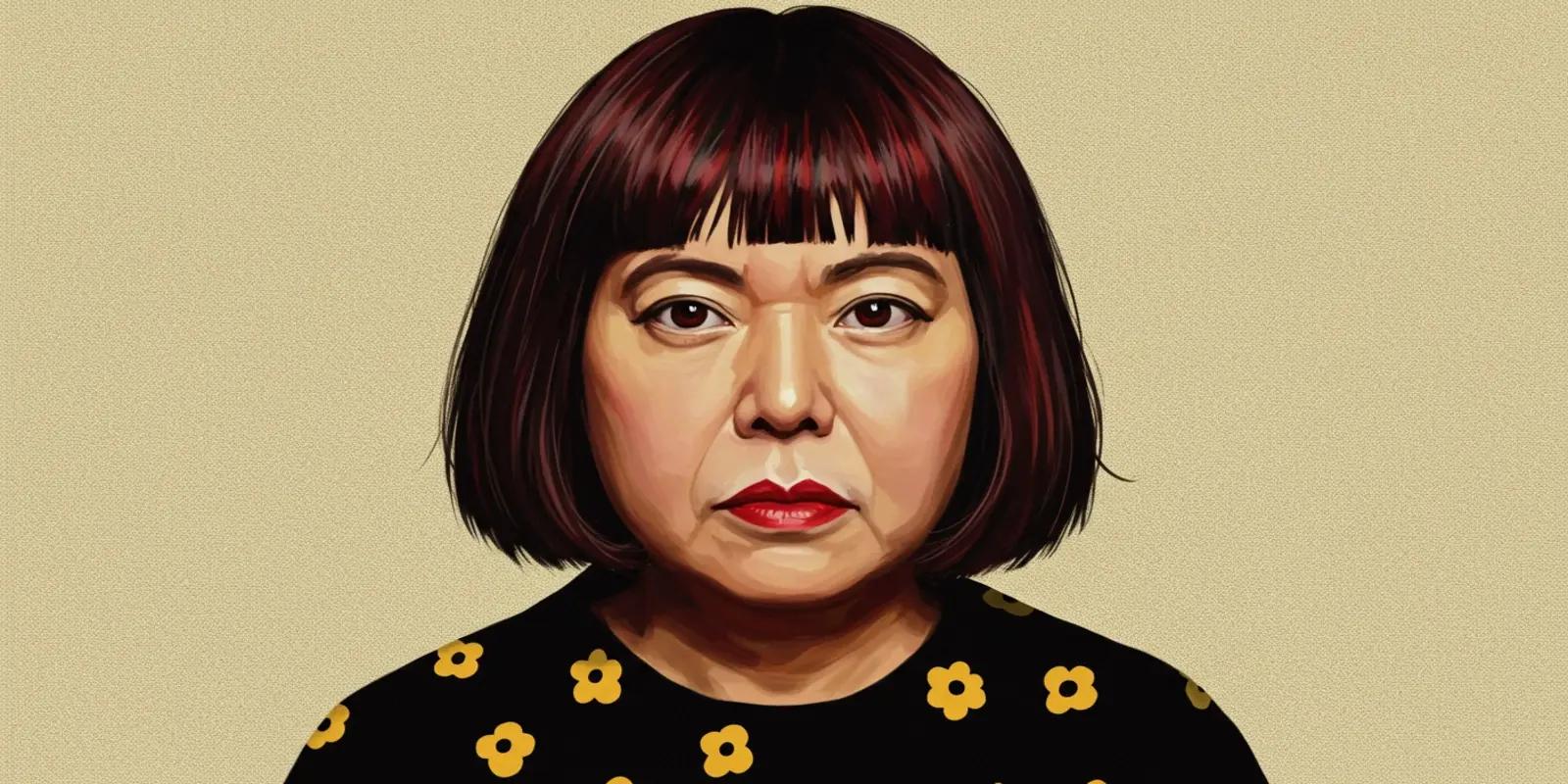
Yayoi Kusama often wears a bright red or orange wig and colorful polka‑dot clothes when she appears in public, making her look as bold and fun as her art!
Yayoi Kusama never got married and chose to focus her life on making art, sharing her imagination and bold ideas with the world instead of starting a family of her own.
Yayoi Kusama is considered one of the most important living artists in the world today.
Yayoi Kusama helped shape the Pop Art world in the 1960s because her bright patterns, dots, and repeat images were new and exciting to other artists.
Yayoi Kusama inspired countless young artists, especially women, to follow their artistic dreams.
Yayoi Kusama showed the world that people with mental health challenges can create beautiful and meaningful art.
Yayoi Kusama showed the world that repetition and patterns — like thousands of dots and lines — can be just as powerful as realistic painting by using them to make art that feels big, bold, and full of imagination!
Yayoi Kusama has museums dedicated entirely to her work in Tokyo, Japan, which opened in 2017.
Yayoi Kusama’s art sells for millions of dollars at big auctions, making her one of the most expensive living female artists because collectors all over the world want her paintings and installations!
Yayoi Kusama helped inspire art where people can walk right into the artwork — like her famous Infinity Mirror Rooms that make you feel surrounded by stars or dots.
Yayoi Kusama's iconic polka dots have become recognized worldwide as a symbol of joy and infinity.
Yayoi Kusama’s name “Yayoi” refers to a period in ancient Japanese history from around 300 BC to 300 AD.
Yayoi Kusama once made a rowboat covered with hundreds of soft, fabric shapes as part of an art installation in the 1960s.
Yayoi Kusama's favorite color combination is yellow and black, which she uses for many of her pumpkin sculptures.
Yayoi Kusama created an artwork called "Narcissus Garden" with about 1,500 mirrored balls at the Venice Biennale in 1966.