
Ludwig van Beethoven had a fiery temper and sometimes threw objects at servants or stormed out of restaurants if he was unhappy with the service.
Ludwig van Beethoven - Facts for Kids
Did you know?
Search name of person, animal, place, thing, etc.
Share
Facts About Ludwig van Beethoven For Kids
Beethoven loved his coffee and was so precise about it that he counted out exactly 60 coffee beans for every cup he brewed — no more, no less!
Ludwig van Beethoven became the guardian of his nephew Karl after his brother died, but their relationship was troubled and difficult.
Beethoven moved many times while he lived in Vienna — more than 60 different places over the years! He changed apartments often as his life and music‑making changed, and sometimes his loud piano playing and strong personality didn’t always go over well with neighbors.
Beethoven sometimes poured cold water over his hands while humming loudly as he composed, which often surprised his neighbors.
Beethoven kept portraits of musical heroes like Handel and Bach on his wall so their music and spirit could inspire him while he composed.
Beethoven enjoyed a cheesy pasta dish (macaroni with cheese) and sometimes asked for it while composing, but it was a fancy version with Parmesan, not the boxed macaroni and cheese we know today.
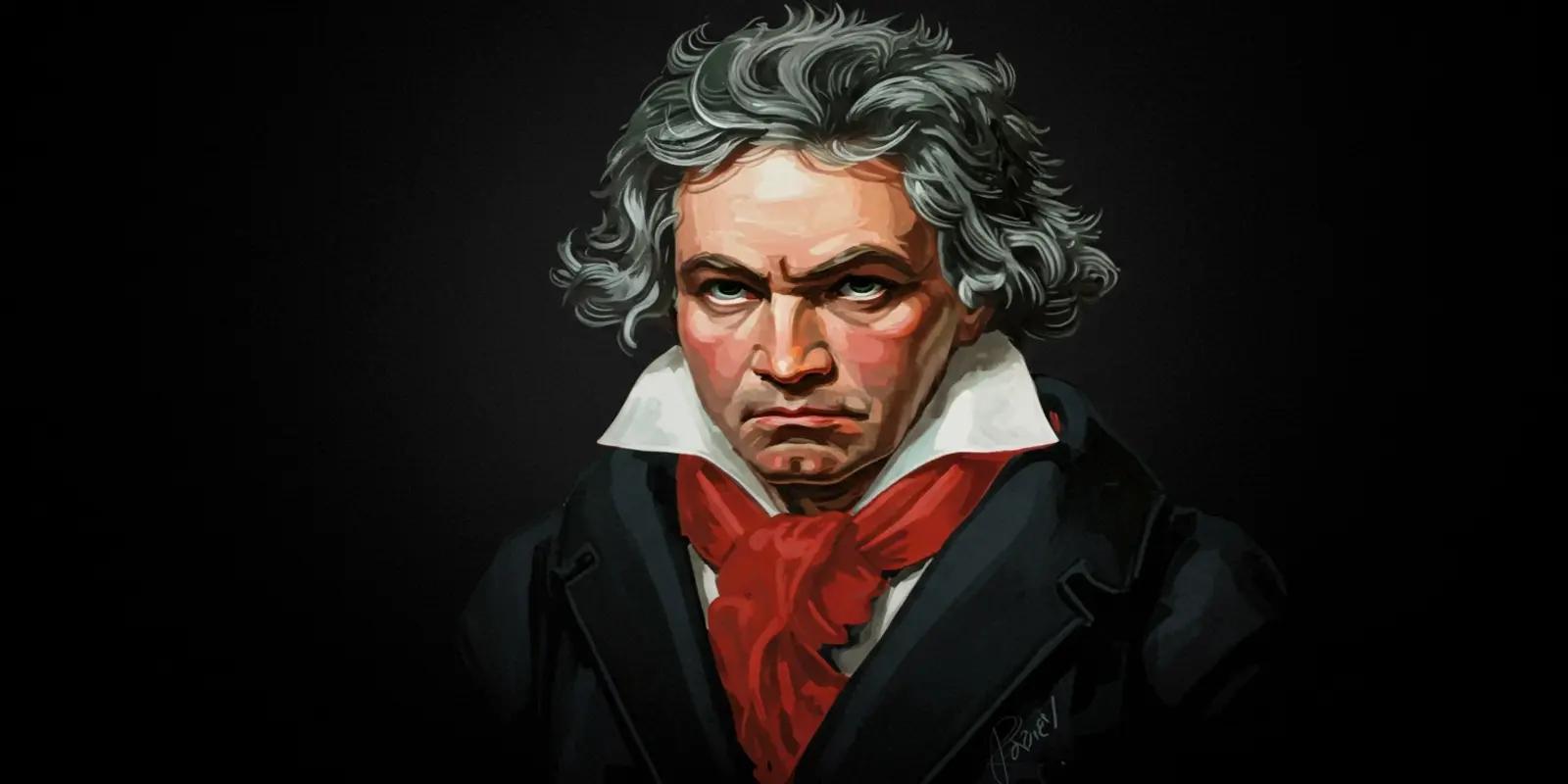
Beethoven often looked a bit messy — his hair was wild and uncombed, and his clothes sometimes didn’t match or look neat because he cared more about his music than how he looked.
Ludwig van Beethoven's health was poor throughout much of his adult life, suffering from various illnesses including digestive problems, rheumatism, and liver disease.
Impact & Legacy
Ludwig van Beethoven revolutionized classical music by expanding the length, emotional range, and complexity of symphonies, sonatas, and chamber music.
Ludwig van Beethoven's music helped transition classical music from the Classical period to the Romantic period, influencing composers for generations to come.
Ludwig van Beethoven's late string quartets were so advanced for their time that many listeners found them incomprehensible at first, but they're now considered some of the greatest chamber music ever written.
Beethoven’s funeral in Vienna in 1827 drew a huge crowd — around 20,000 people followed his funeral procession, showing just how beloved he was as a composer.
Ludwig van Beethoven's manuscripts and personal items are now preserved in libraries and museums around the world, especially in Vienna, Bonn, and Berlin.
Beethoven’s music is played very often in concert halls around the world — one of the most frequently performed of all classical composers, and his works remain favorites in orchestras’ programs year after year.
Beethoven’s “Ode to Joy” melody from his Ninth Symphony has been used around the world as a symbol of hope, freedom, peace, and unity.
Beethoven was one of the first major composers to work as a freelancer — he didn’t have a permanent job with a church or court, and instead made a living from concerts, teaching, and selling his music, helping shape the idea of the independent artist.
Beethoven’s struggle with deafness has inspired people around the world — including many with disabilities — to follow their dreams and keep pursuing what they love, even when life gets hard.
Ludwig van Beethoven's influence extends far beyond classical music—his work has been featured in movies, TV shows, commercials, and even video games.
Ludwig van Beethoven's image has appeared on German currency, stamps, and countless souvenirs, making him one of the most recognizable figures in classical music.
Ludwig van Beethoven’s music has been sent into space on the Voyager Golden Record, representing the best of human creativity to any extraterrestrial life that might find it.
Beethoven was one of the first major composers to use the brand‑new metronome in his music and include exact tempo numbers so musicians would know exactly how fast or slow to play his pieces.
Beethoven’s musical ideas changed the way composers wrote music after him — especially how he developed themes and motifs and expanded musical forms like the symphony, sonata, concerto, and quartet.
Fun Facts & Trivia
Beethoven was not very tall — he was probably around 5 feet 3 inches to 5 feet 5 inches (about 160–165 cm) tall, which was about average or a bit short for his time.
Ludwig van Beethoven's Second Symphony was written while he was coming to terms with his increasing deafness, yet it's one of his most cheerful and energetic works.
Beethoven’s famous “Für Elise” (Bagatelle No. 25 in A minor) wasn’t published until about 40 years after his death (in 1867) and the original autograph manuscript that the first publisher claimed to use has since been lost.
Beethoven could be quite absent‑minded and untidy — on one long walk he was mistaken for a homeless person and arrested for vagrancy because of his messy appearance and roaming about, until someone who knew him came to get him released.
Ludwig van Beethoven was one of the first composers to use the piano pedals extensively, creating new sounds and effects that weren't possible before.
Ludwig van Beethoven's pupils included Archduke Rudolf of Austria, who was both a student and a patron of the composer.
Beethoven is often said to have whispered the Latin phrase “Plaudite, amici, comoedia finita est” (“Applaud, friends, the comedy is over”) near the end of his life, though it’s possible this story grew over time in the memories of his friends.
Ludwig van Beethoven's hearing aids included special ear trumpets made by Johann Nepomuk Mälzel, the inventor of the metronome.
Ludwig van Beethoven's Seventh Symphony was so popular at its premiere that the audience demanded an immediate encore of the second movement.
Ludwig van Beethoven's favorite composers were Handel and Bach, and he once said, "Handel is the greatest composer who ever lived."
Ludwig van Beethoven's music was performed at the fall of the Berlin Wall in 1989, symbolizing freedom and unity.
Soon after Beethoven died in 1827, his body was examined and later exhumed in the 19th century, and some fragments of his skull were taken by a Viennese doctor.
Ludwig van Beethoven's burial site has been moved once—his remains were exhumed and reburied in a more prominent location in Vienna's Central Cemetery in 1888.
Ludwig van Beethoven's String Quartet No. 14 in C-sharp minor, Opus 131 has seven movements played without pauses, unusual for its time, and was the composer's personal favorite.
Ludwig van Beethoven's Symphony No. 5 became a powerful symbol of Allied victory during World War II because its opening motif matches the Morse code for "V" (for victory).
Ludwig van Beethoven's body was exhumed twice after his death for scientific study, once in 1863 and again in 1888.
Ludwig van Beethoven's last public performance was conducting his Ninth Symphony in 1824, even though he was completely deaf—another conductor stood behind him to help the orchestra follow his tempo.