Basic Information and Location
Chichén Itzá sits on Mexico’s Yucatán Peninsula, about halfway between the cities of Cancún and Mérida—like a hidden treasure on a giant map!

Did you know?
Search name of person, animal, place, thing, etc.
Share
Chichén Itzá sits on Mexico’s Yucatán Peninsula, about halfway between the cities of Cancún and Mérida—like a hidden treasure on a giant map!
The name Chichen Itza means “At the mouth of the well of the Itza people” — the Itza were the Maya people who built this amazing city!
Chichén Itzá became a UNESCO World Heritage Site in 1988, which means people around the world work together to protect this amazing ancient city!
People built Chichen Itza more than 1,500 years ago – that's older than your great-great-great-great-grandparents' time!
Chichén Itzá covers about 4 square miles—almost like nearly 2,000 football fields put together! That’s a huge ancient city to explore!
The Maya people started building Chichén Itzá around the year 600 CE, which means some parts of Chichén Itzá are more than 1,400 years old!
The Maya chose this spot to build Chichén Itzá because it had two big natural sinkholes called cenotes that provided fresh water.
Chichén Itzá was like an ancient super city, with temples, plazas, and neighborhoods where priests, leaders, and everyday Maya families lived and worked.
The Maya built Chichen Itza without any metal tools, wheels, or pack animals – they did it all with stone tools and lots of teamwork!
Different Maya rulers added new buildings to Chichén Itzá over hundreds of years—so the city slowly grew bigger and bigger across many generations!
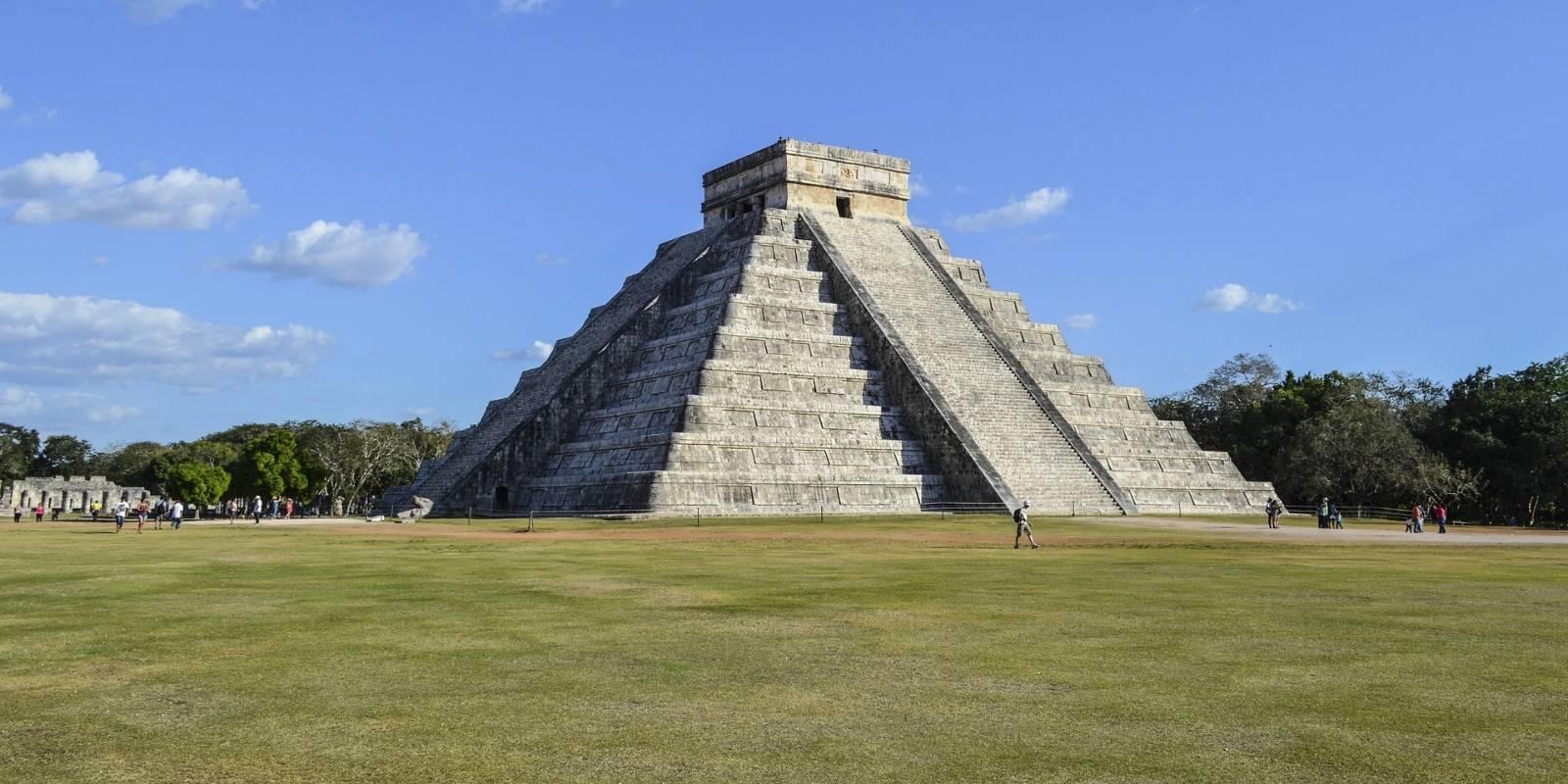
The most famous building at Chichén Itzá is called El Castillo (The Castle), and it works like a giant stone calendar with 365 steps—one for each day of the year!
El Castillo is about 98 feet tall—that’s like a 9‑story building or 16 kids standing on each other’s shoulders!
During the spring and fall equinoxes, the sun makes shadows on El Castillo that look like a giant snake slithering down the stairs!
If you clap your hands at the base of El Castillo, the echo can sound a lot like a quetzal bird’s chirp!
The Maya built Chichén Itzá’s buildings with thousands of limestone blocks—each one cut by hand without any power tools, and all of it moved and put in place with teamwork!
The Great Ball Court at Chichén Itzá is the largest in ancient America, and it’s longer than a single football field — more than one and a half fields end‑to‑end!
The walls of the Great Ball Court are built so well that a whisper at one end can be heard clearly at the other — all 545 feet away!
Chichén Itzá has a building called the Observatory, or El Caracol, that the Maya used to watch the stars and planets and learn about the sky!
The Maya painted many buildings at Chichén Itzá in bright colors like red, blue, green, and yellow—but over time the paint has worn off, so today the stone looks gray!
The Maya played a special ball game at Chichén Itzá called Pok‑ta‑Pok, where players kept a heavy rubber ball in play mostly with their hips, knees, and elbows instead of their hands or feet!
The Maya used special places at Chichén Itzá, like the Venus Platform and the Observatory, to watch Venus and other planets in the sky because they were excellent astronomers!
Chichén Itzá has many carved stone decorations that include plants and flowers mixed with people, animals, and symbols.
Over 2.6 million people visit Chichén Itzá each year — that’s like filling up more than 26 giant soccer stadiums full of fans!
In 2007, Chichén Itzá was voted one of the New Seven Wonders of the World — joining other amazing places like the Great Wall of China and the Taj Mahal!
The Maya used a special tree sap as glue to hold some of their building stones together!
The Maya made right angles and straight corners in their buildings by using clever geometry and simple ropes and cords — no modern tools needed!
The Maya built their pyramids layer by layer, like stacking big stone “steps” one on top of another — like making a giant stone sandwich that reaches up into the sky!
The Maya celebrated a New Year festival at Chichen Itza that lasted for five days!